THE ADVENTURE COLLECTIVE® · Independent discovery and booking for outdoor travel

Travel from Tangier to Tetouan’s UNESCO‑listed Medina on a guided day trip that moves from mountain air to narrow alleys and artisan souks. This practical guide previews what to expect—history, walking logistics, and local tips for a full day out.
Travel from Tangier to Tetouan’s UNESCO‑listed Medina on a guided day trip that moves from mountain air to narrow alleys and artisan souks. This practical guide previews what to expect—history, walking logistics, and local tips for a full day out.
A morning drive out of Tangier drops you into a different rhythm: narrow alleyways open like pages of an old map, whitewashed facades meet carved wooden doors, and the scent of cumin and fresh bread threads through the air.
Verified experiences and guided adventures in the surrounding area.
Operated by Xauen Tours · Tetouan, Tanger-Tetouan-Al Hoceima
A morning drive out of Tangier drops you into a different rhythm: narrow alleyways open like pages of an old map, whitewashed facades meet carved wooden doors, and the scent of cumin and fresh bread threads through the air.
Tetouan sits at the foot of the Rif Mountains and on the edge of the Mediterranean, its Old Medina registered as a UNESCO World Heritage site thanks to a preserved Andalusian urban plan brought by refugees after the 15th‑century Reconquista. Stone streets, cobbled thresholds and small plazas reveal layers of Spanish and Moroccan influence—Spanish quarter architecture and the Mellah (Jewish quarter) sit within easy walking distance of bustling souks and the Museum of Archaeology.
Geologically the city is framed by the low, folded ridges of the Rif; from higher lanes you can feel the mountain air push toward the sea. Local crafts—hand‑painted zellij tiles, leatherwork and tiny wood workshops—reward slow exploration and small purchases.
Practical guidance: expect about 5–6 hours for the round trip tour from Tangier (transport included). The Medina is compact but largely pedestrian-only with uneven cobbles; comfortable shoes and modest clothing are practical. Carry cash for market purchases, a reusable water bottle, and plan to move at a relaxed pace to let the guide point out hidden artisans and historic doorways. Aim for a morning start to avoid midday heat and to catch the markets at their liveliest.
easy.
5–6 hours.
Light walking; suitable for most fitness levels but expect standing and short uphill sections on cobbles.
Driving time is roughly 1–1.5 hours each way depending on traffic; the full experience—including time in Tetouan—is about 5–6 hours.
This tour typically includes a guided visit but confirm whether specific museum admissions are covered when booking; some sites may charge a small fee.
Infants and small children can join; main streets are stroller-accessible but expect tight alleys and steps inside the Medina where carrying may be necessary.
Yes—souk stalls and artisans sell ceramics, leather goods and tiles; bring cash and be prepared to bargain politely.
Tetouan’s Old Medina reflects heavy Andalusian influence after 15th‑century migrations; its urban fabric preserves Hispano‑Moorish patterns and colonial-era Spanish quarters.
Visitors are encouraged to support local artisans directly, avoid single‑use plastics, and respect narrow residential lanes to limit wear and congestion.
Xauen Tours operates guided outdoor trips and adventures with an emphasis on safety, stewardship, and memorable experiences.
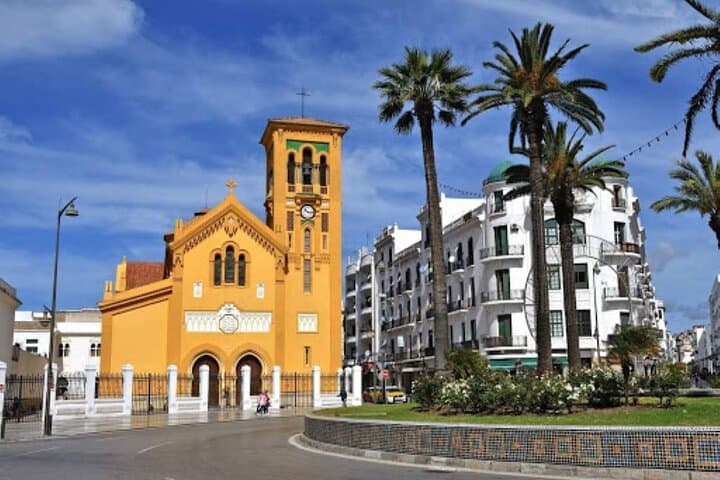


A morning drive out of Tangier drops you into a different rhythm: narrow alleyways open like pages of an old map, whitewashed facades meet carved wooden doors, and the scent of cumin and fresh bread threads through the air.
A morning drive out of Tangier drops you into a different rhythm: narrow alleyways open like pages of an old map, whitewashed facades meet carved wooden doors, and the scent of cumin and fresh bread threads through the air.
Tetouan sits at the foot of the Rif Mountains and on the edge of the Mediterranean, its Old Medina registered as a UNESCO World Heritage site thanks to a preserved Andalusian urban plan brought by refugees after the 15th‑century Reconquista. Stone streets, cobbled thresholds and small plazas reveal layers of Spanish and Moroccan influence—Spanish quarter architecture and the Mellah (Jewish quarter) sit within easy walking distance of bustling souks and the Museum of Archaeology.
Geologically the city is framed by the low, folded ridges of the Rif; from higher lanes you can feel the mountain air push toward the sea. Local crafts—hand‑painted zellij tiles, leatherwork and tiny wood workshops—reward slow exploration and small purchases.
Practical guidance: expect about 5–6 hours for the round trip tour from Tangier (transport included). The Medina is compact but largely pedestrian-only with uneven cobbles; comfortable shoes and modest clothing are practical. Carry cash for market purchases, a reusable water bottle, and plan to move at a relaxed pace to let the guide point out hidden artisans and historic doorways. Aim for a morning start to avoid midday heat and to catch the markets at their liveliest.