THE ADVENTURE COLLECTIVE® · Independent discovery and booking for outdoor travel

Book timed admission to the Terracotta Warriors for guaranteed entry and optional guided service. This ticket skips the line and can include private transfer from Xi'an, letting you explore the archaeological pits and museum with less waiting.
Book timed admission to the Terracotta Warriors for guaranteed entry and optional guided service. This ticket skips the line and can include private transfer from Xi'an, letting you explore the archaeological pits and museum with less waiting.
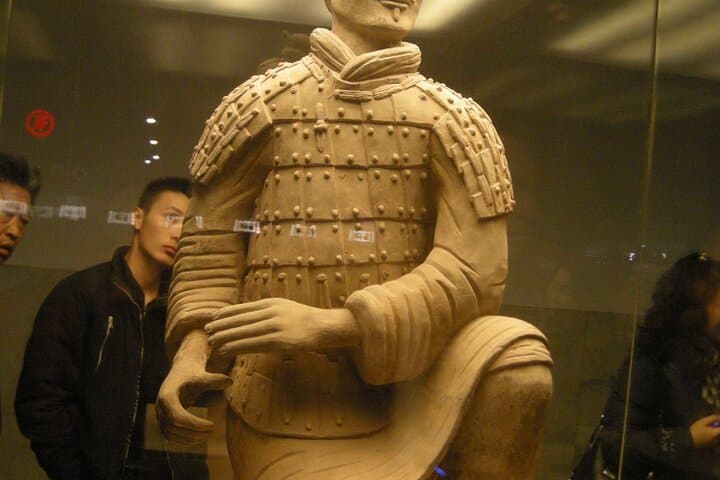
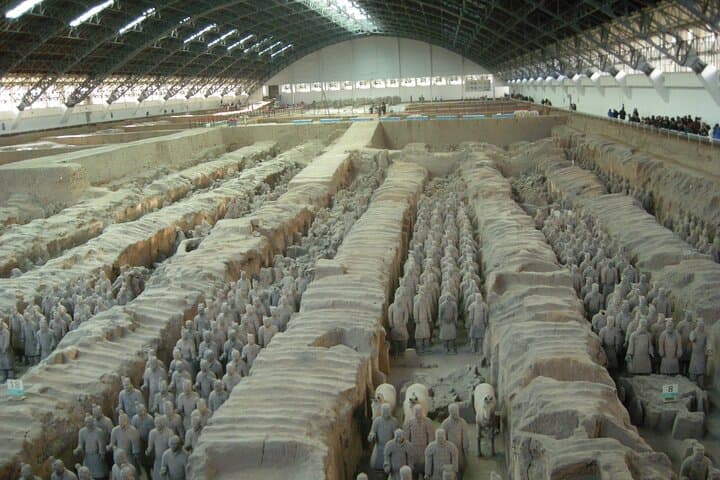
You step from the minivan into a wide courtyard and the air carries a dry, loess-scented hush; beyond the glass, ranks of immobile men stare back across millennia. The Terracotta Warriors museum is a staged confrontation with time — earthen pits brimming with life-sized soldiers, chariots and cavalry that once stood guard over Emperor Qin Shi Huang's tomb.
Verified experiences and guided adventures in the surrounding area.
Operated by happychinatours · Xi'an, Shaanxi
You step from the minivan into a wide courtyard and the air carries a dry, loess-scented hush; beyond the glass, ranks of immobile men stare back across millennia. The Terracotta Warriors museum is a staged confrontation with time — earthen pits brimming with life-sized soldiers, chariots and cavalry that once stood guard over Emperor Qin Shi Huang's tomb.
Discovered by farmers in 1974, this funerary army offers a window into Qin-era military organization and imperial power. The site sits on the northern edge of the Loess Plateau, where local soils preserved fragile clay forms and where modern conservation techniques now protect painted surfaces and fragile reconstructions.
Culturally, the pits reflect statecraft: mass production, regional workshops and practices meant to accompany a ruler into the afterlife. Most visitors move through three main excavation pits and the adjacent exhibition halls that display artifacts, reconstruction work and interpretive timelines.
Practical guidance: book a timed ticket and consider the optional guided service and car transfer to avoid long waits and negotiate the 45–60 minute drive from central Xi’an. Expect 2–3 hours inside the museum itself and light walking on even but sometimes dusty paths; many areas are wheelchair accessible but check transfer arrangements before booking. Bring water, a light layer for museum air-conditioning, and a camera with good zoom for detail shots (tripods are often restricted).
Plan morning arrivals to catch cooler conditions and reduced crowds. Respect ropes and barriers — these figures are fragile archaeological objects under active restoration — and leave room in your schedule to visit the small on-site conservation displays that reveal how these figures are studied and preserved.
easy.
4–5 hours.
Light physical condition required — mostly walking on level surfaces and short stairs
Mobile tickets are accepted at the entrance, but keep your booking confirmation and passport details handy for verification.
Allow 2–3 hours for the museum and pits; add travel time (45–60 minutes from central Xi’an) if you choose transfer service.
The option to add an English-speaking local guide is available; independent audio guides and interpretive signage are also provided.
Major exhibition areas and pit viewing platforms are wheelchair accessible, but some paths may be uneven—confirm transfer and accessibility details when booking.
The army was buried with Qin Shi Huang (259–210 BCE), the first emperor to unify China; the complex was meant to guard his mausoleum and demonstrate imperial reach.
Ongoing preservation balances public display with careful humidity, light control and laboratory restoration; visitors should not touch exhibits to prevent damage.
happychinatours operates guided outdoor trips and adventures with an emphasis on safety, stewardship, and memorable experiences.
You step from the minivan into a wide courtyard and the air carries a dry, loess-scented hush; beyond the glass, ranks of immobile men stare back across millennia. The Terracotta Warriors museum is a staged confrontation with time — earthen pits brimming with life-sized soldiers, chariots and cavalry that once stood guard over Emperor Qin Shi Huang's tomb.
You step from the minivan into a wide courtyard and the air carries a dry, loess-scented hush; beyond the glass, ranks of immobile men stare back across millennia. The Terracotta Warriors museum is a staged confrontation with time — earthen pits brimming with life-sized soldiers, chariots and cavalry that once stood guard over Emperor Qin Shi Huang's tomb.
Discovered by farmers in 1974, this funerary army offers a window into Qin-era military organization and imperial power. The site sits on the northern edge of the Loess Plateau, where local soils preserved fragile clay forms and where modern conservation techniques now protect painted surfaces and fragile reconstructions.
Culturally, the pits reflect statecraft: mass production, regional workshops and practices meant to accompany a ruler into the afterlife. Most visitors move through three main excavation pits and the adjacent exhibition halls that display artifacts, reconstruction work and interpretive timelines.
Practical guidance: book a timed ticket and consider the optional guided service and car transfer to avoid long waits and negotiate the 45–60 minute drive from central Xi’an. Expect 2–3 hours inside the museum itself and light walking on even but sometimes dusty paths; many areas are wheelchair accessible but check transfer arrangements before booking. Bring water, a light layer for museum air-conditioning, and a camera with good zoom for detail shots (tripods are often restricted).
Plan morning arrivals to catch cooler conditions and reduced crowds. Respect ropes and barriers — these figures are fragile archaeological objects under active restoration — and leave room in your schedule to visit the small on-site conservation displays that reveal how these figures are studied and preserved.