THE ADVENTURE COLLECTIVE® · Independent discovery and booking for outdoor travel

Walk among 2,000 life‑size warriors and visit the First Emperor’s mausoleum on a full‑day guided tour from Xi’an. This guide explains what to expect, the history beneath the soil, and practical tips for planning your visit.
Walk among 2,000 life‑size warriors and visit the First Emperor’s mausoleum on a full‑day guided tour from Xi’an. This guide explains what to expect, the history beneath the soil, and practical tips for planning your visit.
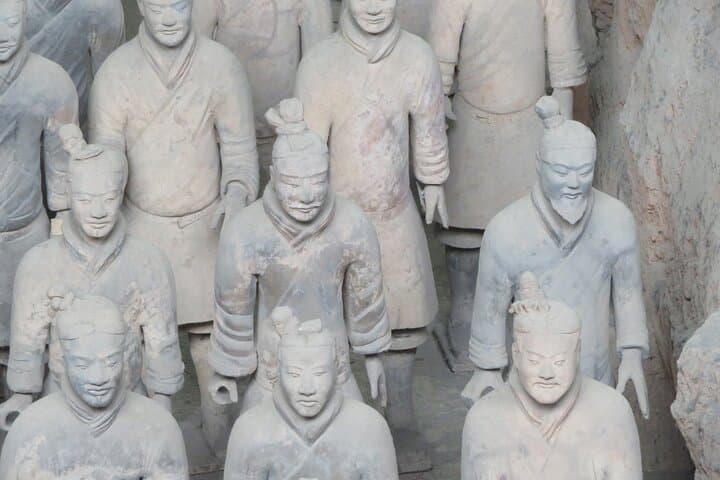
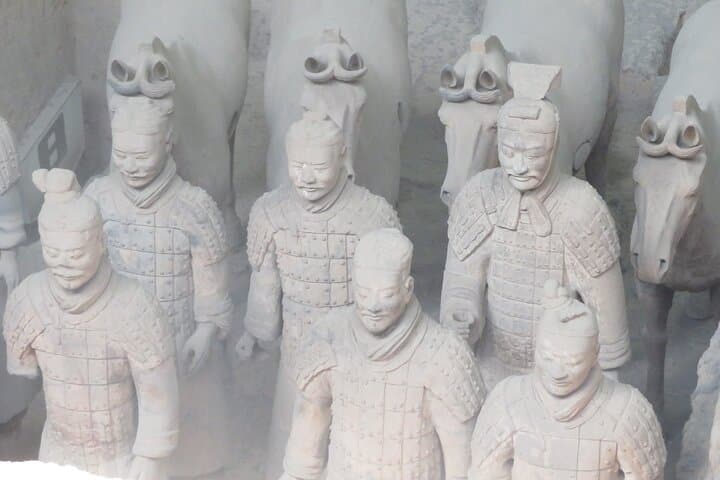
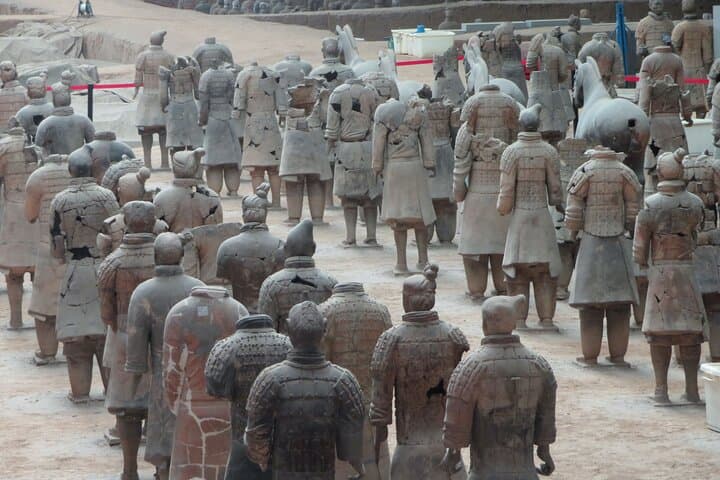
You step from Xi’an’s flat plain into a shallow valley where earth keeps a secret: rows of life‑size soldiers frozen mid‑watch. The dry soil here holds more than bones — it holds a moment in 3rd‑century‑BC history that still insists on being heard.
Verified experiences and guided adventures in the surrounding area.
Operated by Xi'an Food Tour · Xi'an, Shaanxi
You step from Xi’an’s flat plain into a shallow valley where earth keeps a secret: rows of life‑size soldiers frozen mid‑watch. The dry soil here holds more than bones — it holds a moment in 3rd‑century‑BC history that still insists on being heard.
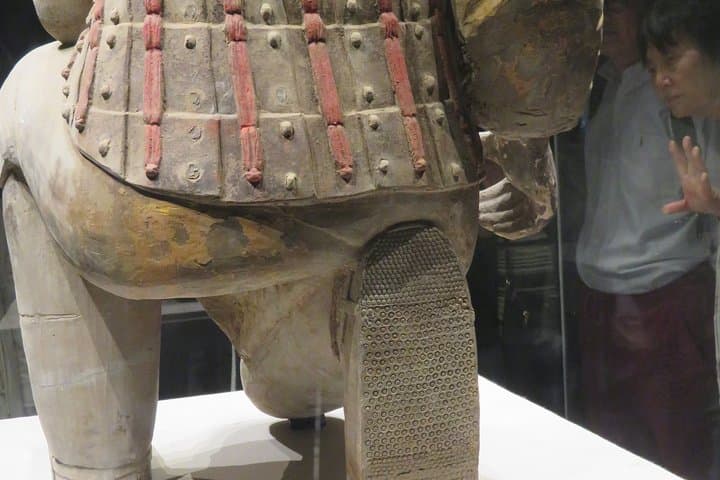
The Terracotta Army was buried with Qin Shi Huang, China’s first emperor, roughly 2,200 years ago. Three excavated pits reveal different forces — the main battle formation, the mechanized units and a compact command trench — alongside bronze chariots and acrobatic figures. About a mile to the west rises the emperor’s mausoleum, a massive tomb complex ringed by attendant burials. The landscape itself sits on loess plains where wind‑laid silt preserved fragile artifacts for millennia.
Culturally, the site marks the consolidation of imperial power and early statecraft; the adjacent Shaanxi History Museum gives context from Neolithic settlements through the Tang capital that made Xi’an a crossroads.
Practically: tours usually run 6–8 hours when paired with the Shaanxi History Museum. Expect significant walking on hard museum floors and outdoor paths; admission to the pits and mausoleum area is typically handled on arrival (not always included). Carry water, wear supportive shoes, and pick a morning start to avoid midday heat and the biggest crowds. Respect barriers, follow guide instructions, and plan for visa‑class ID checks when purchasing official tickets. With a clear schedule and modest fitness, a single day can turn a distant past into a remarkably immediate experience.
moderate.
6–8 hours.
Moderate—able to walk several miles and stand during exhibit explanations
Typical escorted visits that include the Terracotta Army and Shaanxi History Museum run about 6–8 hours, depending on transit time and stop durations.
Not always—this operator indicates admission is not included, so confirm before arrival and bring passport or ID for ticketing if required.
The site has large indoor exhibition halls and outdoor pits with uneven approaches; it’s family‑friendly but not recommended for those unable to walk or stand for moderate periods.
Photography is generally allowed in the pits but flash and tripods may be restricted; respect posted signs and guide instructions.
The Terracotta Army was buried with Qin Shi Huang around 210–209 BCE as part of a vast funerary complex that reflects the centralization of power under the Qin dynasty.
Ongoing conservation balances excavation with preservation; visitors are asked to stay behind barriers and minimize flash photography to protect pigments and fragile surfaces.
Xi'an Food Tour operates guided outdoor trips and adventures with an emphasis on safety, stewardship, and memorable experiences.
You step from Xi’an’s flat plain into a shallow valley where earth keeps a secret: rows of life‑size soldiers frozen mid‑watch. The dry soil here holds more than bones — it holds a moment in 3rd‑century‑BC history that still insists on being heard.
You step from Xi’an’s flat plain into a shallow valley where earth keeps a secret: rows of life‑size soldiers frozen mid‑watch. The dry soil here holds more than bones — it holds a moment in 3rd‑century‑BC history that still insists on being heard.
The Terracotta Army was buried with Qin Shi Huang, China’s first emperor, roughly 2,200 years ago. Three excavated pits reveal different forces — the main battle formation, the mechanized units and a compact command trench — alongside bronze chariots and acrobatic figures. About a mile to the west rises the emperor’s mausoleum, a massive tomb complex ringed by attendant burials. The landscape itself sits on loess plains where wind‑laid silt preserved fragile artifacts for millennia.
Culturally, the site marks the consolidation of imperial power and early statecraft; the adjacent Shaanxi History Museum gives context from Neolithic settlements through the Tang capital that made Xi’an a crossroads.
Practically: tours usually run 6–8 hours when paired with the Shaanxi History Museum. Expect significant walking on hard museum floors and outdoor paths; admission to the pits and mausoleum area is typically handled on arrival (not always included). Carry water, wear supportive shoes, and pick a morning start to avoid midday heat and the biggest crowds. Respect barriers, follow guide instructions, and plan for visa‑class ID checks when purchasing official tickets. With a clear schedule and modest fitness, a single day can turn a distant past into a remarkably immediate experience.