THE ADVENTURE COLLECTIVE® · Independent discovery and booking for outdoor travel

Spend a half-day above Antalya exploring Termessos’s hilltop ruins, the prehistoric chambers of Karain Cave, and the Antalya Museum before a relaxed walk through Kaleiçi’s old harbor. This private tour blends archaeology, geology and local culture across a manageable 6‑hour itinerary.
Spend a half-day above Antalya exploring Termessos’s hilltop ruins, the prehistoric chambers of Karain Cave, and the Antalya Museum before a relaxed walk through Kaleiçi’s old harbor. This private tour blends archaeology, geology and local culture across a manageable 6‑hour itinerary.
You step out of the minivan as the city noise thins and a dry, pine-scented wind pushes up from the Taurus foothills. Above Antalya, Termessos perches roughly 1,000 metres on Güllük Mountain; its stone theatre and sheared terraces look down on the plain as if daring you to explore their narrow, stepped streets.
Verified experiences and guided adventures in the surrounding area.
Operated by Sojourn Turkey · Antalya, Antalya Province
You step out of the minivan as the city noise thins and a dry, pine-scented wind pushes up from the Taurus foothills. Above Antalya, Termessos perches roughly 1,000 metres on Güllük Mountain; its stone theatre and sheared terraces look down on the plain as if daring you to explore their narrow, stepped streets.
The route threads together different ages: the rebellious Pisidian city of Termessos, carved into limestone and granite with surviving walls and a hilltop necropolis; Karain Cave, a multi-chamber Paleolithic site where human occupation stretches back tens of thousands of years; and the Antalya Museum, whose well-preserved sarcophagi and the relics associated with St. Nicholas outline the region’s long cultural arc. Afternoon strolls through Kaleiçi bring the Ottoman-era wooden houses, Hadrian’s Gate and the working harbor into plain sight—an immediate contrast to wind-swept ruins above the city.
Expect uneven stone surfaces and short uphill sections at Termessos and tight corridors in Karain Cave; the pace is steady but hands-on in places. A private guide and driver consolidate logistics, Museum entry and parking fees are typically covered on organized tours, and lunch at a local restaurant gives a chance to taste Antalya’s citrus-accented cuisine.
Practical edge: wear sturdy shoes, bring at least 1–2 litres of water, sun protection and a light daypack. Early pickups avoid the midday heat and give clearer views across the bay. For history buffs and active travelers alike, this six-hour loop pairs archaeology with tangible coastal culture—accessible, scenic and rooted in the landscape.
moderate.
5–7 hours.
Comfortable walking ability with occasional uphill sections; fine for most travelers who can handle uneven terrain.
The tour runs about six hours and typically includes private transport, a professional English-speaking guide, entrance fees for Termessos and the Antalya Museum, parking fees and lunch at a local restaurant.
Sections require uphill walking on uneven stone; it’s classified as moderate—most people in average fitness can participate, but stable footwear is recommended.
Karain Cave is often included when time allows; ask at booking because access depends on scheduling and site opening hours.
Yes—additionalInfo notes strollers are possible and the tour suits a wide range of fitness levels, though caves and rocky paths may be challenging for very young children.
Termessos was an independent Pisidian city that resisted Alexander the Great and preserved Hellenistic and Roman architecture; via Sebaste, an ancient Roman road near Antalya, dates back to 6 BC.
Visitors should stick to marked paths to avoid fragile archaeological strata and local guides often emphasize leaving no trace to protect fragile cave deposits and hilltop vegetation.
Sojourn Turkey operates guided outdoor trips and adventures with an emphasis on safety, stewardship, and memorable experiences.
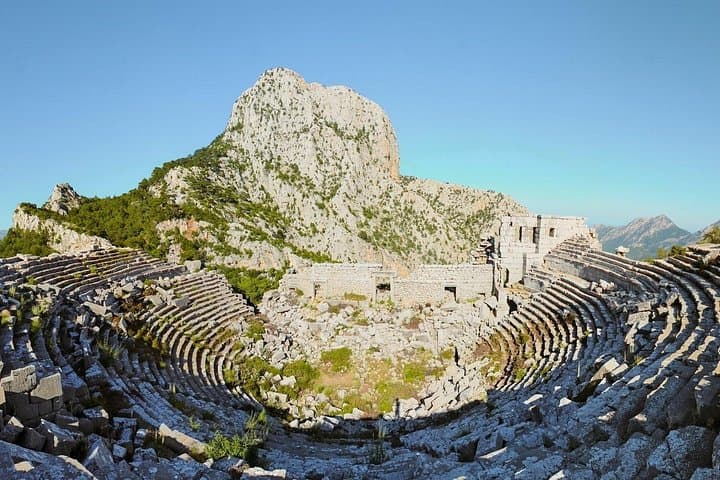
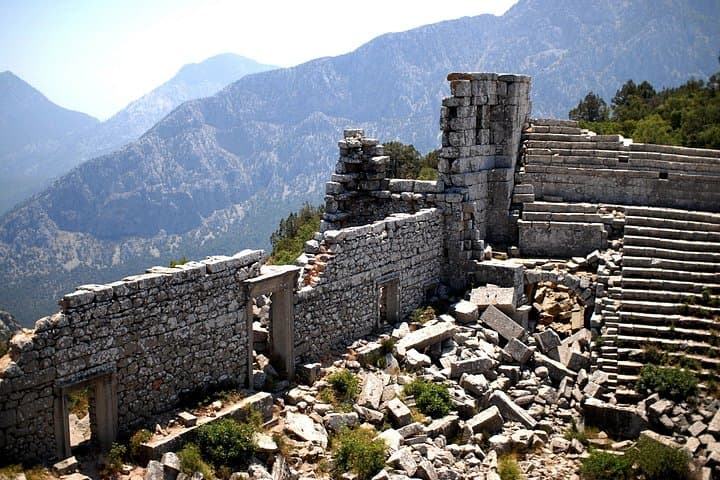
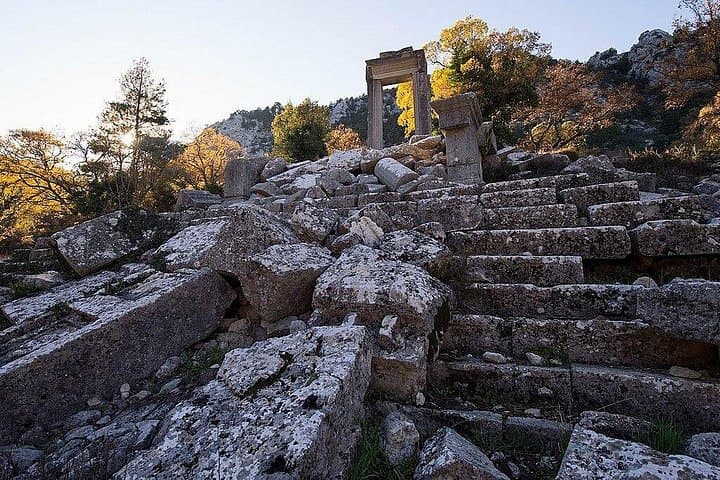
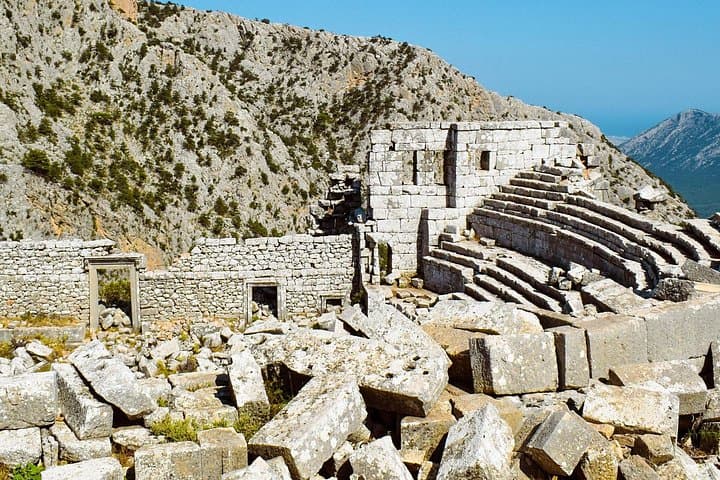
You step out of the minivan as the city noise thins and a dry, pine-scented wind pushes up from the Taurus foothills. Above Antalya, Termessos perches roughly 1,000 metres on Güllük Mountain; its stone theatre and sheared terraces look down on the plain as if daring you to explore their narrow, stepped streets.
You step out of the minivan as the city noise thins and a dry, pine-scented wind pushes up from the Taurus foothills. Above Antalya, Termessos perches roughly 1,000 metres on Güllük Mountain; its stone theatre and sheared terraces look down on the plain as if daring you to explore their narrow, stepped streets.
The route threads together different ages: the rebellious Pisidian city of Termessos, carved into limestone and granite with surviving walls and a hilltop necropolis; Karain Cave, a multi-chamber Paleolithic site where human occupation stretches back tens of thousands of years; and the Antalya Museum, whose well-preserved sarcophagi and the relics associated with St. Nicholas outline the region’s long cultural arc. Afternoon strolls through Kaleiçi bring the Ottoman-era wooden houses, Hadrian’s Gate and the working harbor into plain sight—an immediate contrast to wind-swept ruins above the city.
Expect uneven stone surfaces and short uphill sections at Termessos and tight corridors in Karain Cave; the pace is steady but hands-on in places. A private guide and driver consolidate logistics, Museum entry and parking fees are typically covered on organized tours, and lunch at a local restaurant gives a chance to taste Antalya’s citrus-accented cuisine.
Practical edge: wear sturdy shoes, bring at least 1–2 litres of water, sun protection and a light daypack. Early pickups avoid the midday heat and give clearer views across the bay. For history buffs and active travelers alike, this six-hour loop pairs archaeology with tangible coastal culture—accessible, scenic and rooted in the landscape.