THE ADVENTURE COLLECTIVE® · Independent discovery and booking for outdoor travel

Step from Prague’s bustle into the quiet geometry of Terezín, where fortifications and museum rooms map wartime lives. This private 5-hour tour covers the Small Fortress, Ghetto Museum and Magdeburg Barracks with a guide and private transport.
Step from Prague’s bustle into the quiet geometry of Terezín, where fortifications and museum rooms map wartime lives. This private 5-hour tour covers the Small Fortress, Ghetto Museum and Magdeburg Barracks with a guide and private transport.
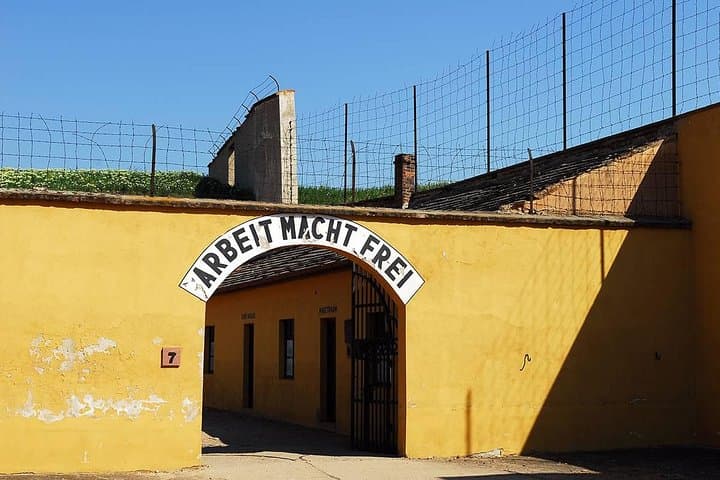
A low stone rampart frames the road into Terezín; the town’s ochre walls rise like a memory you can walk into. Visitors stepping from a comfortable car into the town’s compact square quickly trade city noise for measured silence—bricks, barracks and courtyards that hold a heavy human story.
Verified experiences and guided adventures in the surrounding area.
Operated by Visita Praga · Terezín, Ústí nad Labem Region
A low stone rampart frames the road into Terezín; the town’s ochre walls rise like a memory you can walk into. Visitors stepping from a comfortable car into the town’s compact square quickly trade city noise for measured silence—bricks, barracks and courtyards that hold a heavy human story.
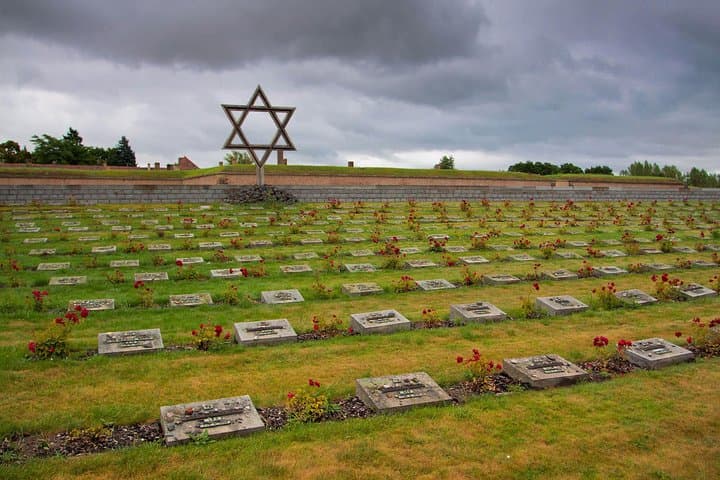
Terezín (Theresienstadt) was fortified in the 18th century and repurposed by the Nazis in World War II as a ghetto and transit camp for Czech Jews and other prisoners. The guided route typically includes the Small Fortress, the Ghetto Museum, the Magdeburg Barracks and the cemetery, revealing layers of military architecture, wartime bureaucracy and personal records preserved in archives and exhibitions.
Geologically the site sits on low rolling floodplain above the Labe (Elbe) river basin; the town’s fortifications and casemates reflect Habsburg military engineering rather than dramatic alpine topography. Local culture balances quiet commemoration with educational programming—school groups and historians visit year-round.
Practical guidance: this is a primarily walking tour with cobbles and uneven thresholds—expect 1–2 miles of on-foot exploration inside museum grounds over a 5-hour outing including round-trip travel from Prague. Allow time for thoughtful observation; photography rules vary by exhibit. Visitors benefit from early departures to avoid midday crowds and to keep the pace reflective rather than rushed. Bring a water bottle, comfortable shoes, and a respectful mindset: sites are maintained for education and remembrance, and the experience is as much about listening as it is about seeing.
easy.
5 hours.
Suitable for most fitness levels; involves 1–2 miles of walking on uneven surfaces and standing during exhibits.
The experience runs about 5 hours total and includes private pickup and drop-off in Prague using a late-model comfort car.
Admissions are typically not included in the base description—confirm with the operator whether entrance fees to the Ghetto Museum or Small Fortress are covered.
The tour is marked suitable for all fitness levels and many areas are wheelchair accessible, but some historic thresholds and staircases may present challenges; discuss needs when booking.
Photography rules vary by exhibit; the guide will advise—avoid flash, follow signage, and respect restricted areas.
Terezín was constructed as an 18th-century fortress and later used by the Nazis as a ghetto and transit camp; it served both as a propaganda site and a holding point for deportations to extermination camps.
The site is maintained by Czech cultural institutions and memorial organizations; visitors are asked to follow rules that protect delicate documents, uniforms and the fabric of historic buildings.
Visita Praga operates guided outdoor trips and adventures with an emphasis on safety, stewardship, and memorable experiences.


A low stone rampart frames the road into Terezín; the town’s ochre walls rise like a memory you can walk into. Visitors stepping from a comfortable car into the town’s compact square quickly trade city noise for measured silence—bricks, barracks and courtyards that hold a heavy human story.
A low stone rampart frames the road into Terezín; the town’s ochre walls rise like a memory you can walk into. Visitors stepping from a comfortable car into the town’s compact square quickly trade city noise for measured silence—bricks, barracks and courtyards that hold a heavy human story.
Terezín (Theresienstadt) was fortified in the 18th century and repurposed by the Nazis in World War II as a ghetto and transit camp for Czech Jews and other prisoners. The guided route typically includes the Small Fortress, the Ghetto Museum, the Magdeburg Barracks and the cemetery, revealing layers of military architecture, wartime bureaucracy and personal records preserved in archives and exhibitions.
Geologically the site sits on low rolling floodplain above the Labe (Elbe) river basin; the town’s fortifications and casemates reflect Habsburg military engineering rather than dramatic alpine topography. Local culture balances quiet commemoration with educational programming—school groups and historians visit year-round.
Practical guidance: this is a primarily walking tour with cobbles and uneven thresholds—expect 1–2 miles of on-foot exploration inside museum grounds over a 5-hour outing including round-trip travel from Prague. Allow time for thoughtful observation; photography rules vary by exhibit. Visitors benefit from early departures to avoid midday crowds and to keep the pace reflective rather than rushed. Bring a water bottle, comfortable shoes, and a respectful mindset: sites are maintained for education and remembrance, and the experience is as much about listening as it is about seeing.