THE ADVENTURE COLLECTIVE® · Independent discovery and booking for outdoor travel

Private half-day marine tour from Terceira combining whale and dolphin watching, a close approach to Ilhéus das Cabras sea stacks, and snorkeling in protected waters. Expect experienced spotters, hydrophone listening, and a practical briefing before entering the sea.
Private half-day marine tour from Terceira combining whale and dolphin watching, a close approach to Ilhéus das Cabras sea stacks, and snorkeling in protected waters. Expect experienced spotters, hydrophone listening, and a practical briefing before entering the sea.
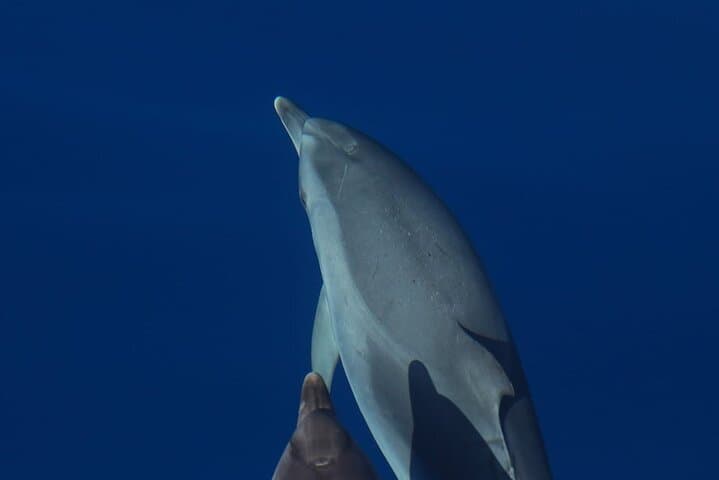
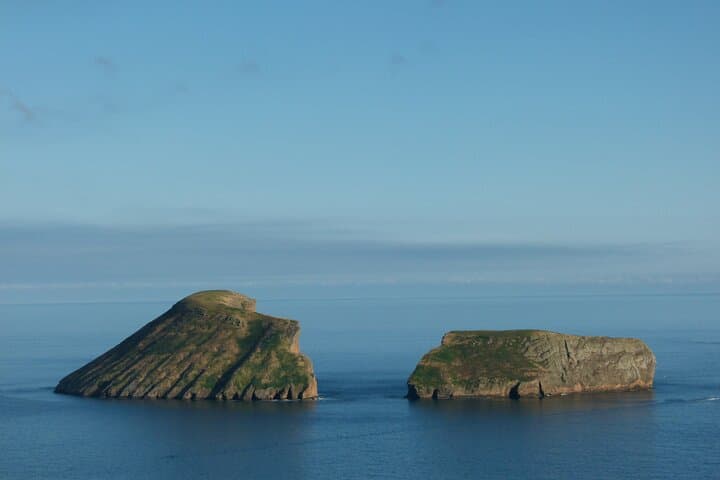
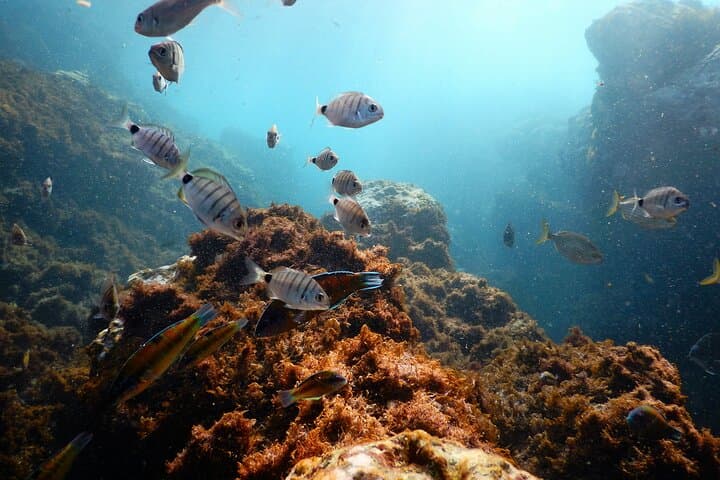
The bow cuts a low, steady wake as Terceira’s cliffs slip away — basalt faces scored by sea and wind, gulls tracking the boat like punctuation. The captain scans the horizon while a hydrophone translates distant clicks; somewhere below, a pod answers. This private excursion pairs big-sea sightings with close-range exploration of Ilhéus das Cabras and a snorkel in clear Azorean water.
Verified experiences and guided adventures in the surrounding area.
Operated by OceanEmotion · Angra do Heroísmo, Azores
The bow cuts a low, steady wake as Terceira’s cliffs slip away — basalt faces scored by sea and wind, gulls tracking the boat like punctuation. The captain scans the horizon while a hydrophone translates distant clicks; somewhere below, a pod answers. This private excursion pairs big-sea sightings with close-range exploration of Ilhéus das Cabras and a snorkel in clear Azorean water.
Centuries of seafaring and a mid-20th-century whaling past shape local knowledge here; crews now convert that heritage into conservation-led tourism. Geology is obvious: volcanic basalt towers and sea stacks born from ancient eruptions rise straight from deep water, creating upwellings that concentrate prey and attract cetaceans.
Culturally the islands are compact and maritime — boatmen read weather the same way farmers read soil. Guides on this trip are trained spotters and use hydrophones and local sea charts to find dolphins, sperm whales, and other species recorded around Terceira.
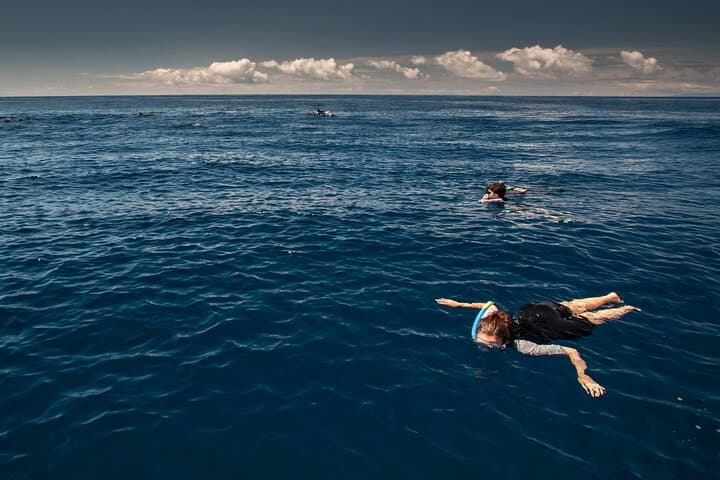
Practically, expect roughly 3–4 hours on the water. The ride can be brisk; temperatures on deck feel a full layer colder than ashore. Snorkel segments occur in protected coves with calm water when conditions allow; basic swimming ability and a short briefing are required. Operators offer a sighting guarantee or a rebooking if no animals appear.
Plan for windproof layers, reef-safe sunscreen, and waterproof bags for electronics. Morning departures often mean calmer seas and higher sighting rates. Respect minimum distances for marine mammals, follow guide instructions, and treat underwater life as the fragile resource it is — the success of future trips depends on current stewardship.
moderate.
3–4 hours.
Moderate fitness: able to board small boats, stand on deck for extended periods, and swim short distances for snorkeling.
The operator offers a sighting guarantee — if no cetaceans are observed, they offer a free rebooking or refund, though sightings can’t be guaranteed on every single outing.
Yes; snorkeling takes place in sheltered areas with a briefing and basic instruction, but participants must be comfortable in the water and able to swim short distances.
Wear layers and a windproof jacket, non-slip footwear, and bring a hat and sunglasses; temperatures on deck are cooler than on shore.
Children are allowed but must be accompanied by an adult; infant seats are available and staff assess suitability case by case.
Terceira’s maritime economy included whaling into the 20th century; today local communities combine that knowledge with conservation-minded tourism.
Tours operate with spotters and hydrophones and emphasize minimum-distance rules and reef-safe practices to reduce disturbance to marine life.
OceanEmotion operates guided outdoor trips and adventures with an emphasis on safety, stewardship, and memorable experiences.
The bow cuts a low, steady wake as Terceira’s cliffs slip away — basalt faces scored by sea and wind, gulls tracking the boat like punctuation. The captain scans the horizon while a hydrophone translates distant clicks; somewhere below, a pod answers. This private excursion pairs big-sea sightings with close-range exploration of Ilhéus das Cabras and a snorkel in clear Azorean water.
The bow cuts a low, steady wake as Terceira’s cliffs slip away — basalt faces scored by sea and wind, gulls tracking the boat like punctuation. The captain scans the horizon while a hydrophone translates distant clicks; somewhere below, a pod answers. This private excursion pairs big-sea sightings with close-range exploration of Ilhéus das Cabras and a snorkel in clear Azorean water.
Centuries of seafaring and a mid-20th-century whaling past shape local knowledge here; crews now convert that heritage into conservation-led tourism. Geology is obvious: volcanic basalt towers and sea stacks born from ancient eruptions rise straight from deep water, creating upwellings that concentrate prey and attract cetaceans.
Culturally the islands are compact and maritime — boatmen read weather the same way farmers read soil. Guides on this trip are trained spotters and use hydrophones and local sea charts to find dolphins, sperm whales, and other species recorded around Terceira.
Practically, expect roughly 3–4 hours on the water. The ride can be brisk; temperatures on deck feel a full layer colder than ashore. Snorkel segments occur in protected coves with calm water when conditions allow; basic swimming ability and a short briefing are required. Operators offer a sighting guarantee or a rebooking if no animals appear.
Plan for windproof layers, reef-safe sunscreen, and waterproof bags for electronics. Morning departures often mean calmer seas and higher sighting rates. Respect minimum distances for marine mammals, follow guide instructions, and treat underwater life as the fragile resource it is — the success of future trips depends on current stewardship.