THE ADVENTURE COLLECTIVE® · Independent discovery and booking for outdoor travel

Head offshore from Terceira for a private whale-watching and dolphin-swim experience in the Azores. Expect guided snorkeling with spotters, a safety-first approach, and the chance to see multiple cetacean species in a setting shaped by volcanic seafloor and strong currents.
Head offshore from Terceira for a private whale-watching and dolphin-swim experience in the Azores. Expect guided snorkeling with spotters, a safety-first approach, and the chance to see multiple cetacean species in a setting shaped by volcanic seafloor and strong currents.
You push off from a small harbor on Terceira and the island exhales behind you: basalt cliffs drop into glassy blue, and the boat's wake immediately draws curious seabirds. The ocean here moves with a personality of its own—currents that prod you seaward and swells that roll like slow, patient beasts. Within minutes the spotter calls out and a dorsal fin slices the surface; the waters answer with the quick, playful arcs of dolphins.
Verified experiences and guided adventures in the surrounding area.
Operated by OceanEmotion · Angra do Heroísmo, Azores
You push off from a small harbor on Terceira and the island exhales behind you: basalt cliffs drop into glassy blue, and the boat's wake immediately draws curious seabirds. The ocean here moves with a personality of its own—currents that prod you seaward and swells that roll like slow, patient beasts. Within minutes the spotter calls out and a dorsal fin slices the surface; the waters answer with the quick, playful arcs of dolphins.
The Azores sit where the Mid-Atlantic Ridge shapes dramatic underwater topography, concentrating food and drawing 29 recorded cetacean species. Terceira has a maritime past—from 15th-century transatlantic routes to a 20th-century shift from whaling to conservation—so modern tours operate with an eye toward protection and scientific observation.
Culturally, crews combine Portuguese seamanship with local island hospitality; expect straightforward briefings and an emphasis on safety and respect for wildlife. For travelers, the highlight is contact: regulated, guided swims and snorkels that let you witness dolphins in open water while crews maintain protocols.
Practically, tours last about three to four hours—plan for boat motion, sun, and changing sea conditions. Wear a snug swimsuit under a provided wetsuit if needed, keep sunscreen reef-safe, and secure cameras with a wrist strap. If seas are rough or sightings are sparse the operator will rebook or refund per their guarantee.
This trip balances thrill and care: you meet animals that chose to approach, in an environment that both beckons and demands respect.
moderate.
3–4 hours.
Moderate fitness required—comfortable swimming ability and mobility to get on/off a small boat.
Sightings are very likely—operators record many cetacean species—but because these are wild animals sightings aren’t guaranteed; if none occur you are typically offered a free rebook or refund per the operator’s policy.
Basic snorkeling and competent swimming are expected; staff provide equipment and a briefing, and swimmers remain under close supervision by the crew.
Policies vary by operator; younger children may be restricted for safety—check age minimums and lifejacket rules when booking.
Tours may be canceled or rescheduled for safety; the operator will refund or rebook if sea conditions prevent a safe outing.
Terceira was a strategic Atlantic port on 15th–19th century routes; the islands transitioned from historic whaling to modern conservation-based whale watching in the late 20th century.
Operators follow regional codes of conduct—keep distance unless animals approach, limit swim time with groups, and use reef-safe products to reduce impacts on fragile marine ecosystems.
OceanEmotion operates guided outdoor trips and adventures with an emphasis on safety, stewardship, and memorable experiences.
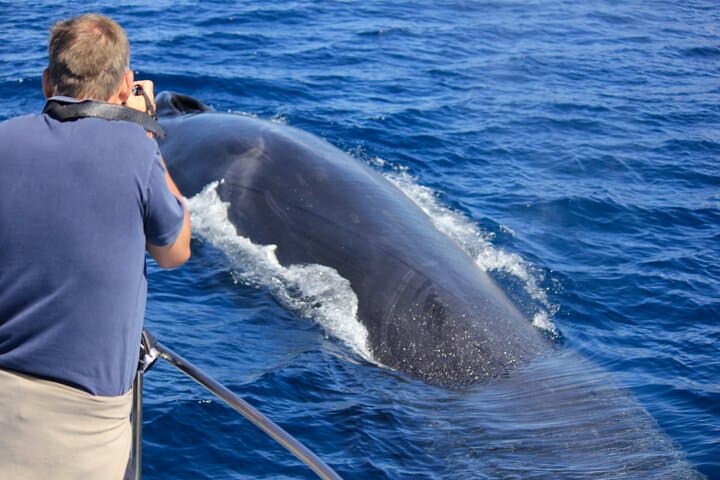
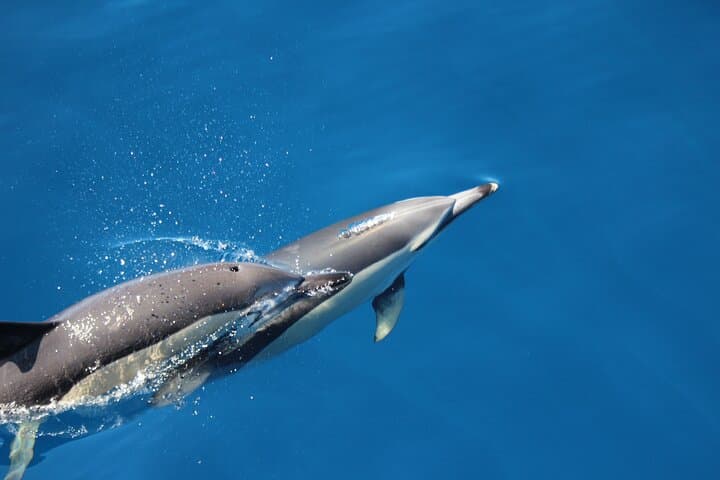
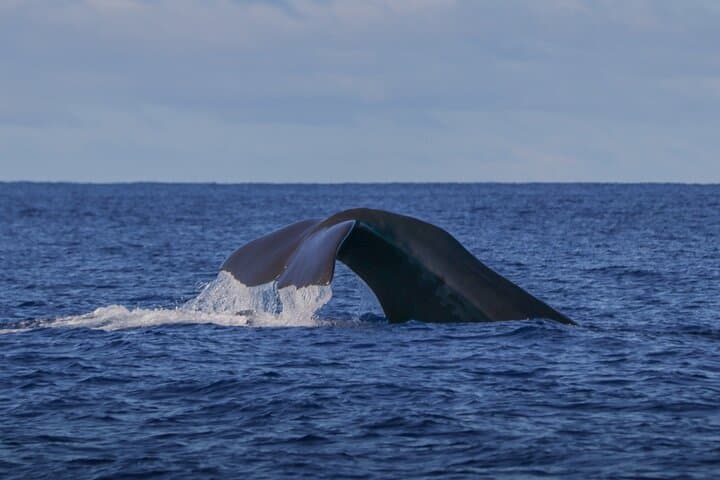
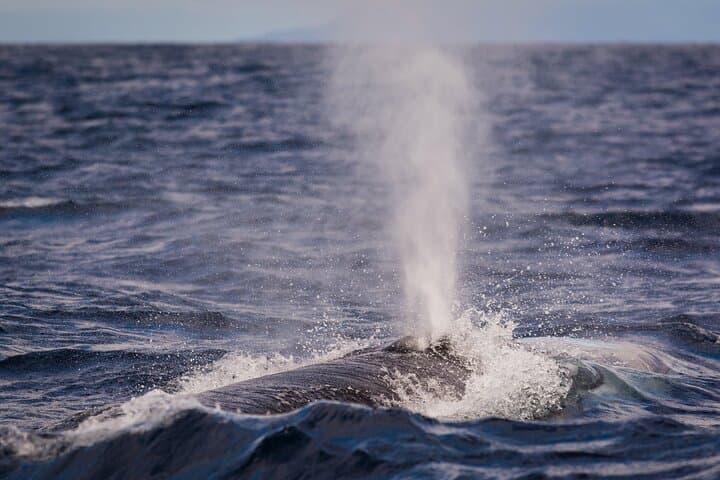
You push off from a small harbor on Terceira and the island exhales behind you: basalt cliffs drop into glassy blue, and the boat's wake immediately draws curious seabirds. The ocean here moves with a personality of its own—currents that prod you seaward and swells that roll like slow, patient beasts. Within minutes the spotter calls out and a dorsal fin slices the surface; the waters answer with the quick, playful arcs of dolphins.
You push off from a small harbor on Terceira and the island exhales behind you: basalt cliffs drop into glassy blue, and the boat's wake immediately draws curious seabirds. The ocean here moves with a personality of its own—currents that prod you seaward and swells that roll like slow, patient beasts. Within minutes the spotter calls out and a dorsal fin slices the surface; the waters answer with the quick, playful arcs of dolphins.
The Azores sit where the Mid-Atlantic Ridge shapes dramatic underwater topography, concentrating food and drawing 29 recorded cetacean species. Terceira has a maritime past—from 15th-century transatlantic routes to a 20th-century shift from whaling to conservation—so modern tours operate with an eye toward protection and scientific observation.
Culturally, crews combine Portuguese seamanship with local island hospitality; expect straightforward briefings and an emphasis on safety and respect for wildlife. For travelers, the highlight is contact: regulated, guided swims and snorkels that let you witness dolphins in open water while crews maintain protocols.
Practically, tours last about three to four hours—plan for boat motion, sun, and changing sea conditions. Wear a snug swimsuit under a provided wetsuit if needed, keep sunscreen reef-safe, and secure cameras with a wrist strap. If seas are rough or sightings are sparse the operator will rebook or refund per their guarantee.
This trip balances thrill and care: you meet animals that chose to approach, in an environment that both beckons and demands respect.