THE ADVENTURE COLLECTIVE® · Independent discovery and booking for outdoor travel

Float above the pyramids at sunrise then walk the Avenue of the Dead—an early morning hot-air balloon and guided tour that pairs panoramic flight with a museum-grade look at Teotihuacán’s monumental core.
Float above the pyramids at sunrise then walk the Avenue of the Dead—an early morning hot-air balloon and guided tour that pairs panoramic flight with a museum-grade look at Teotihuacán’s monumental core.
Before dawn the Teotihuacán Valley is a cool, breathing plane of mist and black cactus, and the balloon prepares like a slow-blooming creature against a pale sky.
Verified experiences and guided adventures in the surrounding area.
Operated by Volando Alto · San Juan Teotihuacán, State of Mexico
Before dawn the Teotihuacán Valley is a cool, breathing plane of mist and black cactus, and the balloon prepares like a slow-blooming creature against a pale sky.
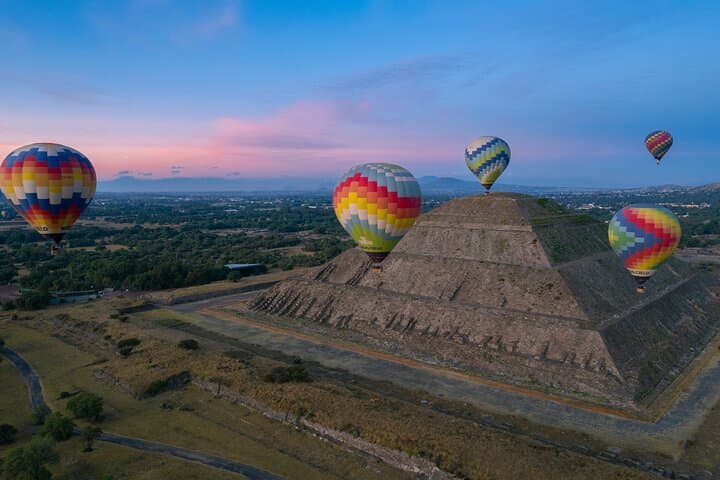
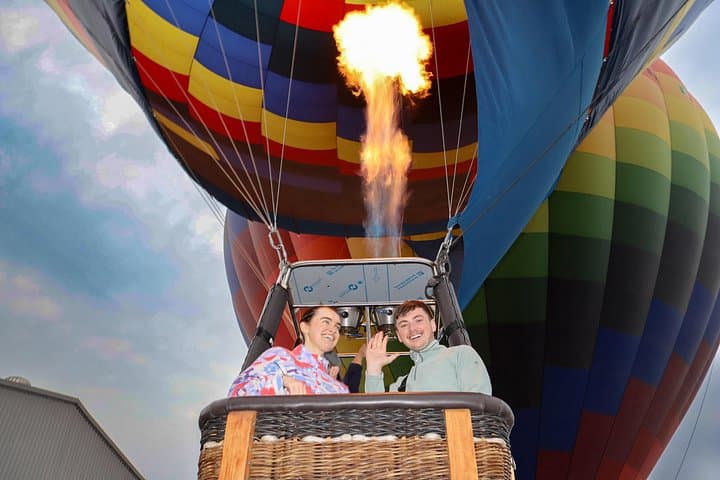
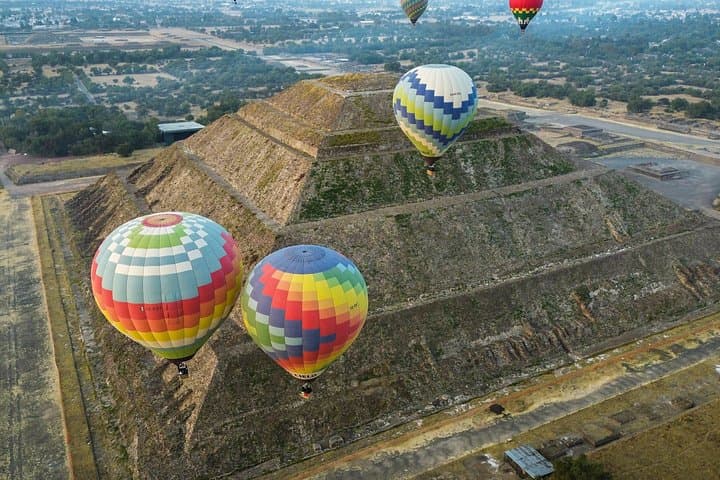
Passengers rise from Mexico City before 5 a.m., driven out past farms and volcanic ridges to a takeoff field where pilots brief them and the burners sing. Ascending more than 600 meters, the basket floats along currents that push and pull the boxy silhouettes of the Pyramid of the Sun and Pyramid of the Moon into sudden perspective. From above the Avenue of the Dead reads like an architectural spine—roughly two kilometers of plaza, platforms and stairways—set on a volcanic plain of tuff and basalt that supplied the ancient builders.
Teotihuacán was a major pre‑Columbian city (its high point between about 100–700 CE), famed for large-scale urban planning, obsidian trade and colorful murals. Modern visits combine that deep history with living craft traditions: local artisans, mezcal and pulque tastings, and music in a breakfast restaurant. Guides explain the site’s scale—Pyramid of the Sun reaches about 65 meters—and the physicality of climbing carved stone steps.
Practically, this is an early, full‑day excursion (7–8 hours) that blends a low‑impact aerial experience with walking and stairs on uneven ancient stone. Weather controls flights—wind direction may prevent flying directly over ruins—so flexibility is essential. Dress in layers for cool mornings, bring sun protection and water, and carry ID if you plan to taste spirits. Expect hotel pickup pre‑dawn and return before midafternoon for a compact, high‑altitude view of one of Mesoamerica’s largest archaeological landscapes.
moderate.
7–8 hours.
Light to moderate fitness — mostly standing during flight and walking/climbing stairs at the archaeological site.
Not necessarily; wind direction controls the flight path and operators cannot guarantee flying directly above specific monuments.
Pickup is usually around 4:30 a.m., and the total excursion is about 7–8 hours with return to Mexico City before midafternoon.
Yes — the experience includes a buffet breakfast with vegetarian/vegan options and local drink tastings, as listed in the itinerary.
The balloon portion is suitable for many ages, but the guided archaeological tour involves uneven ground and stairs; travelers with mobility concerns should check accessibility beforehand.
Teotihuacán was a major urban center between roughly 100–700 CE, known for large pyramids, planned avenues and long-distance obsidian trade.
The archaeological zone is protected and visitors are asked to stay on marked paths, avoid climbing restricted areas and support local guides and artisans to promote sustainable tourism.
Volando Alto operates guided outdoor trips and adventures with an emphasis on safety, stewardship, and memorable experiences.

Before dawn the Teotihuacán Valley is a cool, breathing plane of mist and black cactus, and the balloon prepares like a slow-blooming creature against a pale sky.
Before dawn the Teotihuacán Valley is a cool, breathing plane of mist and black cactus, and the balloon prepares like a slow-blooming creature against a pale sky.
Passengers rise from Mexico City before 5 a.m., driven out past farms and volcanic ridges to a takeoff field where pilots brief them and the burners sing. Ascending more than 600 meters, the basket floats along currents that push and pull the boxy silhouettes of the Pyramid of the Sun and Pyramid of the Moon into sudden perspective. From above the Avenue of the Dead reads like an architectural spine—roughly two kilometers of plaza, platforms and stairways—set on a volcanic plain of tuff and basalt that supplied the ancient builders.
Teotihuacán was a major pre‑Columbian city (its high point between about 100–700 CE), famed for large-scale urban planning, obsidian trade and colorful murals. Modern visits combine that deep history with living craft traditions: local artisans, mezcal and pulque tastings, and music in a breakfast restaurant. Guides explain the site’s scale—Pyramid of the Sun reaches about 65 meters—and the physicality of climbing carved stone steps.
Practically, this is an early, full‑day excursion (7–8 hours) that blends a low‑impact aerial experience with walking and stairs on uneven ancient stone. Weather controls flights—wind direction may prevent flying directly over ruins—so flexibility is essential. Dress in layers for cool mornings, bring sun protection and water, and carry ID if you plan to taste spirits. Expect hotel pickup pre‑dawn and return before midafternoon for a compact, high‑altitude view of one of Mesoamerica’s largest archaeological landscapes.