THE ADVENTURE COLLECTIVE® · Independent discovery and booking for outdoor travel

Two-hour group surf lessons on Tenerife’s south coast introduce riders to beach-break waves with licensed instructors in small groups. Gear and showers are provided; morning sessions offer the cleanest conditions.
Two-hour group surf lessons on Tenerife’s south coast introduce riders to beach-break waves with licensed instructors in small groups. Gear and showers are provided; morning sessions offer the cleanest conditions.
The Atlantic breathes against Tenerife’s south coast, and for two hours it becomes a classroom of swell and salt. From a small surf shop 100 meters from the shoreline, instructors walk students to a shifting beach break where the ocean dares you to stand up and move with it.
Verified experiences and guided adventures in the surrounding area.
Operated by Surf Life Tenerife · Playa de las Américas, Santa Cruz de Tenerife
The Atlantic breathes against Tenerife’s south coast, and for two hours it becomes a classroom of swell and salt. From a small surf shop 100 meters from the shoreline, instructors walk students to a shifting beach break where the ocean dares you to stand up and move with it.
Tenerife’s shoreline is volcanic — black sand beaches and submerged basalt shelves born of Mount Teide’s eruptions shape how waves arrive here. Surf culture in the south evolved alongside the island’s tourism: fishing villages gave way to surf schools that read local wind patterns and swell windows. Lessons at Playa de las Américas introduce learners to board position, pop-up technique, wave selection and ocean awareness while licensed coaches manage safety in waist-to-chest deep water.
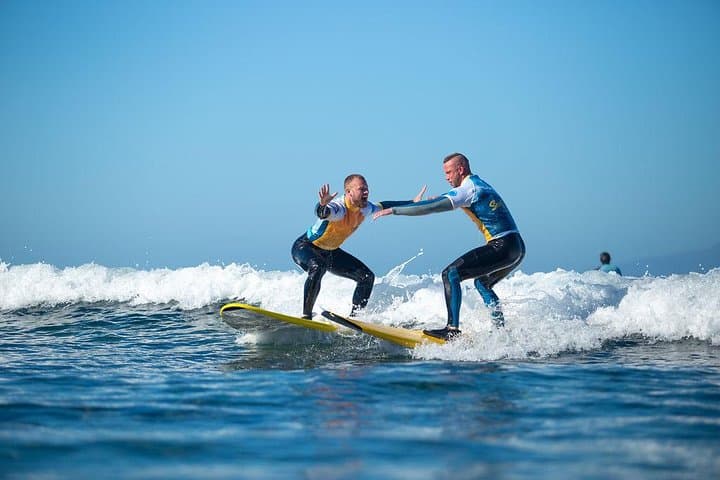
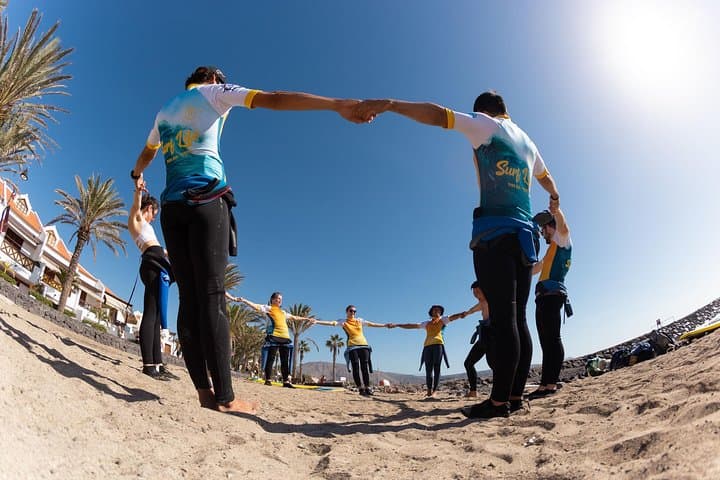
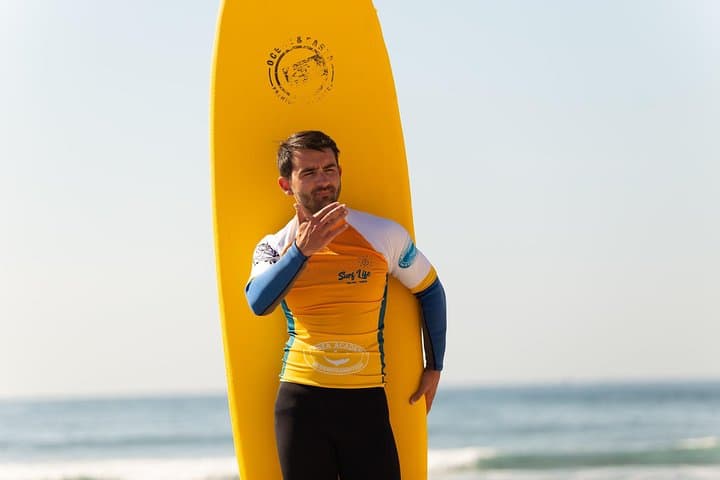
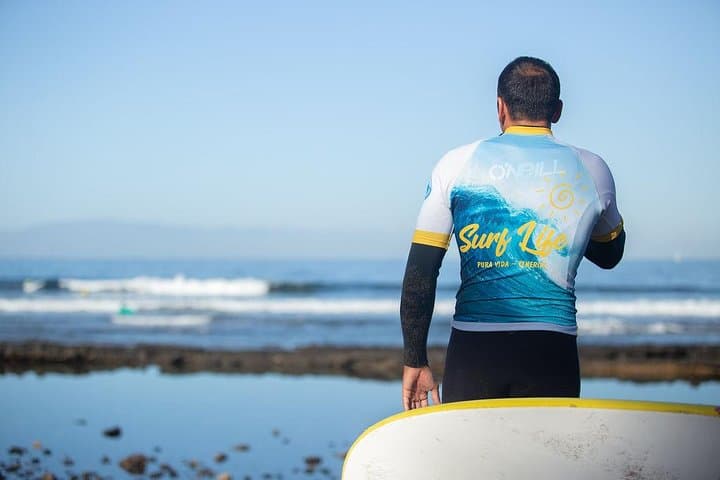
Groups are small (up to six) and instructors will enter the water — sometimes using flippers to push and stabilize beginners, or paddling alongside intermediates to refine timing. Equipment (wetsuits, surf shoes, leashes and licras) is provided and there’s a brief warm-up, in-water practice, post-surf stretching and access to showers at the shop.
Practical edge: aim for morning sessions when winds tend to be lighter and swells cleaner; expect beach-break waves from 0.5–2 m depending on swell; basic swimming ability is required. Tell instructors about any injuries, wear reef-safe sunscreen, hydrate, and plan a light meal afterward — two hours in the Atlantic is sporty and exhilarating.
easy.
2 hours.
Suitable for people with basic fitness who can swim; expect moderate upper-body use from paddling and standing repetitions.
No — lessons accommodate absolute beginners through intermediate surfers; instructors adapt drills to skill level.
Wetsuits, surf shoes, leashes and licras are provided; bring swimwear, reef-safe sunscreen, a towel and a water bottle.
The activity is stroller and wheelchair accessible in parts, but in-water assistance is required; disclose mobility limits when booking to confirm suitability.
The operator’s cancellation policy allows full refunds if you cancel at least 24 hours prior; sessions may be rescheduled for safety based on local conditions.
Tenerife’s southern coast shifted from fishing hamlets to a recreational shoreline as 20th-century tourism grew; local surf schools built expertise reading Atlantic swells and trade winds.
Choose reef-safe sunscreen and follow instructor guidance to avoid sensitive rocky zones; local groups support beach clean-ups to preserve the coastline.
Surf Life Tenerife operates guided outdoor trips and adventures with an emphasis on safety, stewardship, and memorable experiences.
The Atlantic breathes against Tenerife’s south coast, and for two hours it becomes a classroom of swell and salt. From a small surf shop 100 meters from the shoreline, instructors walk students to a shifting beach break where the ocean dares you to stand up and move with it.
The Atlantic breathes against Tenerife’s south coast, and for two hours it becomes a classroom of swell and salt. From a small surf shop 100 meters from the shoreline, instructors walk students to a shifting beach break where the ocean dares you to stand up and move with it.
Tenerife’s shoreline is volcanic — black sand beaches and submerged basalt shelves born of Mount Teide’s eruptions shape how waves arrive here. Surf culture in the south evolved alongside the island’s tourism: fishing villages gave way to surf schools that read local wind patterns and swell windows. Lessons at Playa de las Américas introduce learners to board position, pop-up technique, wave selection and ocean awareness while licensed coaches manage safety in waist-to-chest deep water.
Groups are small (up to six) and instructors will enter the water — sometimes using flippers to push and stabilize beginners, or paddling alongside intermediates to refine timing. Equipment (wetsuits, surf shoes, leashes and licras) is provided and there’s a brief warm-up, in-water practice, post-surf stretching and access to showers at the shop.
Practical edge: aim for morning sessions when winds tend to be lighter and swells cleaner; expect beach-break waves from 0.5–2 m depending on swell; basic swimming ability is required. Tell instructors about any injuries, wear reef-safe sunscreen, hydrate, and plan a light meal afterward — two hours in the Atlantic is sporty and exhilarating.