THE ADVENTURE COLLECTIVE® · Independent discovery and booking for outdoor travel

Glide past mangrove roots and watch dolphins ride the bow wake on a private, three-hour eco tour from Goodland. Learn coastal ecology from a Florida master naturalist, comb remote beaches for rare shells, and photograph the weathered Cape Romano Dome Houses.
Glide past mangrove roots and watch dolphins ride the bow wake on a private, three-hour eco tour from Goodland. Learn coastal ecology from a Florida master naturalist, comb remote beaches for rare shells, and photograph the weathered Cape Romano Dome Houses.
The boat slips out of Goodland Boat Park as the sky lightens; mangrove trunks throw long, black fingers over the channel and the salt air thickens around you. The captain, a Florida master naturalist, counts the birds by habit and scans the water with the patience of someone waiting for a story to reveal itself. Minutes later a dorsal fin arcs—dolphins cutting the surface like punctuation—then a pod lines up to ride the bow wake, daring you to keep up.
Verified experiences and guided adventures in the surrounding area.
Operated by Everwater Charters & Tours · Goodland, Florida
The boat slips out of Goodland Boat Park as the sky lightens; mangrove trunks throw long, black fingers over the channel and the salt air thickens around you. The captain, a Florida master naturalist, counts the birds by habit and scans the water with the patience of someone waiting for a story to reveal itself. Minutes later a dorsal fin arcs—dolphins cutting the surface like punctuation—then a pod lines up to ride the bow wake, daring you to keep up.
This three-hour private eco tour threads through the northern edge of the Ten Thousand Islands, a fractured coast of mangrove islets, tidal channels and shallow seagrass flats carved from Pleistocene carbonate and shaped by tides. The landscape you move through is recent on a geological scale—sandbars and oyster ridges accrete and disappear with seasons—but its human history runs deep: Calusa people navigated these same channels for millennia, and later settlers learned to read tides and wind as survival skills.
Cape Romano’s Dome Houses punctuate the route: modern ruins weathered by hurricanes, salt and time that now serve as dramatic photo punctuation and a reminder of the sea’s persistence. Along quieter shorelines the guide will beach the skiff so you can search for rare shells—whelk and angelwing fragments that tell another story of ocean currents and storms.
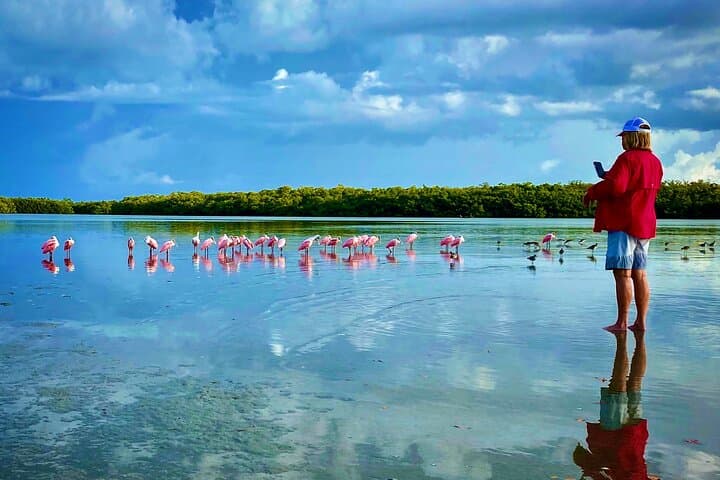
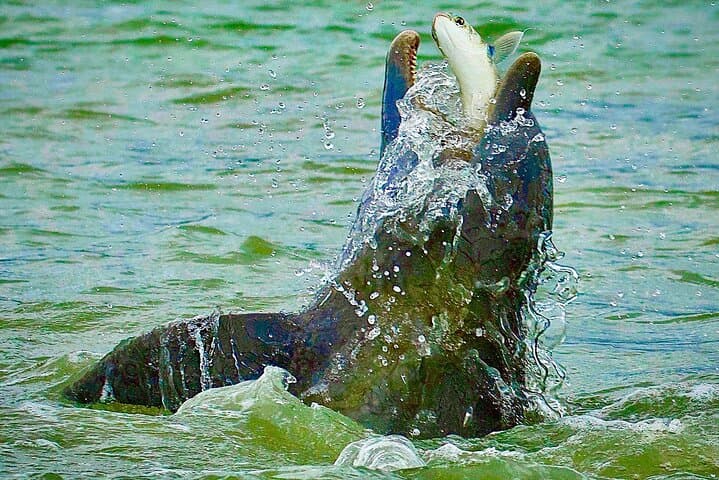
The trip balances wildlife watching with hands-on natural history. Your captain points out nesting shorebirds, seagrass beds that feed juvenile fish, and the mangrove roots that act like a nursery and a nursery rhyme, pulling nutrients from the tide. Expect to encounter playful bottlenose dolphins, wading birds on low-tide flats, and the patchwork of colors from fiddler crabs and oyster shells along the waterline.
Practicalities matter here: meet at Goodland Boat Park (Palm Point Drive) 15 minutes before departure. The tour covers three hours on relatively calm, shallow water but brings sun protection and motion-sickness remedies—tides can make the ride choppy near open passes. The operator supplies bottled water and a captain/guide certified as a Florida naturalist; private-tour status means flexibility for photo stops and beach combing.
Footwear should be easy to rinse and quick-dry; bring a dry bag for cameras and a small binocular for birds. Morning departures are best for light and wildlife activity; late afternoon offers warm, low-angle light for Cape Romano shots. Respect wildlife distance—photography is best with a long lens, not a louder engine.
For travelers seeking a compact, interpretive taste of Southwest Florida’s coastal ecology, this tour is a direct line to dolphins, shorebirds, shelling and the slow-motion drama of mangrove country—wildlife that moves on its own schedule and a coast that keeps reminding you who’s really in charge.
moderate.
3 hours.
Moderate—able to board a small boat, stand and step onto a low beach; some walking on uneven, shell-strewn sand possible.
The tour is three hours; meet at Goodland Boat Park on Palm Point Drive by the flagpole 15 minutes before departure.
Dolphins are commonly seen—captains know local hotspots—but wildlife sightings can’t be guaranteed.
Yes—infants and small children can ride in strollers or on laps; crews recommend life jackets for all ages and close supervision during beach stops.
There are restrooms at the Goodland launch area before departure; boats typically do not have on-board restrooms for three-hour tours.
Service animals are allowed; non-service pets should be checked with the operator in advance since space is limited on a small boat.
Full refunds are available if you cancel at least 24 hours before the scheduled departure time; cancellations within 24 hours are non-refundable.
The Ten Thousand Islands area was traversed and settled by the Calusa people; later it supported small fishing communities and shelling trades that shaped local culture.
Mangrove and seagrass habitats here are critical nurseries; operators follow no-approach guidelines and shore access rules to minimize disturbance and erosion.
Everwater Charters & Tours operates guided outdoor trips and adventures with an emphasis on safety, stewardship, and memorable experiences.
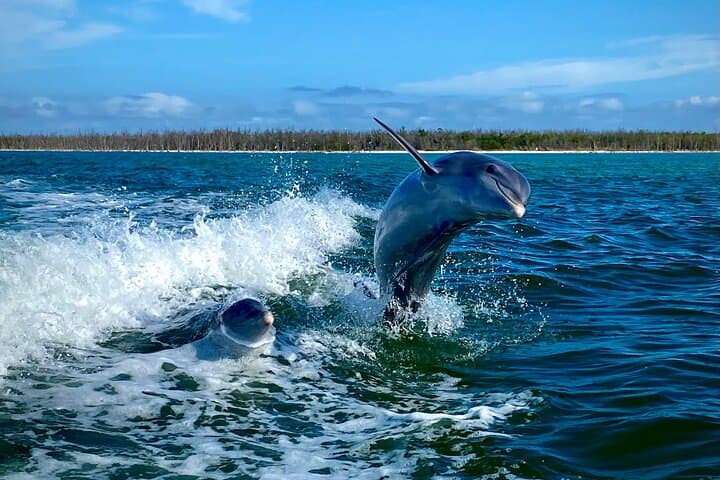
The boat slips out of Goodland Boat Park as the sky lightens; mangrove trunks throw long, black fingers over the channel and the salt air thickens around you. The captain, a Florida master naturalist, counts the birds by habit and scans the water with the patience of someone waiting for a story to reveal itself. Minutes later a dorsal fin arcs—dolphins cutting the surface like punctuation—then a pod lines up to ride the bow wake, daring you to keep up.
The boat slips out of Goodland Boat Park as the sky lightens; mangrove trunks throw long, black fingers over the channel and the salt air thickens around you. The captain, a Florida master naturalist, counts the birds by habit and scans the water with the patience of someone waiting for a story to reveal itself. Minutes later a dorsal fin arcs—dolphins cutting the surface like punctuation—then a pod lines up to ride the bow wake, daring you to keep up.
This three-hour private eco tour threads through the northern edge of the Ten Thousand Islands, a fractured coast of mangrove islets, tidal channels and shallow seagrass flats carved from Pleistocene carbonate and shaped by tides. The landscape you move through is recent on a geological scale—sandbars and oyster ridges accrete and disappear with seasons—but its human history runs deep: Calusa people navigated these same channels for millennia, and later settlers learned to read tides and wind as survival skills.
Cape Romano’s Dome Houses punctuate the route: modern ruins weathered by hurricanes, salt and time that now serve as dramatic photo punctuation and a reminder of the sea’s persistence. Along quieter shorelines the guide will beach the skiff so you can search for rare shells—whelk and angelwing fragments that tell another story of ocean currents and storms.
The trip balances wildlife watching with hands-on natural history. Your captain points out nesting shorebirds, seagrass beds that feed juvenile fish, and the mangrove roots that act like a nursery and a nursery rhyme, pulling nutrients from the tide. Expect to encounter playful bottlenose dolphins, wading birds on low-tide flats, and the patchwork of colors from fiddler crabs and oyster shells along the waterline.
Practicalities matter here: meet at Goodland Boat Park (Palm Point Drive) 15 minutes before departure. The tour covers three hours on relatively calm, shallow water but brings sun protection and motion-sickness remedies—tides can make the ride choppy near open passes. The operator supplies bottled water and a captain/guide certified as a Florida naturalist; private-tour status means flexibility for photo stops and beach combing.
Footwear should be easy to rinse and quick-dry; bring a dry bag for cameras and a small binocular for birds. Morning departures are best for light and wildlife activity; late afternoon offers warm, low-angle light for Cape Romano shots. Respect wildlife distance—photography is best with a long lens, not a louder engine.
For travelers seeking a compact, interpretive taste of Southwest Florida’s coastal ecology, this tour is a direct line to dolphins, shorebirds, shelling and the slow-motion drama of mangrove country—wildlife that moves on its own schedule and a coast that keeps reminding you who’s really in charge.