THE ADVENTURE COLLECTIVE® · Independent discovery and booking for outdoor travel

A 22-day private loop around Sri Lanka that stitches ancient capitals, misty highlands, elephant safaris and coastal beaches into one coherent trip. Expect cultural sites, hikes in the highlands, and guided wildlife viewing with a local chauffeur-guide.
A 22-day private loop around Sri Lanka that stitches ancient capitals, misty highlands, elephant safaris and coastal beaches into one coherent trip. Expect cultural sites, hikes in the highlands, and guided wildlife viewing with a local chauffeur-guide.
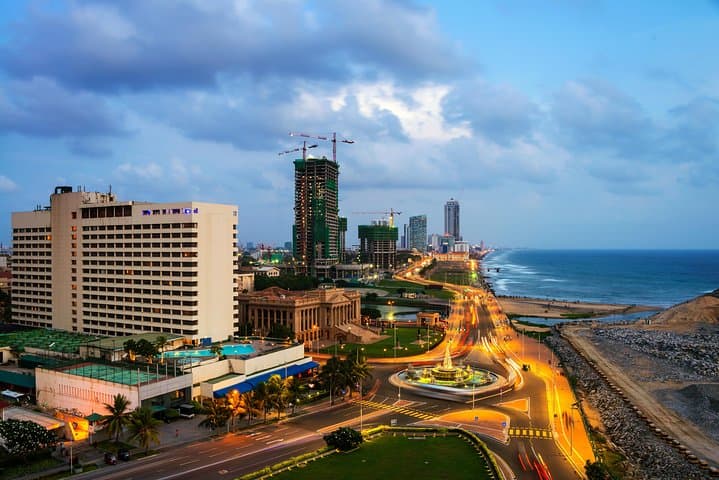
The first time the group vehicle slides out of Colombo’s humid traffic into the open, the island inhales and changes pace. Coconut palms lean over the road like weathered oars, tea terraces unfurl as the air cools, and the rumble of a distant train threads the hills. Across 22 days this private tour moves like a careful reader through Sri Lanka’s chapters—coastal beaches, ancient cities, cloud forests and tea estates—each stop written in stone, water, and leaf.
Verified experiences and guided adventures in the surrounding area.
Operated by Lakpura LLC · Colombo, Western Province
The first time the group vehicle slides out of Colombo’s humid traffic into the open, the island inhales and changes pace. Coconut palms lean over the road like weathered oars, tea terraces unfurl as the air cools, and the rumble of a distant train threads the hills. Across 22 days this private tour moves like a careful reader through Sri Lanka’s chapters—coastal beaches, ancient cities, cloud forests and tea estates—each stop written in stone, water, and leaf.
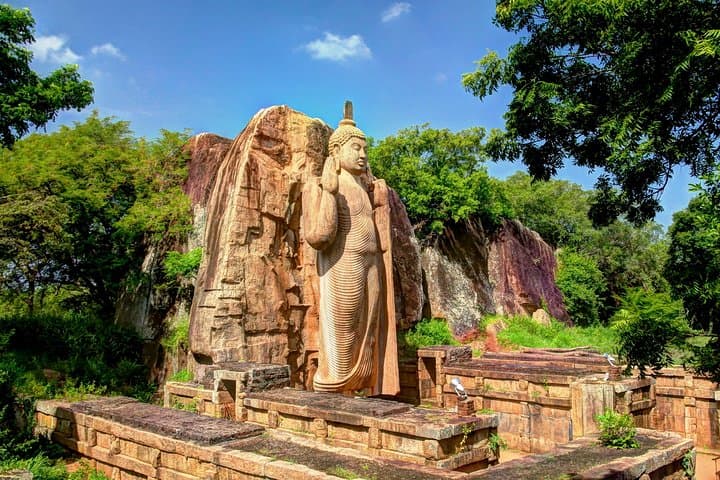
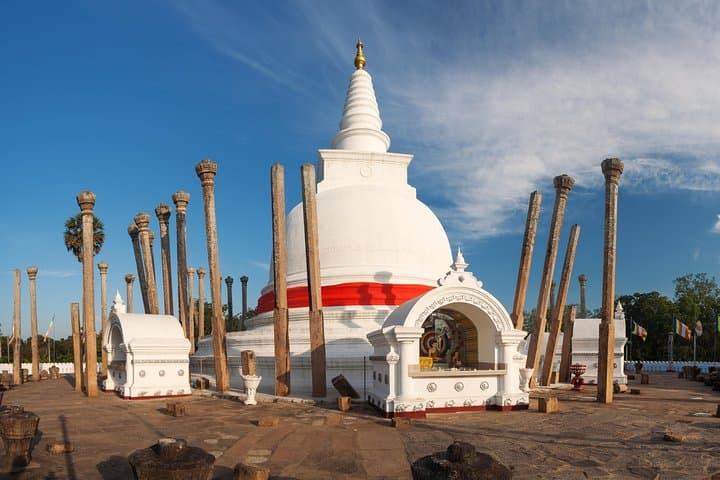
Start in Negombo where fishing nets sketch the shoreline and the wreck of a half-buried ship hosts a riot of reef fish. The itinerary then pushes inland to Anuradhapura and Sigiriya: Anuradhapura’s brick monastic mounds recall a city that governed irrigation and Buddhist scholarship for a thousand years; Sigiriya’s lion-clawed entrance and terraced gardens reveal 5th-century hydraulic ingenuity atop a sheer volcanic plug.
Eastward, Kandy’s Temple of the Tooth and the Peradeniya Botanical Gardens trace the island’s royal and colonial layers. The central highlands—Nuwara Eliya, Horton Plains and Ella—are remnants of Tertiary upthrust and erosion, where montane grasslands and cloud forests sit above 1,800 m and the air tastes of peat and tea. The hike to Ella Rock is a 3‑hour, roughly 6 km roundtrip walk with 200–300 m of climbing; the payoff is a panoramic slice of the Badulla valley and looping rail lines. In the south, Udawalawe and Minneriya parks stage elephant gatherings; Sinharaja’s rainforest keeps a darker, denser world of endemic birds and amphibians.
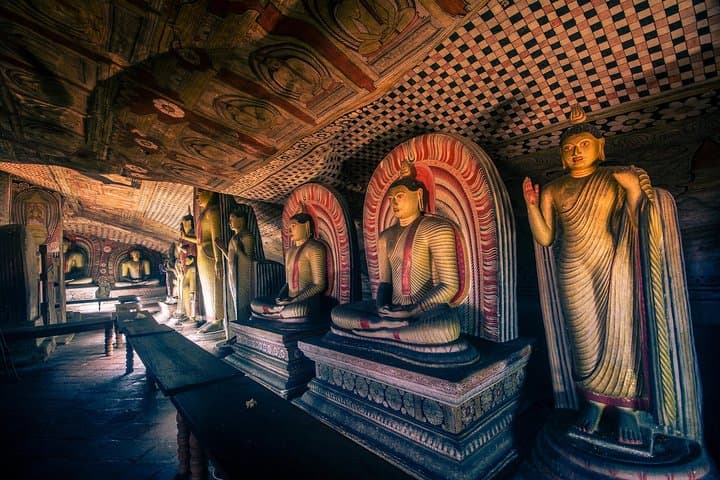
Culturally, the trip is stitched together by rituals and regional crafts: spice gardens in Matale, Kandyan dance performances, and cinnamon harvesters in the Madu River backwaters offer tactile connections to daily life. Geology and hydrology matter here—ancient reservoirs and cisterns are not decorations but the backbone of agrarian civilization.
Practical guidance: this is a travel-heavy itinerary with many short drives—expect several 2–5 hour transfers and a few full-day drives. Pack layered clothing for highland mornings, good hiking shoes for uneven jungle and rock trails, and a light rain shell year-round. Carry local currency for entrances and small purchases; admissions are often not included. For wildlife safaris, bring binoculars, a long lens if you photograph, and keep noise low—animals are both shy and opportunistic.
Timing matters: the trip covers multiple climate zones, so the best windows are December–March for west and south coasts and highlands, and May–October for the northeast and elephant aggregations. Book this as a private tour to control pace; the chauffeur-guide included can adapt visits to light, weather, and wildlife behavior, turning a complex route into a single coherent journey.
moderate.
22 days.
Suitable for travelers in reasonable health who can manage several half-day hikes and multiple day-to-day transfers; not strenuous but requires mobility for temple steps and uneven trails.
No; entrance tickets for museums, monuments and parks are typically not included—carry local currency to pay on arrival.
For the most balanced experience December–March favors the west/south coast and highlands; May–October increases chances to see elephant gatherings in the north-central parks.
The tour is mostly low-impact sightseeing with a few moderate hikes (Ella Rock, Horton Plains). Good mobility for stairs and uneven paths is recommended.
Yes—private vehicle transport and flexible pacing can accommodate children, but temple etiquette and some walks may be challenging for very young kids.
Most nationalities require an ETA prior to arrival—check Sri Lanka Immigration for current visa and ETA rules before travel.
Udawalawe and Minneriya are known for Sri Lankan elephants, waterbirds and reptiles; sightings can’t be guaranteed but guides increase your chances.
Sri Lanka’s cultural triangle (Anuradhapura, Polonnaruwa, Sigiriya) preserves urban planning and hydraulic systems from kingdoms between the 4th century BCE and the medieval period.
Sinharaja and coastal turtle nesting beaches are ecologically sensitive—follow guide instructions, avoid flash photography at nesting sites and support local conservation fees when offered.
Lakpura LLC operates guided outdoor trips and adventures with an emphasis on safety, stewardship, and memorable experiences.
The first time the group vehicle slides out of Colombo’s humid traffic into the open, the island inhales and changes pace. Coconut palms lean over the road like weathered oars, tea terraces unfurl as the air cools, and the rumble of a distant train threads the hills. Across 22 days this private tour moves like a careful reader through Sri Lanka’s chapters—coastal beaches, ancient cities, cloud forests and tea estates—each stop written in stone, water, and leaf.
The first time the group vehicle slides out of Colombo’s humid traffic into the open, the island inhales and changes pace. Coconut palms lean over the road like weathered oars, tea terraces unfurl as the air cools, and the rumble of a distant train threads the hills. Across 22 days this private tour moves like a careful reader through Sri Lanka’s chapters—coastal beaches, ancient cities, cloud forests and tea estates—each stop written in stone, water, and leaf.
Start in Negombo where fishing nets sketch the shoreline and the wreck of a half-buried ship hosts a riot of reef fish. The itinerary then pushes inland to Anuradhapura and Sigiriya: Anuradhapura’s brick monastic mounds recall a city that governed irrigation and Buddhist scholarship for a thousand years; Sigiriya’s lion-clawed entrance and terraced gardens reveal 5th-century hydraulic ingenuity atop a sheer volcanic plug.
Eastward, Kandy’s Temple of the Tooth and the Peradeniya Botanical Gardens trace the island’s royal and colonial layers. The central highlands—Nuwara Eliya, Horton Plains and Ella—are remnants of Tertiary upthrust and erosion, where montane grasslands and cloud forests sit above 1,800 m and the air tastes of peat and tea. The hike to Ella Rock is a 3‑hour, roughly 6 km roundtrip walk with 200–300 m of climbing; the payoff is a panoramic slice of the Badulla valley and looping rail lines. In the south, Udawalawe and Minneriya parks stage elephant gatherings; Sinharaja’s rainforest keeps a darker, denser world of endemic birds and amphibians.
Culturally, the trip is stitched together by rituals and regional crafts: spice gardens in Matale, Kandyan dance performances, and cinnamon harvesters in the Madu River backwaters offer tactile connections to daily life. Geology and hydrology matter here—ancient reservoirs and cisterns are not decorations but the backbone of agrarian civilization.
Practical guidance: this is a travel-heavy itinerary with many short drives—expect several 2–5 hour transfers and a few full-day drives. Pack layered clothing for highland mornings, good hiking shoes for uneven jungle and rock trails, and a light rain shell year-round. Carry local currency for entrances and small purchases; admissions are often not included. For wildlife safaris, bring binoculars, a long lens if you photograph, and keep noise low—animals are both shy and opportunistic.
Timing matters: the trip covers multiple climate zones, so the best windows are December–March for west and south coasts and highlands, and May–October for the northeast and elephant aggregations. Book this as a private tour to control pace; the chauffeur-guide included can adapt visits to light, weather, and wildlife behavior, turning a complex route into a single coherent journey.