THE ADVENTURE COLLECTIVE® · Independent discovery and booking for outdoor travel

Walk among towering Corinthian columns and hear centuries of history via a self‑paced audio guide. This timed-entry visit to the Temple of Olympian Zeus pairs myth and masonry with practical tips for a focused 1–3 hour exploration.
Walk among towering Corinthian columns and hear centuries of history via a self‑paced audio guide. This timed-entry visit to the Temple of Olympian Zeus pairs myth and masonry with practical tips for a focused 1–3 hour exploration.
You step off a busy Athenian avenue and the city opens into a field of stone: Corinthian columns tower above, their fluted shafts catching light like vertical cliffs. Wind from the nearby Ilissos brushes dust and the faint echo of traffic, but inside the archaeological site time feels thicker — older decisions made in marble still shaping the air.
Verified experiences and guided adventures in the surrounding area.
Operated by Trip Knox Ltd · Athens, Attica
You step off a busy Athenian avenue and the city opens into a field of stone: Corinthian columns tower above, their fluted shafts catching light like vertical cliffs. Wind from the nearby Ilissos brushes dust and the faint echo of traffic, but inside the archaeological site time feels thicker — older decisions made in marble still shaping the air.
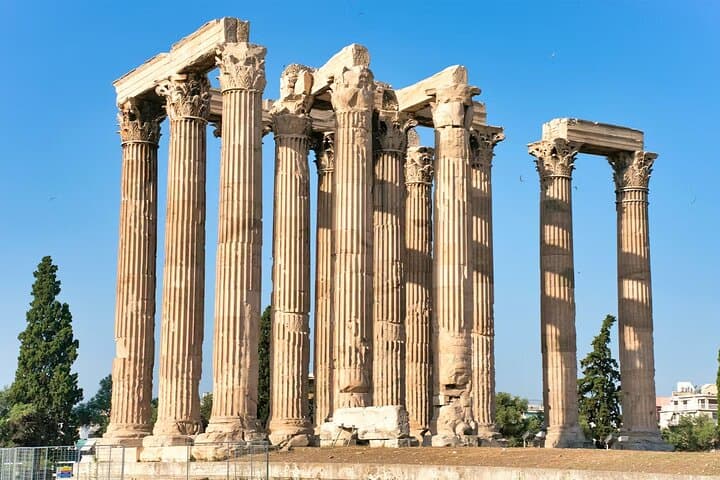
Construction began in the 6th century BCE and staggered across centuries until Emperor Hadrian finished the project in 131–132 CE. Once a colonnade of 104 marble pillars, the Temple of Olympian Zeus survives today in a raw, interrupted silhouette — about 15 columns still stand — giving a clear sense of the original scale and the Roman ambition that completed it. The stone is local Attic/Pentelic marble; weathering and urban pollution have softened details but not the monument’s presence.
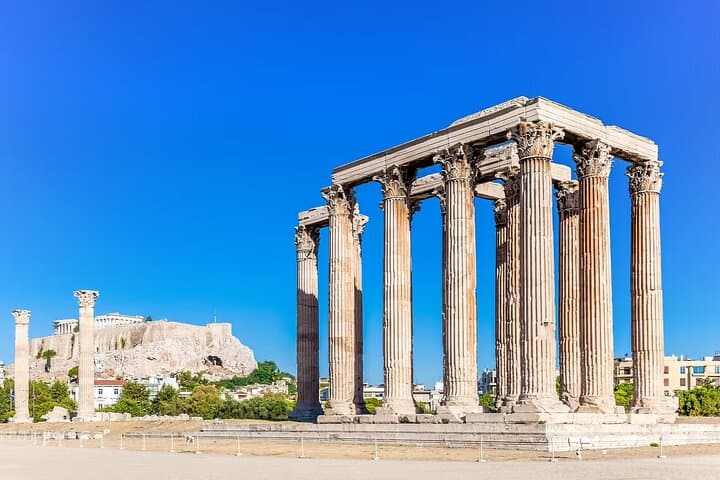
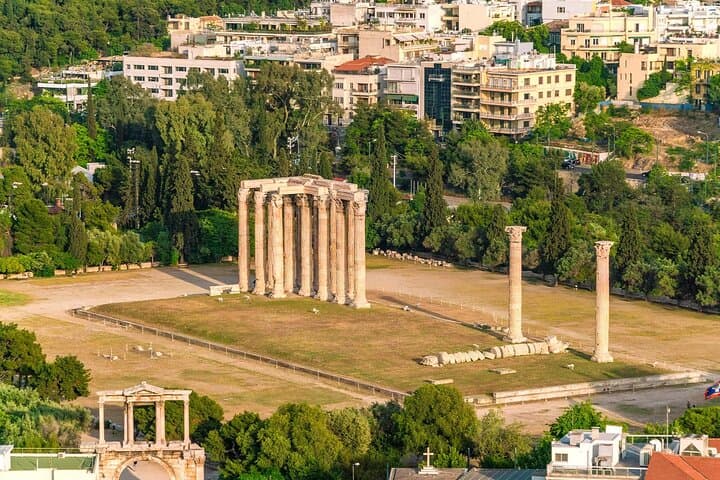
Culture and context sit close: Hadrian’s Arch is a short walk away, the National Garden provides shade, and the Acropolis hill looms to the northwest. The included audio guide pairs myth and construction history — Zeus’ cult, the temple’s political symbolism, and the era’s architectural choices — letting you pace those stories with the route your feet choose.
Practicalities matter here: timed-entry tickets and an audio guide make 60–180 minutes ideal for a full visit. Expect uneven footing, open exposure to sun, and prime photography in early morning or late afternoon light. Bring water, sturdy shoes, and patience; respect ropes and placards. Move deliberately through the columns — the site rewards both close inspection and a few long, quiet minutes standing beneath that scale.
easy.
1–3 hours.
Suitable for most fitness levels; expect walking on uneven ground and short standing periods.
Plan 60–180 minutes: an hour covers the main ruins and photos; two to three hours lets you linger with the audio guide and nearby sights.
Parts of the site have uneven ground and steps; some paths are compacted and passable but full accessibility is limited — contact site staff for current access details.
Photography for personal use is allowed; tripods and professional setups may be restricted — check onsite rules and respect signage.
The audio guide provides thorough historical and mythological context for independent visitors; guided tours add specialized scholarship but aren’t required.
Initiated in the 6th century BCE and completed by Emperor Hadrian in 131–132 CE, the temple once held 104 Corinthian columns and was among the largest sanctuaries in ancient Greece.
The site faces wear from urban pollution and visitor pressure; stay on designated paths, avoid touching carved surfaces, and follow signage to help preserve the ruins.
Trip Knox Ltd operates guided outdoor trips and adventures with an emphasis on safety, stewardship, and memorable experiences.
You step off a busy Athenian avenue and the city opens into a field of stone: Corinthian columns tower above, their fluted shafts catching light like vertical cliffs. Wind from the nearby Ilissos brushes dust and the faint echo of traffic, but inside the archaeological site time feels thicker — older decisions made in marble still shaping the air.
You step off a busy Athenian avenue and the city opens into a field of stone: Corinthian columns tower above, their fluted shafts catching light like vertical cliffs. Wind from the nearby Ilissos brushes dust and the faint echo of traffic, but inside the archaeological site time feels thicker — older decisions made in marble still shaping the air.
Construction began in the 6th century BCE and staggered across centuries until Emperor Hadrian finished the project in 131–132 CE. Once a colonnade of 104 marble pillars, the Temple of Olympian Zeus survives today in a raw, interrupted silhouette — about 15 columns still stand — giving a clear sense of the original scale and the Roman ambition that completed it. The stone is local Attic/Pentelic marble; weathering and urban pollution have softened details but not the monument’s presence.
Culture and context sit close: Hadrian’s Arch is a short walk away, the National Garden provides shade, and the Acropolis hill looms to the northwest. The included audio guide pairs myth and construction history — Zeus’ cult, the temple’s political symbolism, and the era’s architectural choices — letting you pace those stories with the route your feet choose.
Practicalities matter here: timed-entry tickets and an audio guide make 60–180 minutes ideal for a full visit. Expect uneven footing, open exposure to sun, and prime photography in early morning or late afternoon light. Bring water, sturdy shoes, and patience; respect ropes and placards. Move deliberately through the columns — the site rewards both close inspection and a few long, quiet minutes standing beneath that scale.