THE ADVENTURE COLLECTIVE® · Independent discovery and booking for outdoor travel

Skip the queues and step straight into Ming-era ceremony with an instant QR e-ticket to Beijing’s Temple of Heaven. This fast-entry pass gives you access to the Hall of Prayer, Echo Wall, Circular Mound Altar and surrounding park in a straightforward, walkable visit.
Skip the queues and step straight into Ming-era ceremony with an instant QR e-ticket to Beijing’s Temple of Heaven. This fast-entry pass gives you access to the Hall of Prayer, Echo Wall, Circular Mound Altar and surrounding park in a straightforward, walkable visit.
The first steps through the Temple of Heaven park are a calm negotiation between city noise and centuries-old ritual.
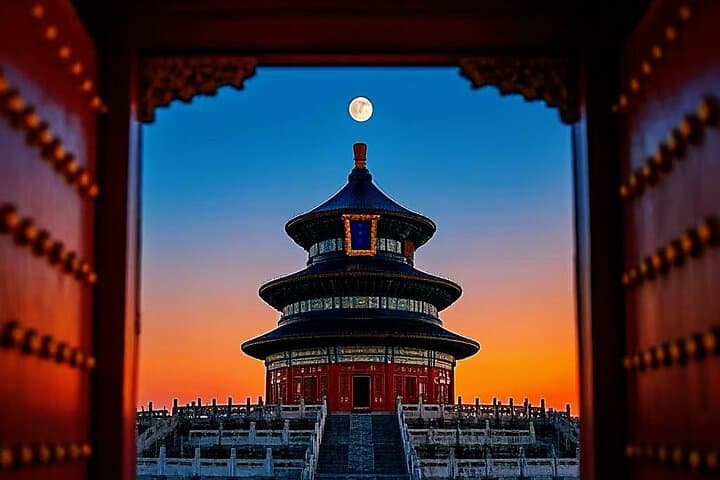
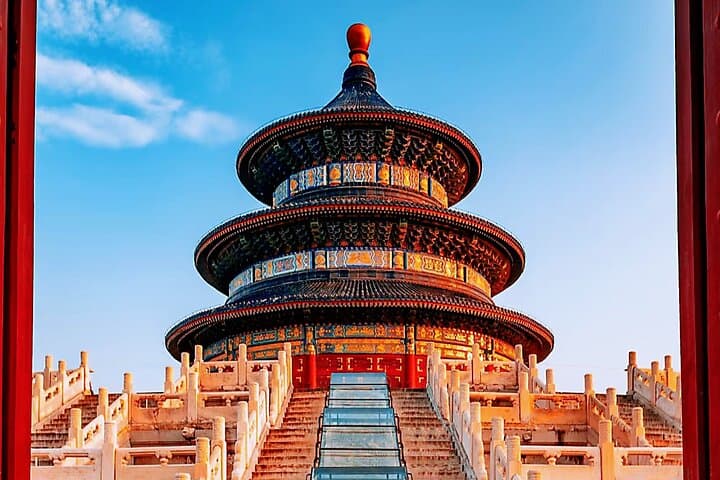
Stone paths open onto the Hall of Prayer for Good Harvests — a circular timber marvel that draws the eye upward — while ancient cypresses murmur as locals practice tai chi on the lawns.
Verified experiences and guided adventures in the surrounding area.
Operated by China Compass · Beijing, Beijing
The first steps through the Temple of Heaven park are a calm negotiation between city noise and centuries-old ritual.
Stone paths open onto the Hall of Prayer for Good Harvests — a circular timber marvel that draws the eye upward — while ancient cypresses murmur as locals practice tai chi on the lawns.
Built between 1406 and 1420 during Emperor Yongle’s reign, the Temple of Heaven was designed as an earthly stage for imperial ceremonies that sought harmony with the cosmos. The complex’s geometry — circular buildings on square bases — encodes Ming cosmology rather than geology, though the flat Beijing plain amplifies the site’s axial lines and vistas.
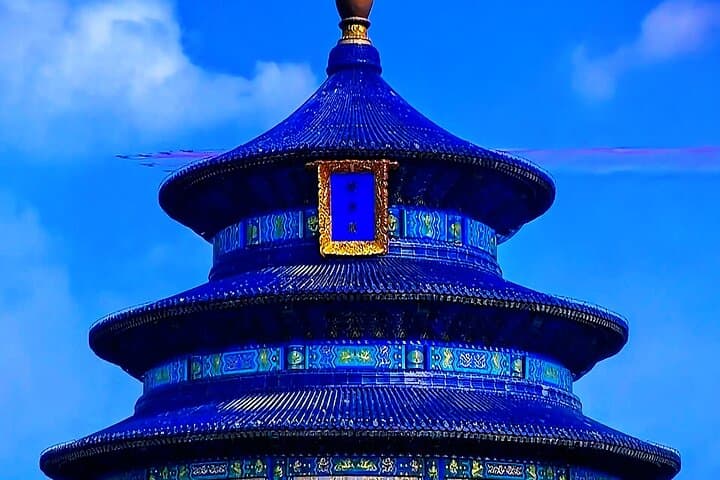
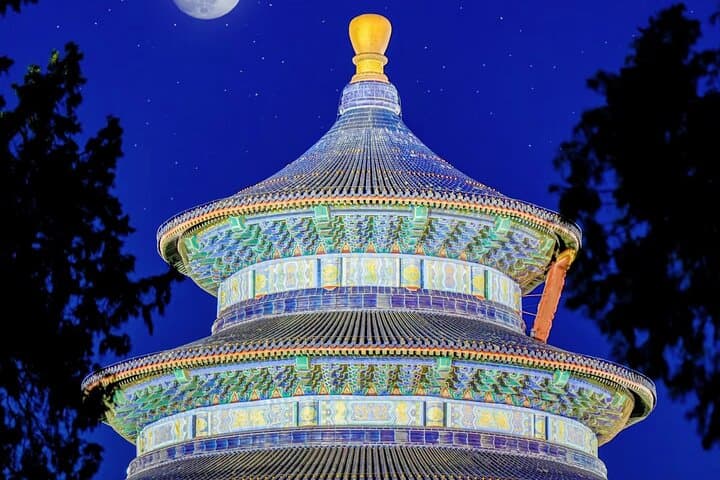
Visitors will feel both architecture and ritual at play: the Hall’s triple eaves, the acoustic sleight of the Echo Wall at the Imperial Vault, and the open stone terraces of the Circular Mound Altar where silence carries.
Practically, an instant QR ticket turns entry into a quick scan and a few focused hours on foot. Expect paved paths, intermittent steps, and large open plazas; crowds peak mid-morning and at sunset. Respect the active rituals and quiet exercise groups — photography is fine but avoid interrupting ceremonies.
Plan for two hours to visit the main halls and wander the park. Bring a reusable water bottle, wear good walking shoes, and carry ID: mobile tickets are accepted but controls may ask for identification. The Temple of Heaven rewards slow observation more than speed — let the place push you into a quieter rhythm.
easy.
2 hours.
Light walking on paved surfaces; suitable for most fitness levels
No—this product provides an instant scannable QR code that is accepted at entry; screenshot it as a backup.
Yes—major pathways and key attractions are wheelchair accessible, though some historic terraces have steps.
Allow about two hours to see the Hall of Prayer, Imperial Vault, the Circular Mound Altar and to stroll the park.
No—this is entry-only access; guided tours are available separately if you want detailed historical interpretation.
Constructed between 1406–1420 under Emperor Yongle, the Temple of Heaven was the imperial altar for ceremonies to ensure good harvests and cosmic harmony.
As a UNESCO World Heritage Site, the complex is actively conserved; visitors should stay on paths, avoid touching painted woodwork, and not feed wildlife.
China Compass operates guided outdoor trips and adventures with an emphasis on safety, stewardship, and memorable experiences.
The first steps through the Temple of Heaven park are a calm negotiation between city noise and centuries-old ritual.
Stone paths open onto the Hall of Prayer for Good Harvests — a circular timber marvel that draws the eye upward — while ancient cypresses murmur as locals practice tai chi on the lawns.
The first steps through the Temple of Heaven park are a calm negotiation between city noise and centuries-old ritual.
Stone paths open onto the Hall of Prayer for Good Harvests — a circular timber marvel that draws the eye upward — while ancient cypresses murmur as locals practice tai chi on the lawns.
Built between 1406 and 1420 during Emperor Yongle’s reign, the Temple of Heaven was designed as an earthly stage for imperial ceremonies that sought harmony with the cosmos. The complex’s geometry — circular buildings on square bases — encodes Ming cosmology rather than geology, though the flat Beijing plain amplifies the site’s axial lines and vistas.
Visitors will feel both architecture and ritual at play: the Hall’s triple eaves, the acoustic sleight of the Echo Wall at the Imperial Vault, and the open stone terraces of the Circular Mound Altar where silence carries.
Practically, an instant QR ticket turns entry into a quick scan and a few focused hours on foot. Expect paved paths, intermittent steps, and large open plazas; crowds peak mid-morning and at sunset. Respect the active rituals and quiet exercise groups — photography is fine but avoid interrupting ceremonies.
Plan for two hours to visit the main halls and wander the park. Bring a reusable water bottle, wear good walking shoes, and carry ID: mobile tickets are accepted but controls may ask for identification. The Temple of Heaven rewards slow observation more than speed — let the place push you into a quieter rhythm.