THE ADVENTURE COLLECTIVE® · Independent discovery and booking for outdoor travel

A day-long, demanding hike from Ushuaia through Fuegian forest and peat to Laguna de los Témpanos and the Vinciguerra Glacier. Expect steep climbs, close-up ice caves, and striking timberline views—guided and door-to-door in about seven hours.
A day-long, demanding hike from Ushuaia through Fuegian forest and peat to Laguna de los Témpanos and the Vinciguerra Glacier. Expect steep climbs, close-up ice caves, and striking timberline views—guided and door-to-door in about seven hours.
The van slips away from Ushuaia before dawn, tires crunching on service roads as the city’s pastel roofs shrink behind you. In under 20 minutes you’re dropped at the mouth of Valle de Andorra—7 km from town—and the air acquires the clean, bitter edge that belongs to high places. The trail starts with a steep, relentless pitch through dense Fuegian forest: lenga trees crowd the path, moss strings from the branches, and the undergrowth drains slowly into peat that smells faintly of iron and earth.
Verified experiences and guided adventures in the surrounding area.
Operated by Latitud Ushuaia Travel · Ushuaia, Tierra del Fuego
The van slips away from Ushuaia before dawn, tires crunching on service roads as the city’s pastel roofs shrink behind you. In under 20 minutes you’re dropped at the mouth of Valle de Andorra—7 km from town—and the air acquires the clean, bitter edge that belongs to high places. The trail starts with a steep, relentless pitch through dense Fuegian forest: lenga trees crowd the path, moss strings from the branches, and the undergrowth drains slowly into peat that smells faintly of iron and earth.
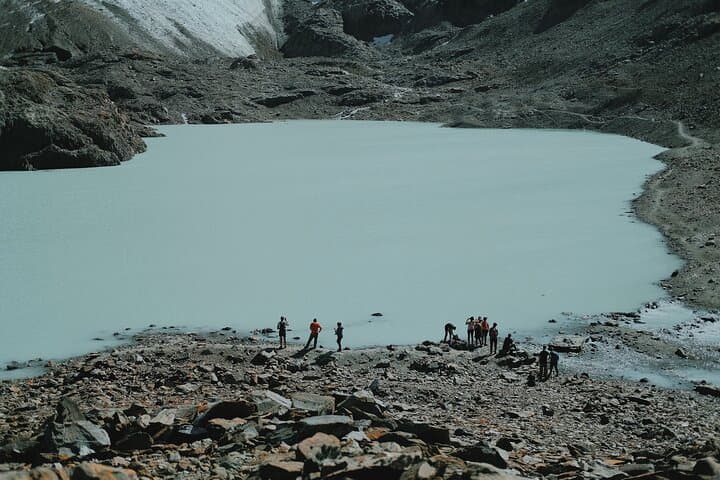
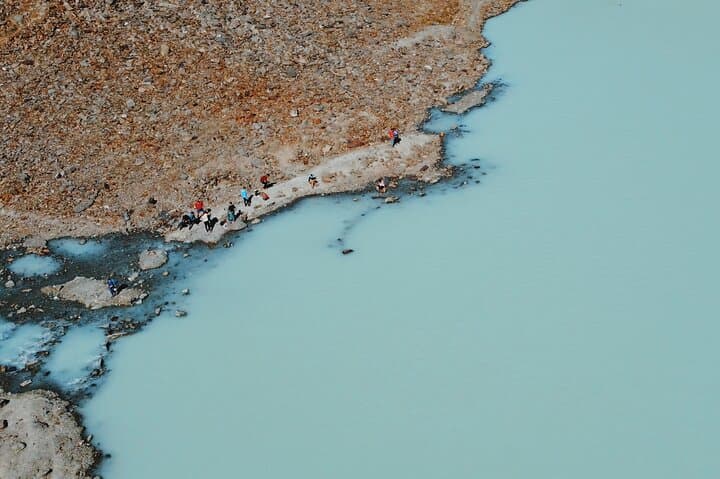
Halfway up the slope the forest gives ground. The trees thin, peatlands spread like a living carpet, and the view opens to a basin where a dark mirror of water waits. Laguna de los Témpanos sits at timberline, ringed by boulder and moraine; beyond it the white face of Vinciguerra Glacier rises—no distant mountain photograph, but an immediate blue ice wall with crevasses and the cave mouths that give the place its reputation.
This is Patagonia’s young geology on display: glaciers born in the Patagonian Ice Field carving valleys, depositing moraines, and collecting the acidic sphagnum peat that characterizes Tierra del Fuego. The valley has human history, too—Yámana and Selk’nam peoples pushed through these landscapes long before European explorers arrived, and the introduction of non-native beavers in the 1940s has since altered riparian corridors you’ll cross.
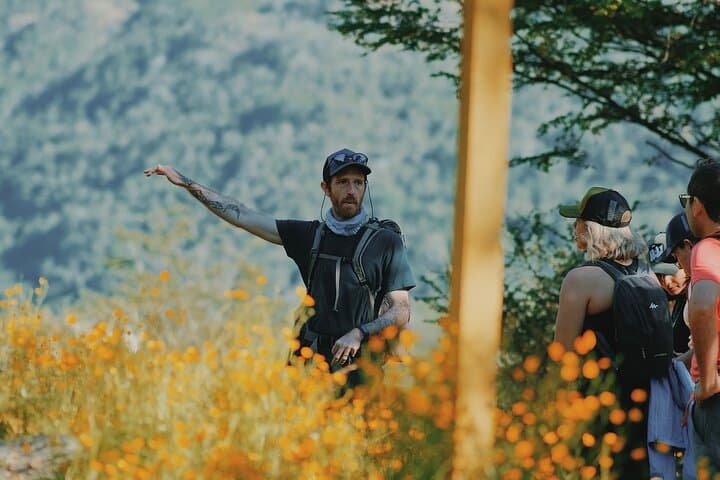
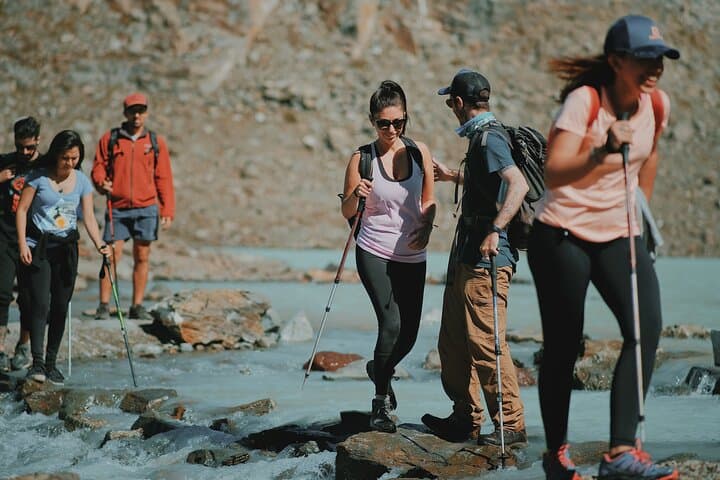
Your guide brings context and safety. Expect to eat a box lunch on the lagoon’s shore and to be close enough to touch the ice if conditions allow. The route is steep and sometimes muddy, with rock and compacted snow depending on season. Trekking poles are provided; crampons are not part of the standard tour.
Practical details: the full outing is about seven hours door-to-door. Plan for roughly 10–12 km of walking with approximately 500–700 m of elevation gain—those figures depend on the lines chosen and detours to viewpoints. Wear waterproof hiking boots with good ankle support, layered synthetic clothing, and a windproof outer shell. Hydrate before you go—the peat can mask water sources—and bring sunscreen and sunglasses; high reflections off ice catch everyone by surprise.
Timing matters: morning pickups beat afternoon weather shifts, and guides may alter plans if ice caves are unstable. Wildlife sightings—introduced beavers, Andean foxes, and forest birds—reward patient eyes near waterways.
For hikers who want raw, uncompromising terrain and the tactile drama of an accessible glacier, the Tempanos Lagoon hike delivers. It’s physically demanding, regionally instructive, and ends with the peculiar calm of being inches from ancient ice in one of the world’s southernmost wild places.
challenging.
6–8 hours.
Hikers should have a high level of cardiovascular fitness and experience with sustained steep ascents and uneven terrain
This route is demanding—steep sections, mud, and up to 500–700 m elevation gain—so prior sustained day-hike experience is recommended.
Guides take you close to visible ice caves; entrance depends on ice stability and safety assessments on the day—expect observation rather than technical entry.
Yes—spotting introduced South American beavers and local foxes along waterways is common; birdlife includes native forest species.
No technical gear is required for the standard tour; trekking poles are provided. Guides will advise if conditions demand special equipment.
Operator picks up from most central hotels and accommodations—confirm exact pickup time and address the day before the tour.
This tour is not recommended for pregnant travelers or anyone with serious spinal, heart, or cardiovascular conditions due to the physical strain.
The valley sits on landscapes long traversed by Yámana and Selk’nam peoples; modern impacts include early European exploration and logging, plus introduced species like beavers.
Peatlands are ecologically sensitive and slow to recover—stick to trails, avoid trampling bogs, and follow guides’ instructions to minimize impact.
Latitud Ushuaia Travel operates guided outdoor trips and adventures with an emphasis on safety, stewardship, and memorable experiences.
The van slips away from Ushuaia before dawn, tires crunching on service roads as the city’s pastel roofs shrink behind you. In under 20 minutes you’re dropped at the mouth of Valle de Andorra—7 km from town—and the air acquires the clean, bitter edge that belongs to high places. The trail starts with a steep, relentless pitch through dense Fuegian forest: lenga trees crowd the path, moss strings from the branches, and the undergrowth drains slowly into peat that smells faintly of iron and earth.
The van slips away from Ushuaia before dawn, tires crunching on service roads as the city’s pastel roofs shrink behind you. In under 20 minutes you’re dropped at the mouth of Valle de Andorra—7 km from town—and the air acquires the clean, bitter edge that belongs to high places. The trail starts with a steep, relentless pitch through dense Fuegian forest: lenga trees crowd the path, moss strings from the branches, and the undergrowth drains slowly into peat that smells faintly of iron and earth.
Halfway up the slope the forest gives ground. The trees thin, peatlands spread like a living carpet, and the view opens to a basin where a dark mirror of water waits. Laguna de los Témpanos sits at timberline, ringed by boulder and moraine; beyond it the white face of Vinciguerra Glacier rises—no distant mountain photograph, but an immediate blue ice wall with crevasses and the cave mouths that give the place its reputation.
This is Patagonia’s young geology on display: glaciers born in the Patagonian Ice Field carving valleys, depositing moraines, and collecting the acidic sphagnum peat that characterizes Tierra del Fuego. The valley has human history, too—Yámana and Selk’nam peoples pushed through these landscapes long before European explorers arrived, and the introduction of non-native beavers in the 1940s has since altered riparian corridors you’ll cross.
Your guide brings context and safety. Expect to eat a box lunch on the lagoon’s shore and to be close enough to touch the ice if conditions allow. The route is steep and sometimes muddy, with rock and compacted snow depending on season. Trekking poles are provided; crampons are not part of the standard tour.
Practical details: the full outing is about seven hours door-to-door. Plan for roughly 10–12 km of walking with approximately 500–700 m of elevation gain—those figures depend on the lines chosen and detours to viewpoints. Wear waterproof hiking boots with good ankle support, layered synthetic clothing, and a windproof outer shell. Hydrate before you go—the peat can mask water sources—and bring sunscreen and sunglasses; high reflections off ice catch everyone by surprise.
Timing matters: morning pickups beat afternoon weather shifts, and guides may alter plans if ice caves are unstable. Wildlife sightings—introduced beavers, Andean foxes, and forest birds—reward patient eyes near waterways.
For hikers who want raw, uncompromising terrain and the tactile drama of an accessible glacier, the Tempanos Lagoon hike delivers. It’s physically demanding, regionally instructive, and ends with the peculiar calm of being inches from ancient ice in one of the world’s southernmost wild places.