THE ADVENTURE COLLECTIVE® · Independent discovery and booking for outdoor travel

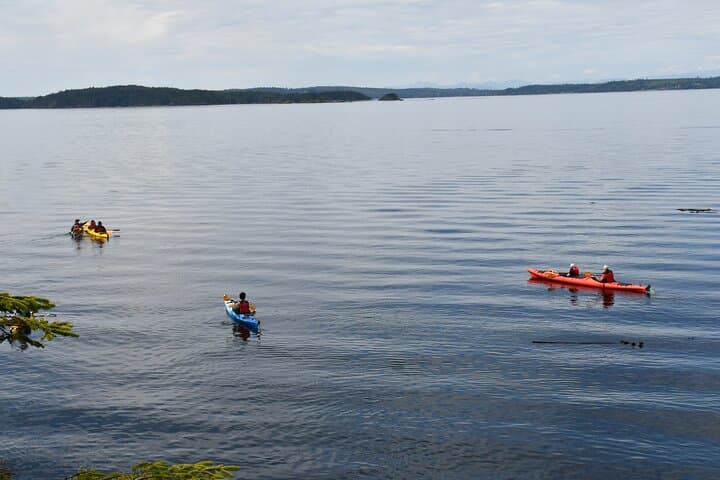
Launch from Telegraph Cove for a guided two-hour kayak that threads the islands and coves of Johnstone Strait. Expect stable double kayaks, expert guides, and strong chances for whale and eagle sightings.
Launch from Telegraph Cove for a guided two-hour kayak that threads the islands and coves of Johnstone Strait. Expect stable double kayaks, expert guides, and strong chances for whale and eagle sightings.
A wind-cooled spray lifts off Johnstone Strait as guides launch twin kayaks from the battered planks of Telegraph Cove’s boardwalk. The harbor hums—fisher skiffs, creaking wharves—and then the Pacific takes the lead: islands slip past, currents test the blade, and the sky opens into channels where orcas and humpbacks have been known to pass.
Verified experiences and guided adventures in the surrounding area.
Operated by North Island Kayak · Telegraph Cove, British Columbia
A wind-cooled spray lifts off Johnstone Strait as guides launch twin kayaks from the battered planks of Telegraph Cove’s boardwalk. The harbor hums—fisher skiffs, creaking wharves—and then the Pacific takes the lead: islands slip past, currents test the blade, and the sky opens into channels where orcas and humpbacks have been known to pass.
This two-hour outing centers on the sheltered coves and small islands that rim northern Vancouver Island. Telegraph Cove began as a turn-of-the-century fishing and cannery outpost and now serves as a gateway to Kwakwakaʼwakw territory and the complex geology of the region—glacially scoured channels, steep rocky islets, and irregular shorelines carved by millennia of ice and tide.
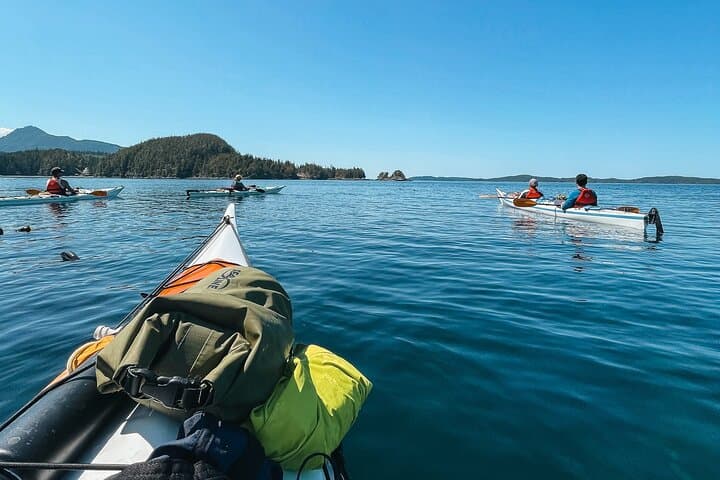
Guides provide stable double kayaks, a full safety briefing, and route choices tuned to tides and weather. Paddling here is as much wildlife watch as workout: bald eagles perch on spruce, seals bob inquisitively, and, with luck and patience, you might glimpse a dorsal fin slicing the strait. Local culture is present in the place names and interpretive chats about coastal First Nations and the small fishing communities that still hold this coast together.
Practicalities: expect 4–6 km of paddling at an easy to moderate pace, exposed to wind and spray. Dress in layers and bring a dry bag, sunscreen, and a camera with a lens hood. Tours run year-round in varying conditions; guides will adjust routes for safety. The trip is ideal for beginners and families who want an accessible taste of marine British Columbia without sacrificing proximity to serious wildlife habitat.
easy.
2 hours.
Suitable for most people with basic mobility and the ability to sit and paddle for up to two hours; not strenuous.
No—this tour is designed for beginners. Guides give a safety briefing and teach basic paddling and re-entry techniques.
Common sightings include seals, bald eagles, and sometimes humpback or killer whales, but wildlife sightings can’t be guaranteed.
Yes—operators monitor conditions and may cancel for wind, heavy rain, or unsafe tidal currents; refunds are typically available if cancelled in advance.
Policies vary; children can join with adults in double kayaks and weight/height information is collected at booking to match appropriate equipment.
Telegraph Cove grew from an early 20th-century fishing and cannery settlement and sits within traditional Kwakwakaʼwakw territory, with local place names and interpretive stories reflecting that heritage.
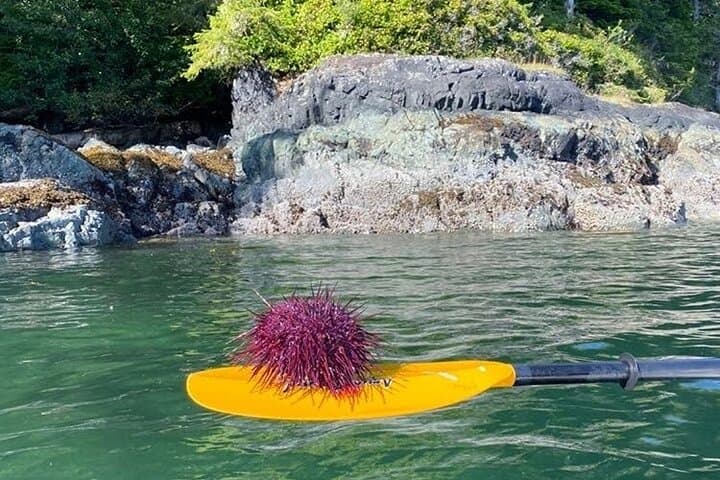
This region is important marine habitat; operators follow strict wildlife-distance rules and practice leave-no-trace to minimize disturbance to whales, seabirds, and intertidal life.
North Island Kayak operates guided outdoor trips and adventures with an emphasis on safety, stewardship, and memorable experiences.
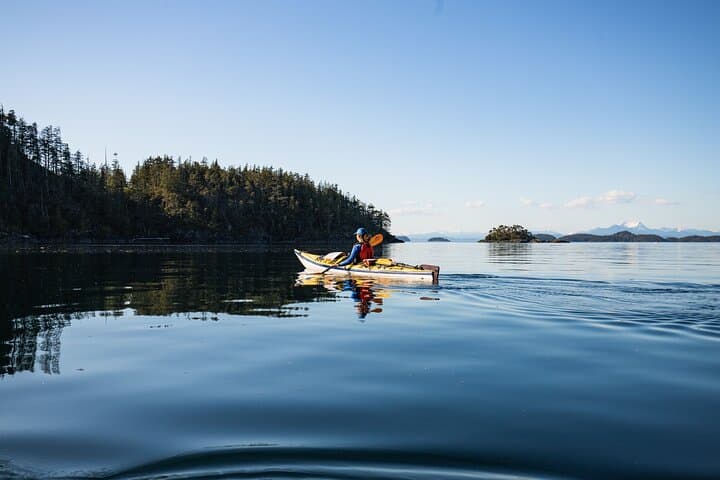
A wind-cooled spray lifts off Johnstone Strait as guides launch twin kayaks from the battered planks of Telegraph Cove’s boardwalk. The harbor hums—fisher skiffs, creaking wharves—and then the Pacific takes the lead: islands slip past, currents test the blade, and the sky opens into channels where orcas and humpbacks have been known to pass.
A wind-cooled spray lifts off Johnstone Strait as guides launch twin kayaks from the battered planks of Telegraph Cove’s boardwalk. The harbor hums—fisher skiffs, creaking wharves—and then the Pacific takes the lead: islands slip past, currents test the blade, and the sky opens into channels where orcas and humpbacks have been known to pass.
This two-hour outing centers on the sheltered coves and small islands that rim northern Vancouver Island. Telegraph Cove began as a turn-of-the-century fishing and cannery outpost and now serves as a gateway to Kwakwakaʼwakw territory and the complex geology of the region—glacially scoured channels, steep rocky islets, and irregular shorelines carved by millennia of ice and tide.
Guides provide stable double kayaks, a full safety briefing, and route choices tuned to tides and weather. Paddling here is as much wildlife watch as workout: bald eagles perch on spruce, seals bob inquisitively, and, with luck and patience, you might glimpse a dorsal fin slicing the strait. Local culture is present in the place names and interpretive chats about coastal First Nations and the small fishing communities that still hold this coast together.
Practicalities: expect 4–6 km of paddling at an easy to moderate pace, exposed to wind and spray. Dress in layers and bring a dry bag, sunscreen, and a camera with a lens hood. Tours run year-round in varying conditions; guides will adjust routes for safety. The trip is ideal for beginners and families who want an accessible taste of marine British Columbia without sacrificing proximity to serious wildlife habitat.