THE ADVENTURE COLLECTIVE® · Independent discovery and booking for outdoor travel

Telaga Waja delivers one of Bali’s longest and most demanding rafting runs—17–18 km of Class III–IV rapids through volcanic canyons and rainforest. Read on for what to expect, safety considerations, and practical gear and timing tips.
Telaga Waja delivers one of Bali’s longest and most demanding rafting runs—17–18 km of Class III–IV rapids through volcanic canyons and rainforest. Read on for what to expect, safety considerations, and practical gear and timing tips.
The boat bumps into the current and the river immediately answers—cold, clear water pushing the raft through a corridor of basalt cliffs and jungle. Telaga Waja opens fast: long runs of Class III–IV rapids demand quick paddling, sharp turns and the sort of teamwork that turns strangers into a crew by the first chute.
Verified experiences and guided adventures in the surrounding area.
Operated by Bali Touristic · Rendang, Bali
The boat bumps into the current and the river immediately answers—cold, clear water pushing the raft through a corridor of basalt cliffs and jungle. Telaga Waja opens fast: long runs of Class III–IV rapids demand quick paddling, sharp turns and the sort of teamwork that turns strangers into a crew by the first chute.
This east-Bali river cuts through volcanic terrain fed by springs and mountain runoff from the slopes of Mount Agung. Historically the valley has supported rice terraces and small villages; today local guides blend that rural culture with decades of rafting know-how. Bamboo footbridges and narrow waterfalls break the river’s cadence, while natural springs keep flows surprisingly clear even in wet months.
Expect a 17–18 km float lasting roughly 2.5–3 hours on the water, with features including a 5-meter natural water slide and a popular 4-meter jump at Bajing Dam. Guides lead every boat, provide safety briefings, and fit full rafting kit; operators usually include lockers, hot showers and lunch at the take-out.
Practical notes: arrive hydrated and rested, wear secure water shoes and quick-dry clothing, and keep valuables in a waterproof bag (many outfits provide one). The route is physically demanding and not recommended for pregnant travelers or those with serious heart or spinal issues. Morning departures are cooler and reduce downstream debris after storms.
On this run the river is alive—it dares you into each rapid but offers clear pools to breathe and watch the canyon’s basalt walls and riparian life slip by.
challenging.
3–4 hours (including transfers and briefing).
Moderate to fit — you should be able to paddle, brace and swim short distances; brief swims may occur in rapids.
No—experienced guides lead every boat and coach paddling technique, but you should be comfortable following instructions and swimming if ejected.
Limits vary by operator; many require children to be a minimum age (often 10–12) and will have weight restrictions—confirm at booking.
Operators monitor river conditions and will cancel or reschedule if flows are unsafe—cancellation policies commonly allow full refunds with 24+ hour notice.
Many tours include pickup from Ubud and nearby areas; confirm pickup point and any surcharge for distant hotels when booking.
The valley has long supported small-scale agriculture and village life; rafting operators often employ local guides who grew up in the river communities.
Operators typically practice leave-no-trace policies and use local waste-management at bases; choose providers who contribute to river clean-up and local livelihoods.
Bali Touristic operates guided outdoor trips and adventures with an emphasis on safety, stewardship, and memorable experiences.

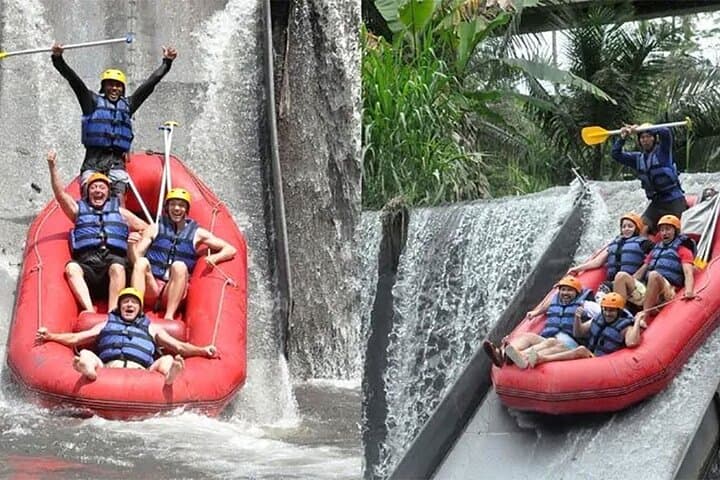


The boat bumps into the current and the river immediately answers—cold, clear water pushing the raft through a corridor of basalt cliffs and jungle. Telaga Waja opens fast: long runs of Class III–IV rapids demand quick paddling, sharp turns and the sort of teamwork that turns strangers into a crew by the first chute.
The boat bumps into the current and the river immediately answers—cold, clear water pushing the raft through a corridor of basalt cliffs and jungle. Telaga Waja opens fast: long runs of Class III–IV rapids demand quick paddling, sharp turns and the sort of teamwork that turns strangers into a crew by the first chute.
This east-Bali river cuts through volcanic terrain fed by springs and mountain runoff from the slopes of Mount Agung. Historically the valley has supported rice terraces and small villages; today local guides blend that rural culture with decades of rafting know-how. Bamboo footbridges and narrow waterfalls break the river’s cadence, while natural springs keep flows surprisingly clear even in wet months.
Expect a 17–18 km float lasting roughly 2.5–3 hours on the water, with features including a 5-meter natural water slide and a popular 4-meter jump at Bajing Dam. Guides lead every boat, provide safety briefings, and fit full rafting kit; operators usually include lockers, hot showers and lunch at the take-out.
Practical notes: arrive hydrated and rested, wear secure water shoes and quick-dry clothing, and keep valuables in a waterproof bag (many outfits provide one). The route is physically demanding and not recommended for pregnant travelers or those with serious heart or spinal issues. Morning departures are cooler and reduce downstream debris after storms.
On this run the river is alive—it dares you into each rapid but offers clear pools to breathe and watch the canyon’s basalt walls and riparian life slip by.