THE ADVENTURE COLLECTIVE® · Independent discovery and booking for outdoor travel

Watch the sun drop behind Canary peaks and then step into one of Europe’s darkest skies at 2,000 m in Teide National Park. This guided evening tour combines dinner, short walks and powerful telescopes for a straightforward stargazing experience.
Watch the sun drop behind Canary peaks and then step into one of Europe’s darkest skies at 2,000 m in Teide National Park. This guided evening tour combines dinner, short walks and powerful telescopes for a straightforward stargazing experience.
You arrive as the road climbs above the clouds and the coastal glare falls away; the air thins, and a horizon of volcanic rock waits. At around 2,000 meters, the sunset in Teide National Park pushes color across hardened lava and basalt ridges, while La Gomera and La Palma silhouette on the far horizon. By nightfall the sky becomes a vault of stars — bright pinpricks and banded milky light visible through powerful telescopes provided on the tour.
Verified experiences and guided adventures in the surrounding area.
Operated by Tenerife Stars · La Orotava, Santa Cruz de Tenerife
You arrive as the road climbs above the clouds and the coastal glare falls away; the air thins, and a horizon of volcanic rock waits. At around 2,000 meters, the sunset in Teide National Park pushes color across hardened lava and basalt ridges, while La Gomera and La Palma silhouette on the far horizon. By nightfall the sky becomes a vault of stars — bright pinpricks and banded milky light visible through powerful telescopes provided on the tour.
Teide is an active volcanic complex whose stratified slopes tell a geological story of eruptions, collapse and island building; the park has UNESCO protection and a long human history from Guanche shepherds to modern astronomy. Tenerife’s strict light-pollution rules and the Starlight Reserve designation preserve viewing conditions, and local culture mixes Canarian cuisine with practical mountain hospitality — expect a three-course dinner and local wine as part of the experience.
Practically, this is an accessible evening tour with short walks, minimal technical challenge, and transport included. Temperatures drop quickly after sunset, and altitude can affect breathing for some visitors — go slow, hydrate, and carry warm layers. Telescopes and a guide will point out constellations, planets and deep-sky objects; bring a camera with a tripod if you want long exposures. Tours typically run about six hours from pickup to return, making this a full-evening outing best booked in clear-sky windows.
Whether you’re chasing astrophotography shots or simply want a wide, dark sky, Teide’s summit-area viewing is a practical, unforgettable way to meet the night.
easy.
6 hours.
Light fitness—able to walk on uneven ground for short stretches and tolerate mild altitude effects.
The viewing sites are around 2,000 meters above sea level, accessed by vehicle with only short guided walks.
Yes—routes are short and gentle, but those with cardiovascular or respiratory issues should consult a doctor before booking.
Teide often sits above low coastal cloud layers, but complete cloud cover at summit elevations can still cancel stargazing; operators monitor conditions and may cancel for poor visibility.
Yes—powerful telescopes and a guide are included to point out constellations, planets and deep-sky objects.
Teide sits on layered volcanic terrain that shaped Tenerife; the area contains cultural traces of the Guanche people and modern scientific stations that study the sky and geology.
The park enforces strict light-pollution rules and protected-access policies; visitors are asked to follow marked paths, minimize noise and take all waste out to protect fragile high-altitude ecosystems.
Tenerife Stars operates guided outdoor trips and adventures with an emphasis on safety, stewardship, and memorable experiences.
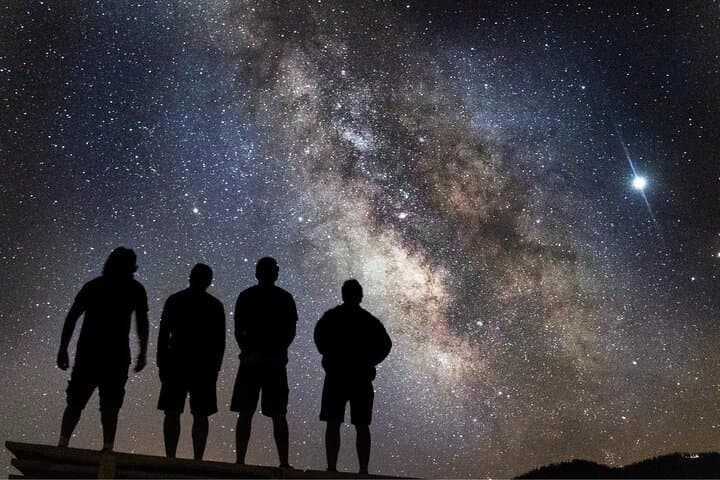
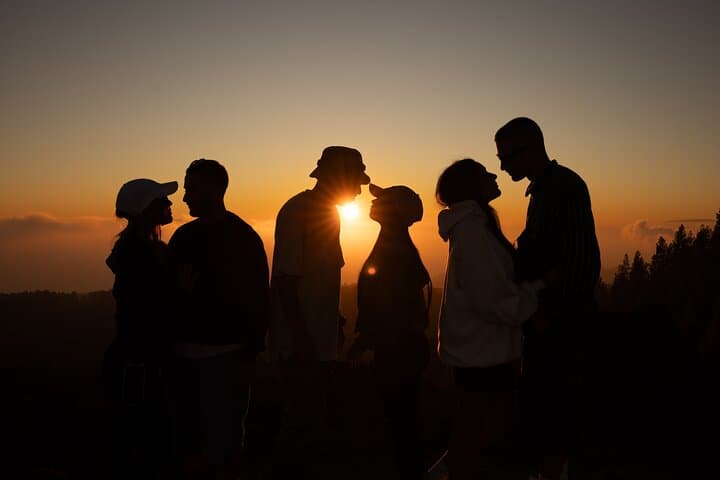
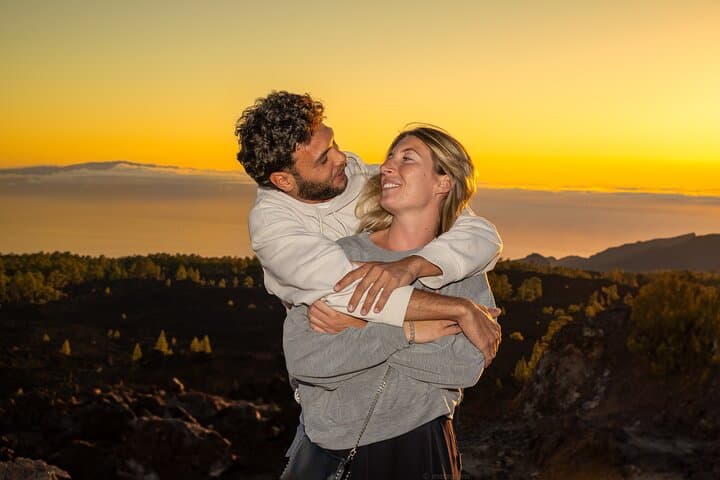
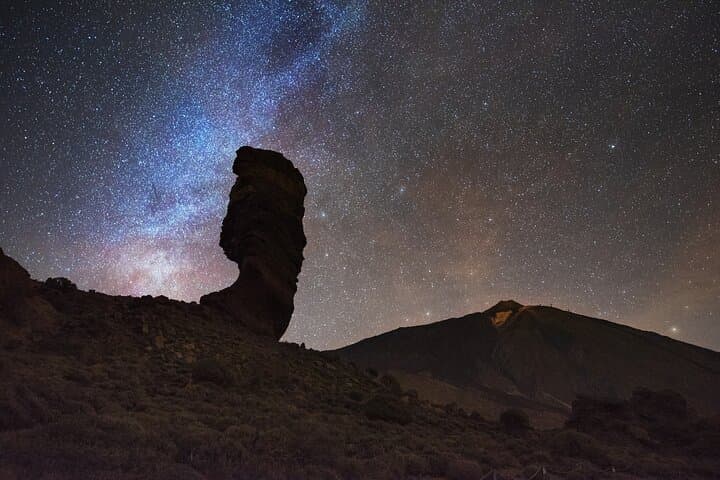
You arrive as the road climbs above the clouds and the coastal glare falls away; the air thins, and a horizon of volcanic rock waits. At around 2,000 meters, the sunset in Teide National Park pushes color across hardened lava and basalt ridges, while La Gomera and La Palma silhouette on the far horizon. By nightfall the sky becomes a vault of stars — bright pinpricks and banded milky light visible through powerful telescopes provided on the tour.
You arrive as the road climbs above the clouds and the coastal glare falls away; the air thins, and a horizon of volcanic rock waits. At around 2,000 meters, the sunset in Teide National Park pushes color across hardened lava and basalt ridges, while La Gomera and La Palma silhouette on the far horizon. By nightfall the sky becomes a vault of stars — bright pinpricks and banded milky light visible through powerful telescopes provided on the tour.
Teide is an active volcanic complex whose stratified slopes tell a geological story of eruptions, collapse and island building; the park has UNESCO protection and a long human history from Guanche shepherds to modern astronomy. Tenerife’s strict light-pollution rules and the Starlight Reserve designation preserve viewing conditions, and local culture mixes Canarian cuisine with practical mountain hospitality — expect a three-course dinner and local wine as part of the experience.
Practically, this is an accessible evening tour with short walks, minimal technical challenge, and transport included. Temperatures drop quickly after sunset, and altitude can affect breathing for some visitors — go slow, hydrate, and carry warm layers. Telescopes and a guide will point out constellations, planets and deep-sky objects; bring a camera with a tripod if you want long exposures. Tours typically run about six hours from pickup to return, making this a full-evening outing best booked in clear-sky windows.
Whether you’re chasing astrophotography shots or simply want a wide, dark sky, Teide’s summit-area viewing is a practical, unforgettable way to meet the night.