THE ADVENTURE COLLECTIVE® · Independent discovery and booking for outdoor travel

Stand on Teide’s volcanic slopes and watch the Milky Way blaze above Tenerife. This guided 80-minute stargazing tour pairs telescopes and astrophotography with local astronomy expertise—ideal for first-time skywatchers and photographers alike.
Stand on Teide’s volcanic slopes and watch the Milky Way blaze above Tenerife. This guided 80-minute stargazing tour pairs telescopes and astrophotography with local astronomy expertise—ideal for first-time skywatchers and photographers alike.
Step out onto moon-cold basalt under a sky so clear the Milky Way seems to ripple. At 2,000–2,400 meters on the flanks of Mount Teide, guides set up telescopes against the volcanic silhouette; constellations cut sharp, planets push color through the darkness, and the air itself feels like it’s holding its breath.
Verified experiences and guided adventures in the surrounding area.
Operated by Discover Experience · La Orotava, Santa Cruz de Tenerife
Step out onto moon-cold basalt under a sky so clear the Milky Way seems to ripple. At 2,000–2,400 meters on the flanks of Mount Teide, guides set up telescopes against the volcanic silhouette; constellations cut sharp, planets push color through the darkness, and the air itself feels like it’s holding its breath.
Teide’s moonscape is the product of millions of years of volcanic activity that built Tenerife from the ocean up. The park sits on Canary Islands geology—pumice, lava flows and hardened ash—shaped further by native Guanche history and centuries of maritime navigation, when sailors used these stars to steer across the Atlantic.
Culturally, stargazing here ties modern astrophotography to local pride in Spain’s designated Starlight Reserve; night is a resource worth preserving. The volcanic cones and rock formations around Roques de García provide dramatic silhouettes during evening briefings and practical windbreaks during telescope time.
Practical guidance: tours are short (about 80 minutes), low-impact and suitable for most fitness levels; expect short walks from the meeting point to observing sites and periods of standing. Dress in layers—temperatures fall quickly after sunset—and bring a headlamp with a red filter to keep night vision. Cameras with long-exposure capability and a tripod will let you capture nebulae and star trails, but follow guide instructions to avoid disturbing equipment or other guests.
Timing matters: choose moonless nights for deep-sky targets; plan transport back to coastal towns as roads can be steep. Above all, leave lights off and voices low—this is a shared encounter with an enormous, slow-moving sky.
easy.
About 80 minutes.
Suitable for most fitness levels; involves short walks and standing periods
The guided observation lasts about 80 minutes including naked-eye orientation and telescope time.
Yes—it's rated physically easy, but children must be accompanied and those with serious heart conditions should consult a doctor.
Tours may be canceled for poor visibility or unsafe road conditions; full refunds are available if canceled at least 24 hours prior or by the operator for bad weather.
Yes—guides often assist with astrophotography and an astrophotographic telescope may be available, but bring your own tripod and camera for best results.
Teide rises from successive volcanic eruptions and holds cultural significance for the native Guanche people; the park is now part of a UNESCO biosphere reserve.
Dark-sky protection is enforced—minimize light use and stay on designated paths to reduce erosion and disturbance to fragile high-altitude ecosystems.
Discover Experience operates guided outdoor trips and adventures with an emphasis on safety, stewardship, and memorable experiences.
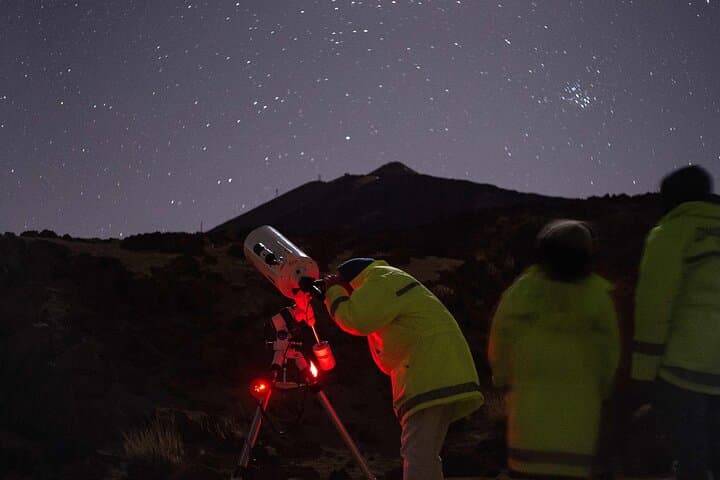
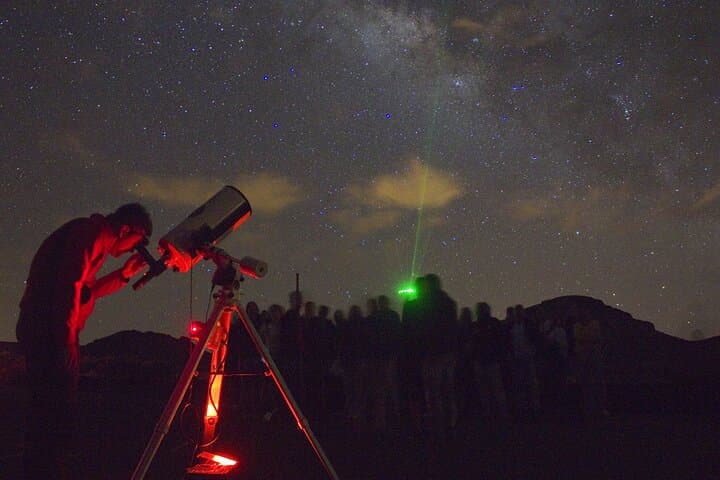
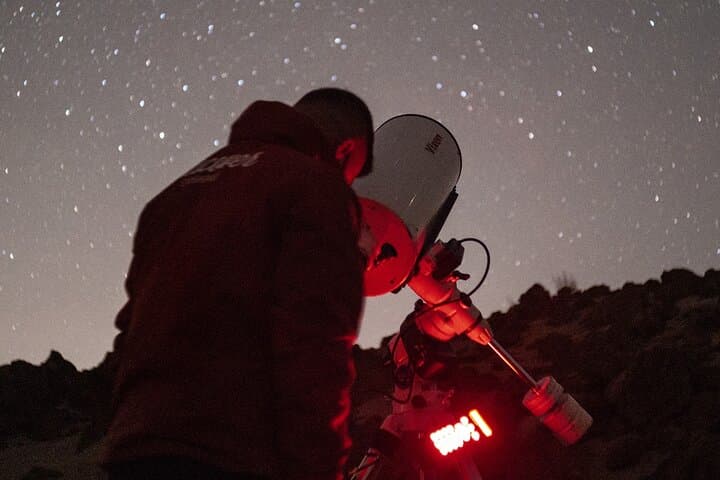
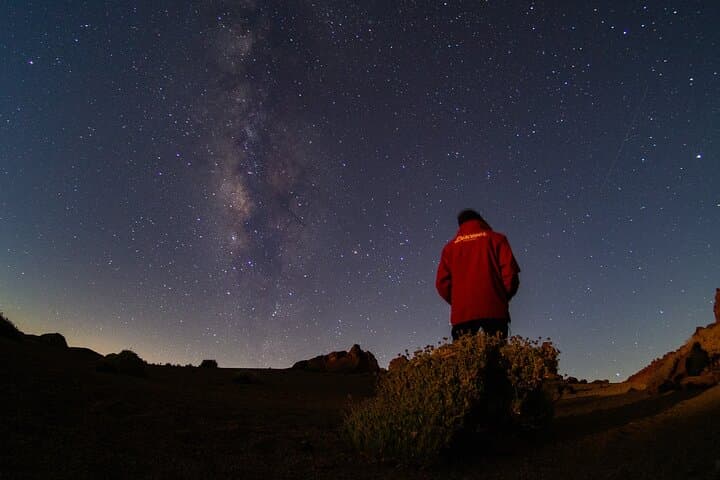
Step out onto moon-cold basalt under a sky so clear the Milky Way seems to ripple. At 2,000–2,400 meters on the flanks of Mount Teide, guides set up telescopes against the volcanic silhouette; constellations cut sharp, planets push color through the darkness, and the air itself feels like it’s holding its breath.
Step out onto moon-cold basalt under a sky so clear the Milky Way seems to ripple. At 2,000–2,400 meters on the flanks of Mount Teide, guides set up telescopes against the volcanic silhouette; constellations cut sharp, planets push color through the darkness, and the air itself feels like it’s holding its breath.
Teide’s moonscape is the product of millions of years of volcanic activity that built Tenerife from the ocean up. The park sits on Canary Islands geology—pumice, lava flows and hardened ash—shaped further by native Guanche history and centuries of maritime navigation, when sailors used these stars to steer across the Atlantic.
Culturally, stargazing here ties modern astrophotography to local pride in Spain’s designated Starlight Reserve; night is a resource worth preserving. The volcanic cones and rock formations around Roques de García provide dramatic silhouettes during evening briefings and practical windbreaks during telescope time.
Practical guidance: tours are short (about 80 minutes), low-impact and suitable for most fitness levels; expect short walks from the meeting point to observing sites and periods of standing. Dress in layers—temperatures fall quickly after sunset—and bring a headlamp with a red filter to keep night vision. Cameras with long-exposure capability and a tripod will let you capture nebulae and star trails, but follow guide instructions to avoid disturbing equipment or other guests.
Timing matters: choose moonless nights for deep-sky targets; plan transport back to coastal towns as roads can be steep. Above all, leave lights off and voices low—this is a shared encounter with an enormous, slow-moving sky.