THE ADVENTURE COLLECTIVE® · Independent discovery and booking for outdoor travel

Experience teamLab’s immersive nighttime art inside Nagai Botanical Garden: interactive lights, floating lamps on Oike Lake, and a glowing bald cypress forest that responds as you move. This 1–2 hour walk combines contemporary digital art with accessible garden pathways — bring a charged phone and expect flashing lights.
Experience teamLab’s immersive nighttime art inside Nagai Botanical Garden: interactive lights, floating lamps on Oike Lake, and a glowing bald cypress forest that responds as you move. This 1–2 hour walk combines contemporary digital art with accessible garden pathways — bring a charged phone and expect flashing lights.
You enter after dusk and the ordinary city noises soften; the garden’s walkways are lit not by lamps but by projected color that reacts as you move. Trees pulse in time with footsteps, lamps on Oike Lake ripple into new colors, and a bald cypress grove shifts its glow as the crowd passes through — the installation makes the garden feel alive and slightly unpredictable.
Verified experiences and guided adventures in the surrounding area.
Operated by TREVOPEDIA · Osaka, Osaka Prefecture
You enter after dusk and the ordinary city noises soften; the garden’s walkways are lit not by lamps but by projected color that reacts as you move. Trees pulse in time with footsteps, lamps on Oike Lake ripple into new colors, and a bald cypress grove shifts its glow as the crowd passes through — the installation makes the garden feel alive and slightly unpredictable.
The exhibition sits inside Nagai Botanical Garden, part of Nagai Park in southern Osaka. The park dates to the early 20th century as green space on the Osaka plain, and teamLab’s work overlays digital choreography on decades-old plantings and ponds. Geologically the area is flat reclaimed plain with engineered waterways, so expect broad vistas rather than steep climbs. Culturally, the show pairs contemporary Japanese media-art practice with traditional garden elements — water, stone, and seasonal plants — inviting a cross-generational crowd.
Practically: tickets are mobile and time-windowed; re-entry isn’t allowed. The walk is accessible with paved paths and stroller-friendly routes, but the artworks include flashing lights and occasional loud audio — visitors with sensitivity should plan accordingly. Photography is encouraged but tripods, monopods, and flash are prohibited. Public transit (Nagai Station) and nearby bus lines serve the park; there’s limited food and no luggage storage on site.
Plan for 60–120 minutes to move deliberately, pause at the lakeside lamps, and let the forest respond. Wear comfortable shoes, keep a charged phone for your ticket, and arrive early in your ticket window to avoid peak crowd surges.
easy.
1–2 hours.
Suitable for most fitness levels; involves standing and walking on paved surfaces for up to two hours.
Yes — the garden routes used for the exhibition are paved and wheelchair/stroller accessible; the event listing notes accessibility features.
No — re-entry is not permitted once you exit the venue, so plan restroom and food needs beforehand.
Yes, handheld photography is allowed, but the use of tripods, monopods, selfie sticks, and flash is prohibited.
Yes — some artworks include flashing lights and loud audio; the venue advises caution for people with epilepsy or sound sensitivity.
Nagai Botanical Garden is part of Nagai Park, a public green space developed in the early 20th century on the Osaka plain; the park has long combined recreation, sports, and curated plantings.
The installation overlays existing plantings without permanent alteration, and organizers typically encourage low-impact visiting—avoid touching plants and follow stay-on-path signage.
TREVOPEDIA operates guided outdoor trips and adventures with an emphasis on safety, stewardship, and memorable experiences.
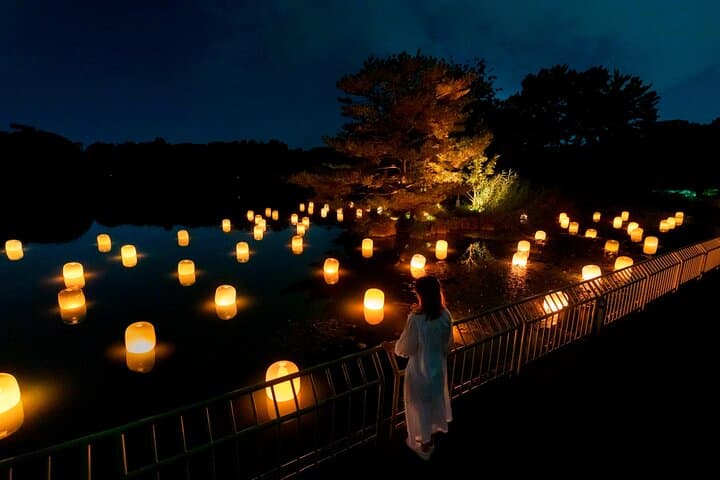
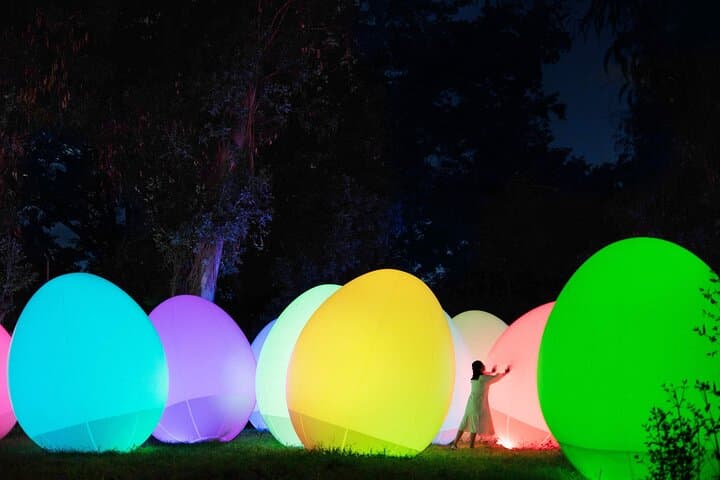
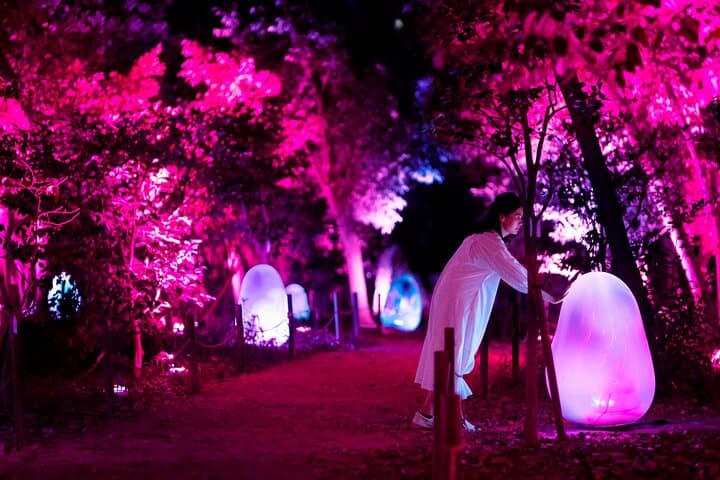
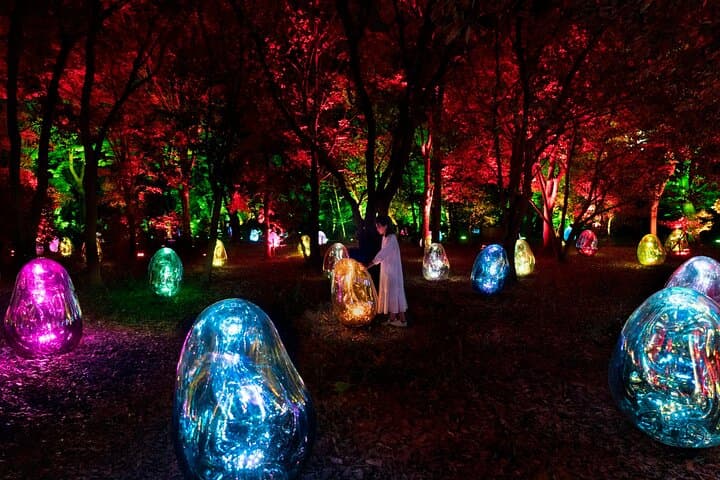
You enter after dusk and the ordinary city noises soften; the garden’s walkways are lit not by lamps but by projected color that reacts as you move. Trees pulse in time with footsteps, lamps on Oike Lake ripple into new colors, and a bald cypress grove shifts its glow as the crowd passes through — the installation makes the garden feel alive and slightly unpredictable.
You enter after dusk and the ordinary city noises soften; the garden’s walkways are lit not by lamps but by projected color that reacts as you move. Trees pulse in time with footsteps, lamps on Oike Lake ripple into new colors, and a bald cypress grove shifts its glow as the crowd passes through — the installation makes the garden feel alive and slightly unpredictable.
The exhibition sits inside Nagai Botanical Garden, part of Nagai Park in southern Osaka. The park dates to the early 20th century as green space on the Osaka plain, and teamLab’s work overlays digital choreography on decades-old plantings and ponds. Geologically the area is flat reclaimed plain with engineered waterways, so expect broad vistas rather than steep climbs. Culturally, the show pairs contemporary Japanese media-art practice with traditional garden elements — water, stone, and seasonal plants — inviting a cross-generational crowd.
Practically: tickets are mobile and time-windowed; re-entry isn’t allowed. The walk is accessible with paved paths and stroller-friendly routes, but the artworks include flashing lights and occasional loud audio — visitors with sensitivity should plan accordingly. Photography is encouraged but tripods, monopods, and flash are prohibited. Public transit (Nagai Station) and nearby bus lines serve the park; there’s limited food and no luggage storage on site.
Plan for 60–120 minutes to move deliberately, pause at the lakeside lamps, and let the forest respond. Wear comfortable shoes, keep a charged phone for your ticket, and arrive early in your ticket window to avoid peak crowd surges.