THE ADVENTURE COLLECTIVE® · Independent discovery and booking for outdoor travel

Walk from Old Munnar into Lakshmi Tea Estate for a 2–3 hour hands-on tea plucking experience, village shrines, and a visit to the century-old CSI Church. Expect easy trails, estate scenery, and practical plucking instruction.
Walk from Old Munnar into Lakshmi Tea Estate for a 2–3 hour hands-on tea plucking experience, village shrines, and a visit to the century-old CSI Church. Expect easy trails, estate scenery, and practical plucking instruction.
The trail opens with the smell of damp earth and cut tea leaves — a cool breath that pushes you forward through narrow tracks between sculpted rows of bushes. Walkers leave Old Munnar on a gentle ascent toward Lakshmi Tea Estate, where terrace-like plantations roll into the distance and a small river threads the valley, daring you to pause and listen.
Verified experiences and guided adventures in the surrounding area.
Operated by Munnar Info · Munnar, Kerala
The trail opens with the smell of damp earth and cut tea leaves — a cool breath that pushes you forward through narrow tracks between sculpted rows of bushes. Walkers leave Old Munnar on a gentle ascent toward Lakshmi Tea Estate, where terrace-like plantations roll into the distance and a small river threads the valley, daring you to pause and listen.
This area of the Western Ghats was converted to tea by British planters in the late 19th century; the patchwork fields you cross reflect that colonial agricultural history and the industry that still defines local livelihoods. Geologically, Munnar sits on ancient Precambrian rock; streams carving through laterite soils feed the plantations and the dam systems downstream.
Culturally the walk crosses living village life: three small temples and the 100+-year-old CSI Church at Chokanad, each offering a quiet window into local faiths and rhythms. You’ll also pass the Chokanad Tea Factory — a practical reminder that the bushes around you are part of a working landscape.
Practically, expect 2–3 hours of easy walking on narrow dirt and estate tracks, occasional stone steps, and short stretches of uneven ground. Wear closed-toe shoes, a light rain layer in monsoon months, and bring water and sun protection. Guides provide tea-plucking instruction in the field, and the route finishes at the CSI Church — a calm place to stretch and reflect before returning to Munnar.
This is a low-impact, hands-on way to see how tea is grown, hear local stories, and move at a relaxed, observant pace.
easy.
2–3 hours.
Suitable for most fitness levels; requires steady balance on uneven paths and light uphill walking
The guided experience lasts about 2–3 hours and is rated easy — mostly gentle estate tracks with short uneven sections.
Yes — field staff provide hands-on plucking training and supervise visitors during the demarcated plucking session.
The route includes narrow and sometimes stepped sections; those with significant mobility limitations should check with the operator beforehand.
Bottled water is listed as included; bring snacks if you need more than light refreshments during the walk.
Tea estates in Munnar grew under British colonial planting schemes in the late 1800s and shaped the regional economy and settlement patterns.
Stay on designated paths and avoid littering; supporting local estate tours that employ residents helps sustain community livelihoods and reduces pressure to convert natural areas.
Munnar Info operates guided outdoor trips and adventures with an emphasis on safety, stewardship, and memorable experiences.

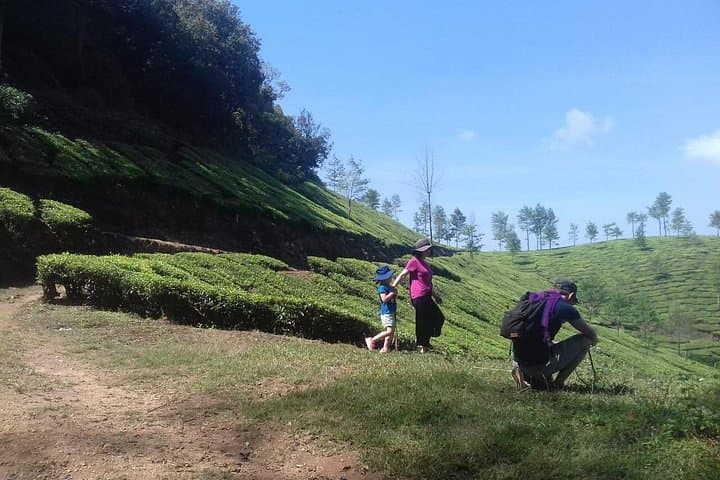

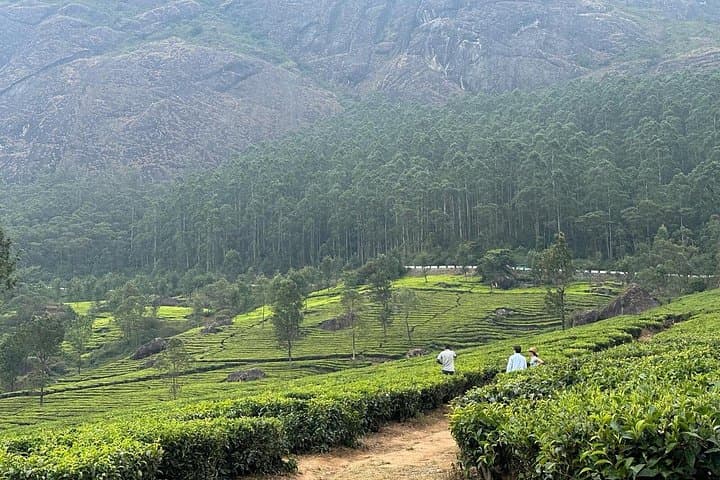
The trail opens with the smell of damp earth and cut tea leaves — a cool breath that pushes you forward through narrow tracks between sculpted rows of bushes. Walkers leave Old Munnar on a gentle ascent toward Lakshmi Tea Estate, where terrace-like plantations roll into the distance and a small river threads the valley, daring you to pause and listen.
The trail opens with the smell of damp earth and cut tea leaves — a cool breath that pushes you forward through narrow tracks between sculpted rows of bushes. Walkers leave Old Munnar on a gentle ascent toward Lakshmi Tea Estate, where terrace-like plantations roll into the distance and a small river threads the valley, daring you to pause and listen.
This area of the Western Ghats was converted to tea by British planters in the late 19th century; the patchwork fields you cross reflect that colonial agricultural history and the industry that still defines local livelihoods. Geologically, Munnar sits on ancient Precambrian rock; streams carving through laterite soils feed the plantations and the dam systems downstream.
Culturally the walk crosses living village life: three small temples and the 100+-year-old CSI Church at Chokanad, each offering a quiet window into local faiths and rhythms. You’ll also pass the Chokanad Tea Factory — a practical reminder that the bushes around you are part of a working landscape.
Practically, expect 2–3 hours of easy walking on narrow dirt and estate tracks, occasional stone steps, and short stretches of uneven ground. Wear closed-toe shoes, a light rain layer in monsoon months, and bring water and sun protection. Guides provide tea-plucking instruction in the field, and the route finishes at the CSI Church — a calm place to stretch and reflect before returning to Munnar.
This is a low-impact, hands-on way to see how tea is grown, hear local stories, and move at a relaxed, observant pace.