THE ADVENTURE COLLECTIVE® · Independent discovery and booking for outdoor travel

Glide 25 km of Ceylon tea country on an assisted e-bike, passing colonial-era tea factories, Hindu temples and panoramic highland viewpoints. This two-and-a-half-hour loop blends easy pedaling with striking views and local plantation life.
Glide 25 km of Ceylon tea country on an assisted e-bike, passing colonial-era tea factories, Hindu temples and panoramic highland viewpoints. This two-and-a-half-hour loop blends easy pedaling with striking views and local plantation life.
You start on a quiet single-track road framed by clipped tea bushes, the motor’s hush replacing the climb's grunt as the valley opens beneath you. Dew from the highlands still beads on leaves; distant whistles from tea factories mark the rhythm of harvest and sorting. Over 25 km you cruise past named estates—Norwood, Stockholm, Mahanilu, Brunswick—each terrace stepping the hillside into neat rows of green.
Verified experiences and guided adventures in the surrounding area.
Operated by The Tea field’s · Maskeliya, Central Province
You start on a quiet single-track road framed by clipped tea bushes, the motor’s hush replacing the climb's grunt as the valley opens beneath you. Dew from the highlands still beads on leaves; distant whistles from tea factories mark the rhythm of harvest and sorting. Over 25 km you cruise past named estates—Norwood, Stockholm, Mahanilu, Brunswick—each terrace stepping the hillside into neat rows of green.
This route threads colonial-era infrastructure and Kandyan highland geology: red-brown soils on weathered Precambrian rock, steep drainage lines that feed the Maskeliya and Castlereagh catchments. Cultural markers punctuate the ride—Hindu temples with colorful gopurams and the white stone All Saints Church (1876), a reminder of British planters who reshaped the landscape for tea production.
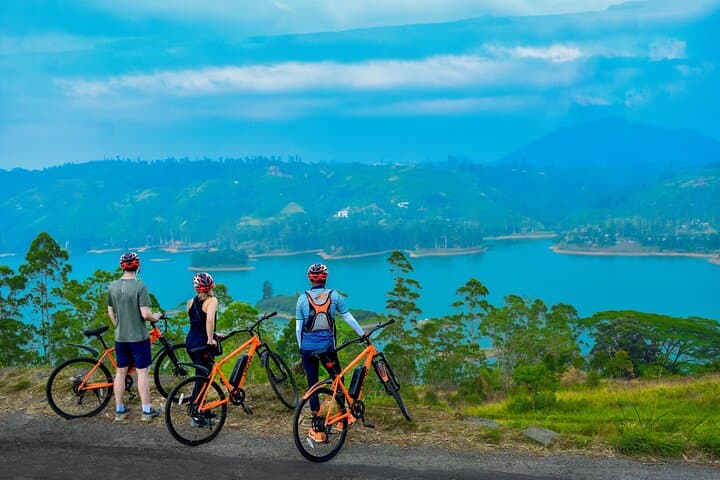
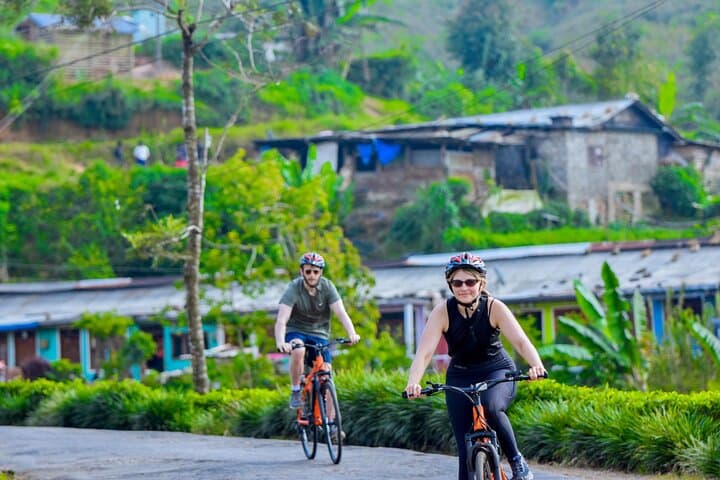
Views open at Bogawanthalawa Valley and Castlereagh View Point, where mist can obscure or dramatize Adams Peak on a clear day. Villages you pass show living plantation culture—workers, small tea stalls, and processing sheds where leaves are withered and rolled.
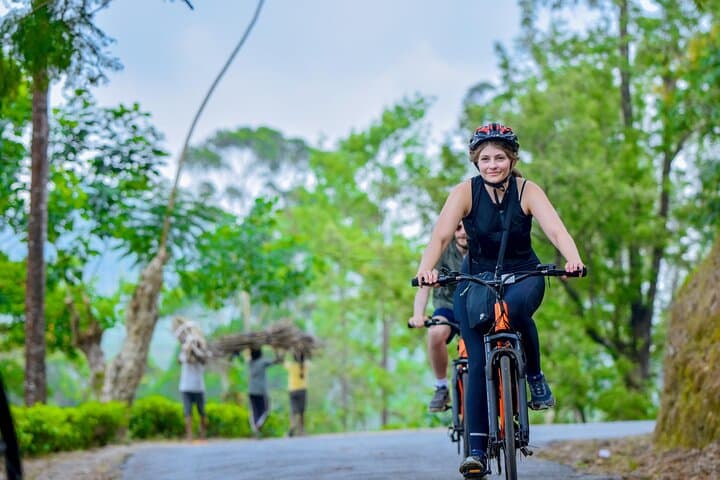
Practically, expect mixed surfaces: sealed roads, farm tracks and compacted dirt; gentle climbs offset by e-bike assistance make the 150-minute outing accessible but still active. Morning departures give the best light and cooler temperatures. Bring layered clothing for sudden weather shifts, water and snacks, and a camera for low-angle light on the bushes. Helmets are standard; a short briefing on e-bike modes and local traffic precedents will help you ride confidently through this working agricultural landscape.
moderate.
2–3 hours.
Suitable for riders with light-to-moderate fitness; e-bike assistance reduces sustained effort but requires balance and short bursts of pedaling.
Yes—these are pedal-assist e-bikes suitable for riders with basic cycling experience; guides brief riders on modes and local road etiquette.
The 25 km route contains rolling climbs and descents; the e-bike motor provides significant assistance but expect to pedal on steeper sections.
Heavy rains can make dirt tracks slippery and tours may be canceled in poor weather—check cancellation terms and local forecasts before booking.
Guides typically plan scenic stops at viewpoints and village sights; factory tours may require prior arrangement and entry permissions.
Central highland tea estates were expanded under colonial planters in the 19th century; All Saints Church (1876) is a surviving colonial landmark near the loop.
Tea plantations alter native forest cover; stick to tracks, avoid littering, and support local guides who follow low-impact practices.
The Tea field’s operates guided outdoor trips and adventures with an emphasis on safety, stewardship, and memorable experiences.
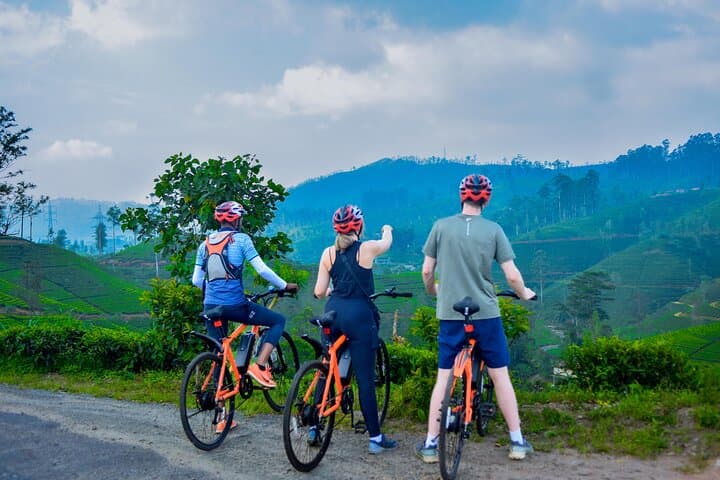
You start on a quiet single-track road framed by clipped tea bushes, the motor’s hush replacing the climb's grunt as the valley opens beneath you. Dew from the highlands still beads on leaves; distant whistles from tea factories mark the rhythm of harvest and sorting. Over 25 km you cruise past named estates—Norwood, Stockholm, Mahanilu, Brunswick—each terrace stepping the hillside into neat rows of green.
You start on a quiet single-track road framed by clipped tea bushes, the motor’s hush replacing the climb's grunt as the valley opens beneath you. Dew from the highlands still beads on leaves; distant whistles from tea factories mark the rhythm of harvest and sorting. Over 25 km you cruise past named estates—Norwood, Stockholm, Mahanilu, Brunswick—each terrace stepping the hillside into neat rows of green.
This route threads colonial-era infrastructure and Kandyan highland geology: red-brown soils on weathered Precambrian rock, steep drainage lines that feed the Maskeliya and Castlereagh catchments. Cultural markers punctuate the ride—Hindu temples with colorful gopurams and the white stone All Saints Church (1876), a reminder of British planters who reshaped the landscape for tea production.
Views open at Bogawanthalawa Valley and Castlereagh View Point, where mist can obscure or dramatize Adams Peak on a clear day. Villages you pass show living plantation culture—workers, small tea stalls, and processing sheds where leaves are withered and rolled.
Practically, expect mixed surfaces: sealed roads, farm tracks and compacted dirt; gentle climbs offset by e-bike assistance make the 150-minute outing accessible but still active. Morning departures give the best light and cooler temperatures. Bring layered clothing for sudden weather shifts, water and snacks, and a camera for low-angle light on the bushes. Helmets are standard; a short briefing on e-bike modes and local traffic precedents will help you ride confidently through this working agricultural landscape.