THE ADVENTURE COLLECTIVE® · Independent discovery and booking for outdoor travel

A private, full-day route from Tbilisi that links Borjomi’s mineral springs, the layered Rabat fortress and the cliff-cut monastery of Vardzia. Expect long drives, steep steps and vivid history shaped in stone.
A private, full-day route from Tbilisi that links Borjomi’s mineral springs, the layered Rabat fortress and the cliff-cut monastery of Vardzia. Expect long drives, steep steps and vivid history shaped in stone.
You step into a ribbon of mountain road as dawn eases out of Tbilisi, the vehicle humming while the Caucasus takes shape ahead—ridges rising, river gorges daring you to look over the guardrail. By midmorning the air tastes mineral and cool in Borjomi; later, cliffs give way to a honeycombed rock city at Vardzia that seems to have grown out of the hillside like slow architecture.
Verified experiences and guided adventures in the surrounding area.
Operated by ushba travel · Tbilisi, Tbilisi
You step into a ribbon of mountain road as dawn eases out of Tbilisi, the vehicle humming while the Caucasus takes shape ahead—ridges rising, river gorges daring you to look over the guardrail. By midmorning the air tastes mineral and cool in Borjomi; later, cliffs give way to a honeycombed rock city at Vardzia that seems to have grown out of the hillside like slow architecture.
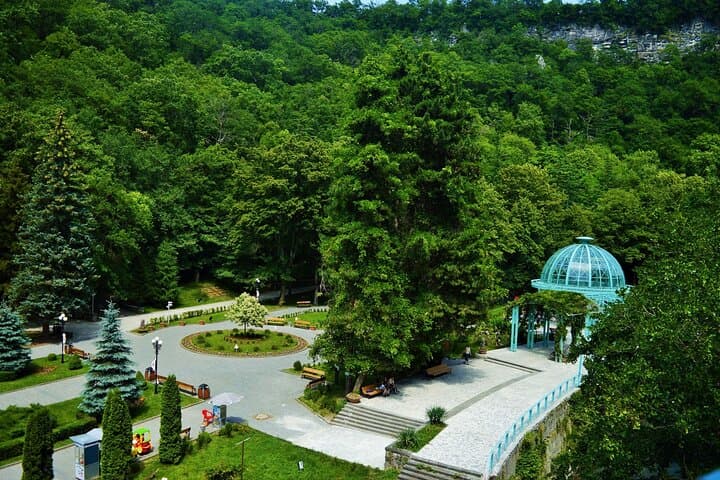
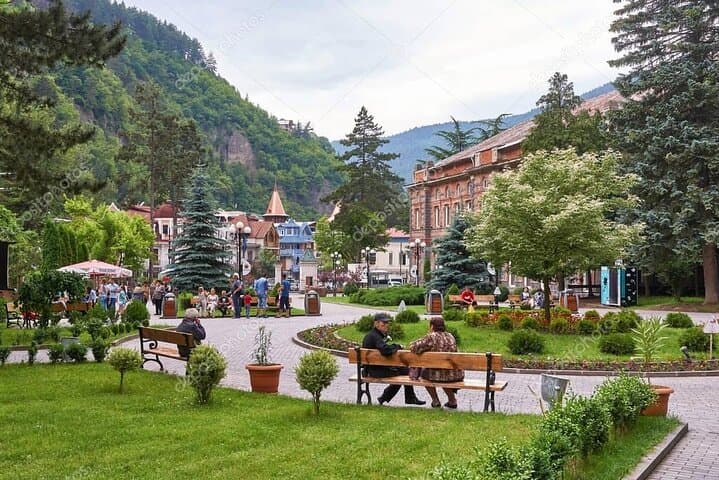
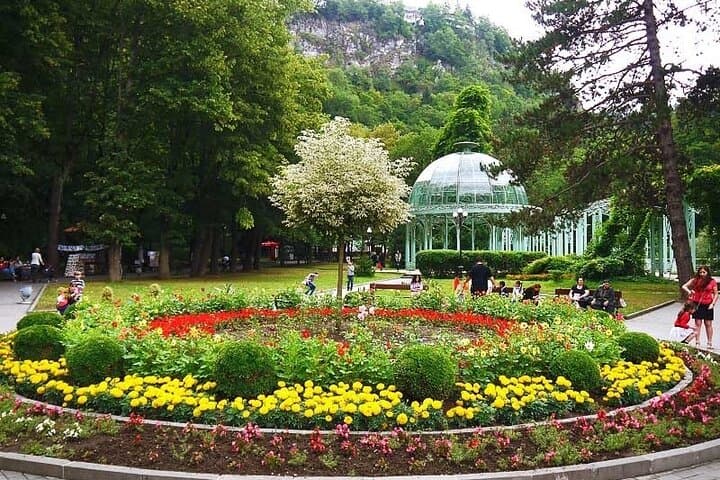
This full-day private tour strings together three of southern Georgia’s defining chapters. Borjomi sits in a verdant gorge famed for its naturally carbonated springs and a 19th-century park that once hosted Russian imperial visits. Akhaltsikhe’s Rabat Fortress is a layered frontier site—Ottoman, Georgian and European influences overlap in masonry and mosque, church and caravanserai. Vardzia is a 12th-century cave-monastery complex credited to the era of Queen Tamar: carved halls, frescoed chapels and an ancient irrigation system testify to medieval engineering.
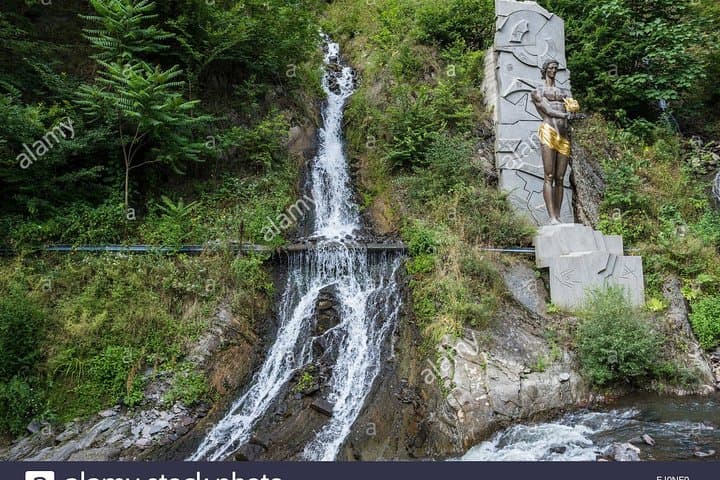
Geology matters here: volcanic tuff and river erosion shaped the cliffs that made Vardzia possible; mineral-rich springs fed Borjomi’s fame. Locally, hospitality is direct—tea, strong bread and talk about lineage and land are common.
Practical guidance: expect a long day of drives and steep steps; comfortable, grippy shoes and layered clothing are essential. Bring small cash for modest site fees and a refillable water bottle for long stretches between services. Timing matters—start early to maximize light at Vardzia and avoid afternoon coach crowds. The route rewards travelers who want history, landscape and a sense of how people have lived with these cliffs for centuries.
moderate.
13 hours.
Good basic fitness for several hours of walking and climbing steps; able to handle long periods in a vehicle.
Most bookings begin and return to Tbilisi; exact pickup points are confirmed at booking.
Entrance to Vardzia, Rabat and Borjomi typically requires small additional fees (not always included)—bring cash for $1–$5 tickets.
The tour is private and rated easy for basic mobility, but Vardzia involves steep stairs and uneven passages which can be challenging for limited mobility.
Yes—there are springs and kiosks in Borjomi where you can sample water; local guides often point out the main spring.
Vardzia was developed in the 12th century during Georgia’s medieval flowering under Queen Tamar; Rabat’s current citadel reflects Ottoman-era renovation over older Georgian foundations.
Borjomi-Kharagauli National Park protects these valleys; stick to marked trails, avoid taking spring water in single-use bottles, and respect local cultural sites.
ushba travel operates guided outdoor trips and adventures with an emphasis on safety, stewardship, and memorable experiences.
You step into a ribbon of mountain road as dawn eases out of Tbilisi, the vehicle humming while the Caucasus takes shape ahead—ridges rising, river gorges daring you to look over the guardrail. By midmorning the air tastes mineral and cool in Borjomi; later, cliffs give way to a honeycombed rock city at Vardzia that seems to have grown out of the hillside like slow architecture.
You step into a ribbon of mountain road as dawn eases out of Tbilisi, the vehicle humming while the Caucasus takes shape ahead—ridges rising, river gorges daring you to look over the guardrail. By midmorning the air tastes mineral and cool in Borjomi; later, cliffs give way to a honeycombed rock city at Vardzia that seems to have grown out of the hillside like slow architecture.
This full-day private tour strings together three of southern Georgia’s defining chapters. Borjomi sits in a verdant gorge famed for its naturally carbonated springs and a 19th-century park that once hosted Russian imperial visits. Akhaltsikhe’s Rabat Fortress is a layered frontier site—Ottoman, Georgian and European influences overlap in masonry and mosque, church and caravanserai. Vardzia is a 12th-century cave-monastery complex credited to the era of Queen Tamar: carved halls, frescoed chapels and an ancient irrigation system testify to medieval engineering.
Geology matters here: volcanic tuff and river erosion shaped the cliffs that made Vardzia possible; mineral-rich springs fed Borjomi’s fame. Locally, hospitality is direct—tea, strong bread and talk about lineage and land are common.
Practical guidance: expect a long day of drives and steep steps; comfortable, grippy shoes and layered clothing are essential. Bring small cash for modest site fees and a refillable water bottle for long stretches between services. Timing matters—start early to maximize light at Vardzia and avoid afternoon coach crowds. The route rewards travelers who want history, landscape and a sense of how people have lived with these cliffs for centuries.