THE ADVENTURE COLLECTIVE® · Independent discovery and booking for outdoor travel

A compact, full-day circuit from Tbilisi that pairs ancient cave-town ruins, highland mineral springs and medieval cathedrals. Expect short walks, steep steps and sweeping river valley views.
A compact, full-day circuit from Tbilisi that pairs ancient cave-town ruins, highland mineral springs and medieval cathedrals. Expect short walks, steep steps and sweeping river valley views.
You roll out of Tbilisi into a landscape that shifts like a story—low urban sprawl gives way to terraced fields, then to the wave-like ridges above Mtskheta where Jvari Church keeps watch over two rivers meeting below.
Verified experiences and guided adventures in the surrounding area.
Operated by Georgian Paradise · Tbilisi, Tbilisi
You roll out of Tbilisi into a landscape that shifts like a story—low urban sprawl gives way to terraced fields, then to the wave-like ridges above Mtskheta where Jvari Church keeps watch over two rivers meeting below.
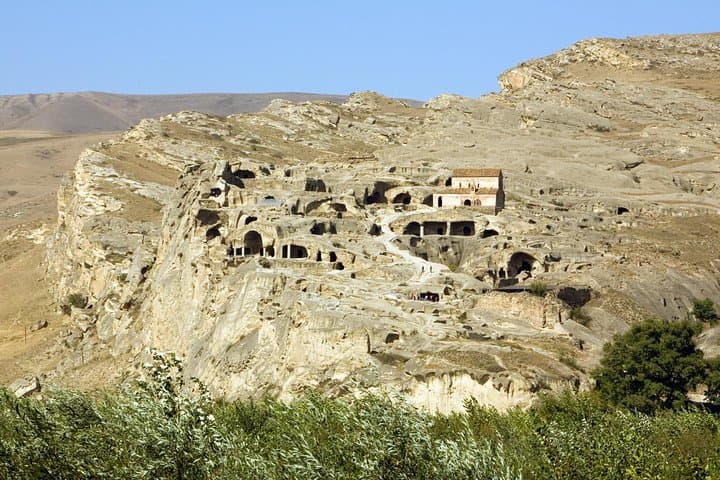
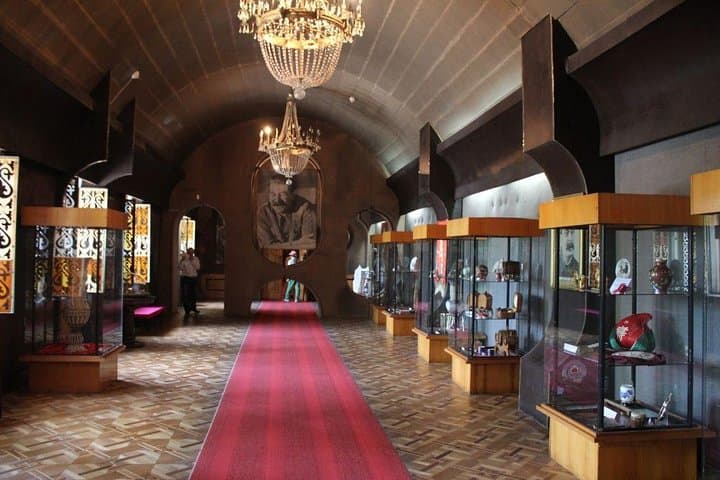
This full-day route threads Georgia’s formative chapters: Jvari’s 4th-century monastery and the 11th-century church framing early Georgian Christianity; Svetitskhoveli Cathedral in Mtskheta, the medieval cathedral long central to Georgian Orthodoxy; Uplistsikhe, a rock-cut town whose carved streets date to the late Bronze Age; and Gori, whose Stalin museum sits in a valley shaped by the Kura and Liakhi rivers. Geology is plain to see—limestone escarpments and river terraces, volcanic springs feeding Borjomi’s mineral waters, and forested slopes of Borjomi-Kharagauli National Park pushing up to 900 m elevation.
Culturally the day balances archaeology, sacred sites, and small-town hospitality: expect roadside stalls, cafés serving khachapuri and strong coffee, and guides who explain both church frescoes and Soviet-era artifacts.
Practical guidance: this is mostly a drive-and-walk tour—short climbs, uneven rock steps, and paved streets at sites. Wear grippy footwear, carry a refillable bottle (mineral water is abundant), and bring a light layer for higher elevations. Timing matters—start early to avoid the afternoon heat and leave room for a cable-car ride above Borjomi. Photography is excellent at sunrise and late afternoon; cash is useful in smaller towns. The tour suits travelers looking for a compact cultural primer on Georgia’s heartland without strenuous hiking.
easy.
7–9 hours.
Suitable for travelers in average fitness; involves short climbs, steps and standing during site visits.
Most departures are from central Tbilisi hotels; the tour returns to Tbilisi at the end of the day.
Confirm with the operator—some sites charge admissions separately; the tour listing indicates admissions are not included by default.
Yes; the itinerary notes it’s suitable for all fitness levels, but some sites have stairs and uneven surfaces.
Yes; itineraries typically include breaks for lunch and short walks in Borjomi Central Park and Mtskheta.
These sites trace Georgia’s arc from Bronze Age fortified towns through medieval Christian centers to modern history centered in Gori.
Borjomi-Kharagauli National Park is protected; stick to trails, avoid collecting natural souvenirs, and support local-led services to minimize impact.
Georgian Paradise operates guided outdoor trips and adventures with an emphasis on safety, stewardship, and memorable experiences.
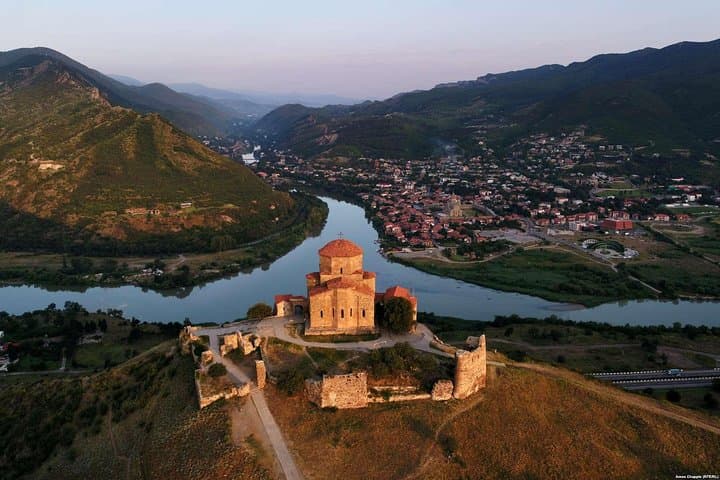
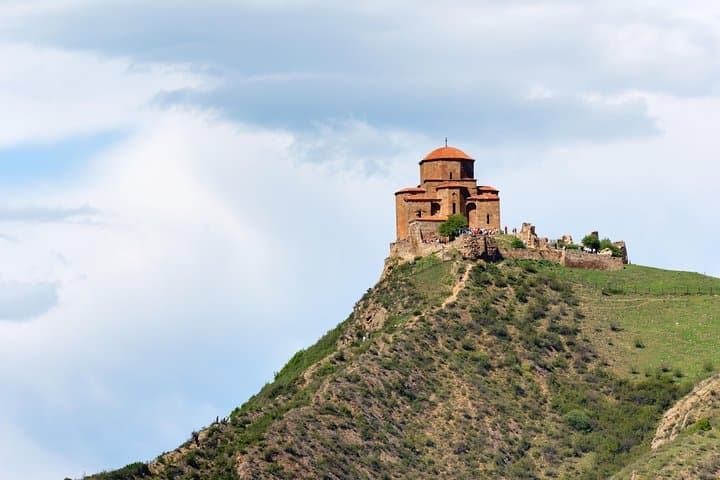
You roll out of Tbilisi into a landscape that shifts like a story—low urban sprawl gives way to terraced fields, then to the wave-like ridges above Mtskheta where Jvari Church keeps watch over two rivers meeting below.
You roll out of Tbilisi into a landscape that shifts like a story—low urban sprawl gives way to terraced fields, then to the wave-like ridges above Mtskheta where Jvari Church keeps watch over two rivers meeting below.
This full-day route threads Georgia’s formative chapters: Jvari’s 4th-century monastery and the 11th-century church framing early Georgian Christianity; Svetitskhoveli Cathedral in Mtskheta, the medieval cathedral long central to Georgian Orthodoxy; Uplistsikhe, a rock-cut town whose carved streets date to the late Bronze Age; and Gori, whose Stalin museum sits in a valley shaped by the Kura and Liakhi rivers. Geology is plain to see—limestone escarpments and river terraces, volcanic springs feeding Borjomi’s mineral waters, and forested slopes of Borjomi-Kharagauli National Park pushing up to 900 m elevation.
Culturally the day balances archaeology, sacred sites, and small-town hospitality: expect roadside stalls, cafés serving khachapuri and strong coffee, and guides who explain both church frescoes and Soviet-era artifacts.
Practical guidance: this is mostly a drive-and-walk tour—short climbs, uneven rock steps, and paved streets at sites. Wear grippy footwear, carry a refillable bottle (mineral water is abundant), and bring a light layer for higher elevations. Timing matters—start early to avoid the afternoon heat and leave room for a cable-car ride above Borjomi. Photography is excellent at sunrise and late afternoon; cash is useful in smaller towns. The tour suits travelers looking for a compact cultural primer on Georgia’s heartland without strenuous hiking.