THE ADVENTURE COLLECTIVE® · Independent discovery and booking for outdoor travel

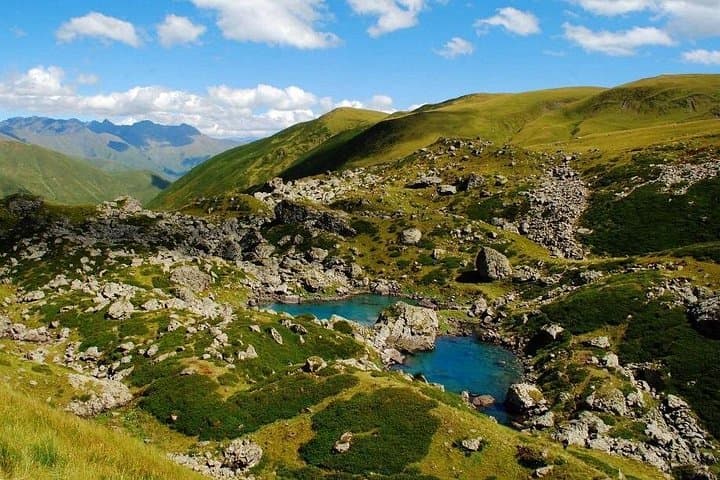
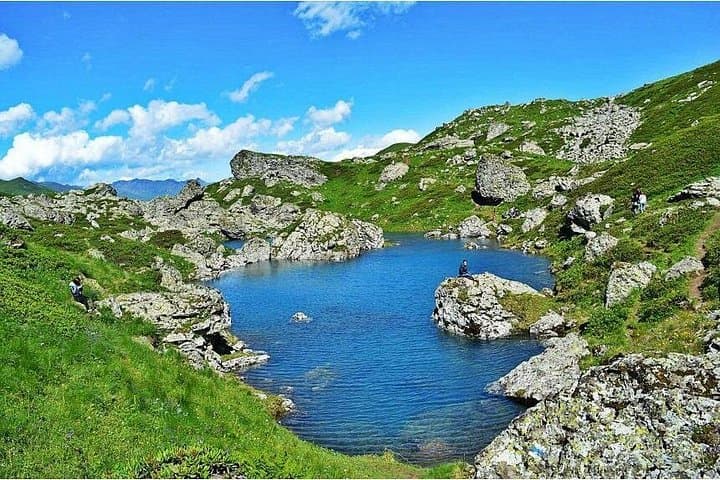
Two active days along the Georgian Military Road deliver fortress views, a hilltop church beneath Mt. Kazbek and a challenging high-alpine trek from Juta to Chaukhi pass with chances to see the Abudelauri lakes. Read on for terrain details, logistics and local tips.
Two active days along the Georgian Military Road deliver fortress views, a hilltop church beneath Mt. Kazbek and a challenging high-alpine trek from Juta to Chaukhi pass with chances to see the Abudelauri lakes. Read on for terrain details, logistics and local tips.
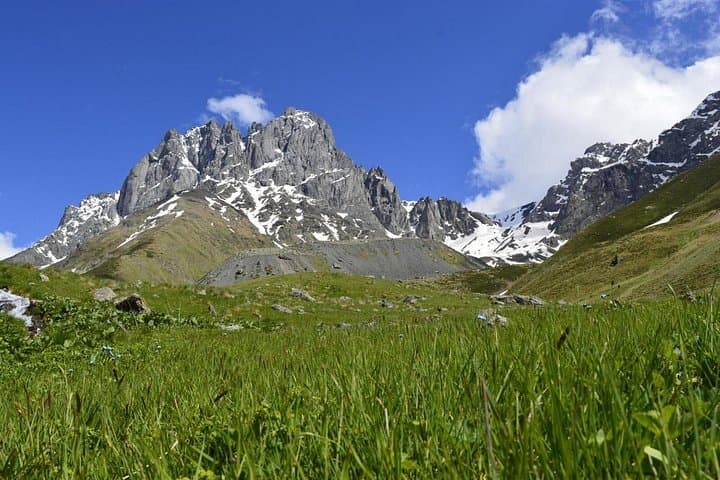
A cold wind from the high Caucasus cuts through the Georgian Military Road as the minivan climbs toward Stepantsminda. Steam rises from roadside springs, iron-rich mineral water beads on the rim of a roadside glass, and distant spires of rock—Chaukhi’s crags—stand like an invitation. The mood is purposeful: this is travel where roads hand you dramatic panoramas and the trail asks for steady feet.
Verified experiences and guided adventures in the surrounding area.
Operated by Sakura Travel Agency · Stepantsminda, Mtskheta-Mtianeti
A cold wind from the high Caucasus cuts through the Georgian Military Road as the minivan climbs toward Stepantsminda. Steam rises from roadside springs, iron-rich mineral water beads on the rim of a roadside glass, and distant spires of rock—Chaukhi’s crags—stand like an invitation. The mood is purposeful: this is travel where roads hand you dramatic panoramas and the trail asks for steady feet.
The route threads centuries of history: the fortified Ananuri complex (XIV–XVII centuries) watches the Aragvi gorge, and the Georgian Military Road has linked Tbilisi and the mountains for generations. Geologically the region is young and uplifted—granite and volcanic intrusions sculpt the jagged ridges near Juta and Chaukhi. Culturally, highland villages keep strong traditions of shepherding and cheese-making; local guesthouses offer hearty stews and khachapuri after a day on the trail.
Practically: the program packs two active days—short walks to Gergeti Trinity (about 2–3 hours if hiked from Stepantsminda, ~400–500m ascent if approached on foot) and a full, difficult trek from Juta toward Chaukhi pass (roughly 10 km each way; plan ~20 km round-trip with alpine terrain and 800–1,500m potential elevation gain depending on the turning point). Trails vary from packed dirt to rocky scree; weather can flip from sun to mist quickly.
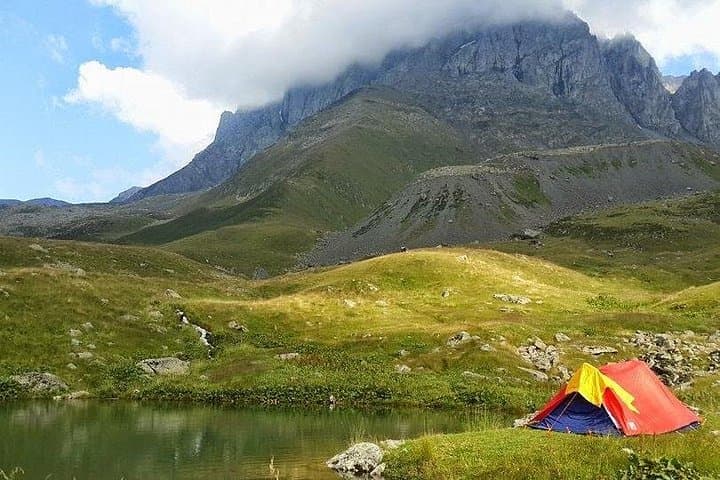
Expect sturdy footwear, layered clothing for windy alpine conditions, and a steady pace on long ascents. Carry extra water, and leave time for quiet stops—waterfalls, climbers’ camps, and the chance that clear weather will reveal the vast face of Mt. Kazbek.
challenging.
2 days (approx. 48 hours).
Good aerobic fitness and experience with full-day hikes; able to cover up to ~20 km with sustained climbs of several hundred to over a thousand meters.
It’s a full-day alpine trek with rocky and sometimes steep sections; expect about 10 km each way and up to 800–1,500 m of elevation change depending on the route and weather.
Altitudes near Gergeti and Juta are around 2,000–2,200 m; symptoms are possible for sensitive travelers—ascend slowly, hydrate, and communicate with your guide.
Late spring through early fall gives the most reliable trail access and visibility; summer offers milder conditions but be ready for afternoon storms.
No formal permits for these trails, but competent boots, navigation basics and a guided party for remote high-alpine sections are strongly recommended.
The Georgian Military Road has linked the South Caucasus to the north for centuries; Ananuri fortress controlled strategic river crossings from the medieval period onward.
Alpine meadows are fragile—stay on established trails, pack out waste, and support local guesthouses that use low-impact practices.
Sakura Travel Agency operates guided outdoor trips and adventures with an emphasis on safety, stewardship, and memorable experiences.
A cold wind from the high Caucasus cuts through the Georgian Military Road as the minivan climbs toward Stepantsminda. Steam rises from roadside springs, iron-rich mineral water beads on the rim of a roadside glass, and distant spires of rock—Chaukhi’s crags—stand like an invitation. The mood is purposeful: this is travel where roads hand you dramatic panoramas and the trail asks for steady feet.
A cold wind from the high Caucasus cuts through the Georgian Military Road as the minivan climbs toward Stepantsminda. Steam rises from roadside springs, iron-rich mineral water beads on the rim of a roadside glass, and distant spires of rock—Chaukhi’s crags—stand like an invitation. The mood is purposeful: this is travel where roads hand you dramatic panoramas and the trail asks for steady feet.
The route threads centuries of history: the fortified Ananuri complex (XIV–XVII centuries) watches the Aragvi gorge, and the Georgian Military Road has linked Tbilisi and the mountains for generations. Geologically the region is young and uplifted—granite and volcanic intrusions sculpt the jagged ridges near Juta and Chaukhi. Culturally, highland villages keep strong traditions of shepherding and cheese-making; local guesthouses offer hearty stews and khachapuri after a day on the trail.
Practically: the program packs two active days—short walks to Gergeti Trinity (about 2–3 hours if hiked from Stepantsminda, ~400–500m ascent if approached on foot) and a full, difficult trek from Juta toward Chaukhi pass (roughly 10 km each way; plan ~20 km round-trip with alpine terrain and 800–1,500m potential elevation gain depending on the turning point). Trails vary from packed dirt to rocky scree; weather can flip from sun to mist quickly.
Expect sturdy footwear, layered clothing for windy alpine conditions, and a steady pace on long ascents. Carry extra water, and leave time for quiet stops—waterfalls, climbers’ camps, and the chance that clear weather will reveal the vast face of Mt. Kazbek.