THE ADVENTURE COLLECTIVE® · Independent discovery and booking for outdoor travel

Walk Tbilisi’s Old Town from sulphur springs to a tucked waterfall, with a cable-car view of Narikala and a guided tasting of Georgian wines. This four-hour walking tour blends history, geology and local rituals for a compact city immersion.
Walk Tbilisi’s Old Town from sulphur springs to a tucked waterfall, with a cable-car view of Narikala and a guided tasting of Georgian wines. This four-hour walking tour blends history, geology and local rituals for a compact city immersion.
The tour begins on a bright city street: cobbles underfoot, the air carrying a faint mineral tang from the Sulphur Baths, and the skyline climbing to the rust-streaked walls of Narikala Fortress. A local guide threads the group through narrow alleys, where wooden balconies lean over wine bars and the chatter of café terraces fills the lanes.
Verified experiences and guided adventures in the surrounding area.
Operated by Rustaveli Agency · Tbilisi, Tbilisi
The tour begins on a bright city street: cobbles underfoot, the air carrying a faint mineral tang from the Sulphur Baths, and the skyline climbing to the rust-streaked walls of Narikala Fortress. A local guide threads the group through narrow alleys, where wooden balconies lean over wine bars and the chatter of café terraces fills the lanes.
Old Tbilisi sits on thermal springs that shaped the city’s origin—legend says a hot spring led to the first settlement under Vakhtang Gorgasali. Geology is visible in the warm steam and layered masonry; culture appears in carved church facades and the aromatic bread from street ovens. The route crosses Rustaveli Avenue's broad, theatrical boulevards before funneling into intimate Kote Apkhazi Street and the Sulphur Bath district where public spa rituals continue a centuries-old habit.
Along the way the guide points out Rezo Gabriadze’s clock theater, Freedom Square’s St. George statue, and a tucked-away waterfall that drops into a cooled, mossy ravine. A cable car ascent to Narikala gives a compact panorama; a curated wine tasting introduces native varieties like saperavi and rkatsiteli.
Practical notes: wear sturdy shoes for cobbles and stairs, carry local cash for small purchases, and plan for roughly four hours including the cable car and tasting. The route is low-impact but includes uneven surfaces and steps; travelers with mobility constraints should check accessibility in advance. Expect an immersive, walkable primer on Tbilisi’s past and present.
easy.
3–4 hours.
Suitable for light fitness—comfortable walking for several hours and negotiating stairs/cobbles
Yes—the tour includes the cable car ride to Narikala, offering panoramic views over Old Tbilisi.
The itinerary lists the Sulphur Baths as a stop with admission included; check with the operator about access to private vs. public rooms.
Non-drinkers can still join for tasting notes; minors may attend but the tasting component is for adults—confirm alternatives if needed.
The route includes cobbles and steps; it’s described as easy but may be challenging for those with limited mobility—contact the operator to discuss accessibility options.
Tbilisi developed around hot sulphur springs and was a crossroads of empires; sites like the Sulphur Baths and Narikala reflect layers of Persian, Byzantine and Georgian influence.
Respect thermal springs and historic fabric by avoiding litter, staying on paths, and supporting small local businesses to sustain community tourism.
Rustaveli Agency operates guided outdoor trips and adventures with an emphasis on safety, stewardship, and memorable experiences.
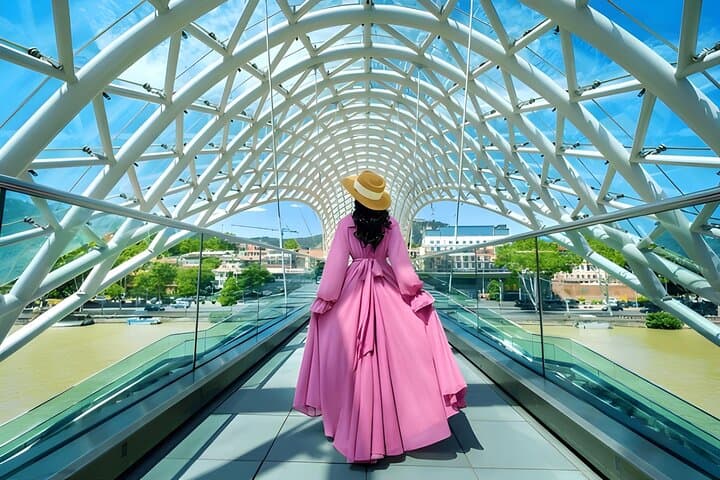
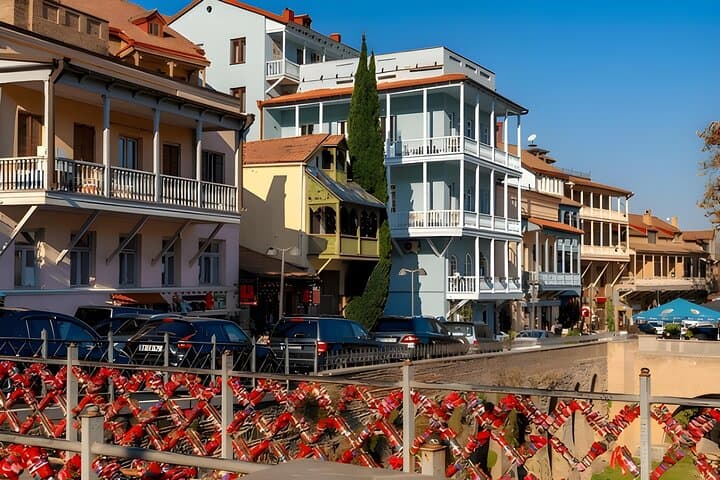

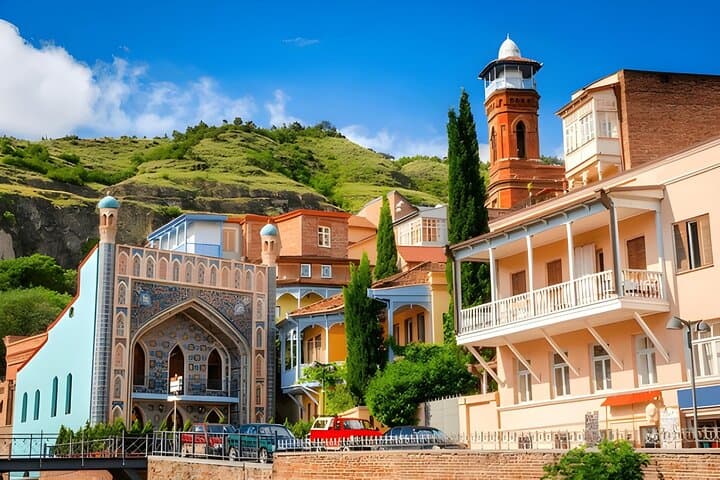
The tour begins on a bright city street: cobbles underfoot, the air carrying a faint mineral tang from the Sulphur Baths, and the skyline climbing to the rust-streaked walls of Narikala Fortress. A local guide threads the group through narrow alleys, where wooden balconies lean over wine bars and the chatter of café terraces fills the lanes.
The tour begins on a bright city street: cobbles underfoot, the air carrying a faint mineral tang from the Sulphur Baths, and the skyline climbing to the rust-streaked walls of Narikala Fortress. A local guide threads the group through narrow alleys, where wooden balconies lean over wine bars and the chatter of café terraces fills the lanes.
Old Tbilisi sits on thermal springs that shaped the city’s origin—legend says a hot spring led to the first settlement under Vakhtang Gorgasali. Geology is visible in the warm steam and layered masonry; culture appears in carved church facades and the aromatic bread from street ovens. The route crosses Rustaveli Avenue's broad, theatrical boulevards before funneling into intimate Kote Apkhazi Street and the Sulphur Bath district where public spa rituals continue a centuries-old habit.
Along the way the guide points out Rezo Gabriadze’s clock theater, Freedom Square’s St. George statue, and a tucked-away waterfall that drops into a cooled, mossy ravine. A cable car ascent to Narikala gives a compact panorama; a curated wine tasting introduces native varieties like saperavi and rkatsiteli.
Practical notes: wear sturdy shoes for cobbles and stairs, carry local cash for small purchases, and plan for roughly four hours including the cable car and tasting. The route is low-impact but includes uneven surfaces and steps; travelers with mobility constraints should check accessibility in advance. Expect an immersive, walkable primer on Tbilisi’s past and present.