THE ADVENTURE COLLECTIVE® · Independent discovery and booking for outdoor travel

Spend a private half-day navigating Tbilisi’s old town, sulfur baths, and Soviet-era monuments with a local driver-guide. Expect cobbled lanes, panoramic cable-car rides, and curated stops that reveal the city’s layered history.
Spend a private half-day navigating Tbilisi’s old town, sulfur baths, and Soviet-era monuments with a local driver-guide. Expect cobbled lanes, panoramic cable-car rides, and curated stops that reveal the city’s layered history.
The Mtkvari River cuts through the city like a silver ribbon, daring you to follow its bends into a tangle of cobbled alleys, painted balconies and domed bathhouses. On this private driver-guided half-day you move at the pace of the streets — stopping where the city insists you stop: a mosque with red brick calm, a clock tower that clicks into a small puppet show, a fortress that watches the roofs below.
Verified experiences and guided adventures in the surrounding area.
Operated by 11 Regions • Georgia · Tbilisi, Tbilisi
The Mtkvari River cuts through the city like a silver ribbon, daring you to follow its bends into a tangle of cobbled alleys, painted balconies and domed bathhouses. On this private driver-guided half-day you move at the pace of the streets — stopping where the city insists you stop: a mosque with red brick calm, a clock tower that clicks into a small puppet show, a fortress that watches the roofs below.
Tbilisi’s story layers centuries: foundations tied to early Georgian kings, an Ottoman influence in bathhouse architecture, and a Soviet imprint of monumental plazas and austere memorials. Geology matters here, too — the sulfur springs that forged the old baths come from tectonic activity along the Lesser Caucasus foothills, and the city’s hills create compact, walkable viewpoints that reward short climbs.
Local culture feels immediate: café chatter on Shardeni Street, vendors at Dry Bridge trading postcards and Soviet-era curios, and the Chronicle of Georgia’s towering columns narrating national history in stone. The cable car lifts you into panoramic vantage points where the city’s contrasts — ancient churches, modern bridges, Soviet-era blocks — align in one frame.
Practical guidance: plan for five to six hours, wear supportive shoes for uneven cobbles and short stair climbs, and bring a refillable water bottle; bottled water is usually provided but having your own keeps the pace uninterrupted. Morning light is best for photos and cooler walking; late afternoons offer warming colors and active markets. Ask your guide about quieter side streets — that’s where Tbilisi’s character reveals itself.
moderate.
5–6 hours.
Moderate fitness for walking on uneven surfaces and short uphill sections; able to climb stairs.
Private transportation is included; confirm your pickup point and time during booking so the driver meets you at a convenient location.
Most stops are viewpoints and public squares; specific admissions (if any) should be clarified with the operator before the tour.
Not recommended for travelers with serious back or heart problems; the route includes cobbled streets and some short climbs and stairs.
Guides are local and typically speak English; check availability of other languages when booking.
Tbilisi grew around sulfur springs and was shaped by Georgian kings, Ottoman and Persian rule, and later Soviet-era urban planning; the modern Holy Trinity Cathedral and the Chronicle of Georgia reflect both national and recent histories.
The old town faces pressures from tourism and development; stick to marked streets, support local artisans, and avoid feeding wildlife to reduce human impact.
11 Regions • Georgia operates guided outdoor trips and adventures with an emphasis on safety, stewardship, and memorable experiences.

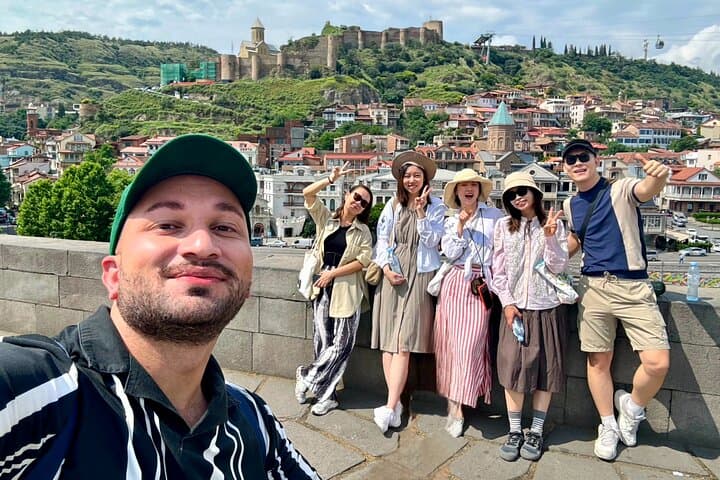


The Mtkvari River cuts through the city like a silver ribbon, daring you to follow its bends into a tangle of cobbled alleys, painted balconies and domed bathhouses. On this private driver-guided half-day you move at the pace of the streets — stopping where the city insists you stop: a mosque with red brick calm, a clock tower that clicks into a small puppet show, a fortress that watches the roofs below.
The Mtkvari River cuts through the city like a silver ribbon, daring you to follow its bends into a tangle of cobbled alleys, painted balconies and domed bathhouses. On this private driver-guided half-day you move at the pace of the streets — stopping where the city insists you stop: a mosque with red brick calm, a clock tower that clicks into a small puppet show, a fortress that watches the roofs below.
Tbilisi’s story layers centuries: foundations tied to early Georgian kings, an Ottoman influence in bathhouse architecture, and a Soviet imprint of monumental plazas and austere memorials. Geology matters here, too — the sulfur springs that forged the old baths come from tectonic activity along the Lesser Caucasus foothills, and the city’s hills create compact, walkable viewpoints that reward short climbs.
Local culture feels immediate: café chatter on Shardeni Street, vendors at Dry Bridge trading postcards and Soviet-era curios, and the Chronicle of Georgia’s towering columns narrating national history in stone. The cable car lifts you into panoramic vantage points where the city’s contrasts — ancient churches, modern bridges, Soviet-era blocks — align in one frame.
Practical guidance: plan for five to six hours, wear supportive shoes for uneven cobbles and short stair climbs, and bring a refillable water bottle; bottled water is usually provided but having your own keeps the pace uninterrupted. Morning light is best for photos and cooler walking; late afternoons offer warming colors and active markets. Ask your guide about quieter side streets — that’s where Tbilisi’s character reveals itself.