THE ADVENTURE COLLECTIVE® · Independent discovery and booking for outdoor travel

Experience Tbilisi’s festive transformation on a 2–3 hour guided walk from Liberty Square through Orbeliani Square’s Christmas bazaar. Taste local treats, see historic architecture lit for the season, and learn how Georgians celebrate the New Year.
Experience Tbilisi’s festive transformation on a 2–3 hour guided walk from Liberty Square through Orbeliani Square’s Christmas bazaar. Taste local treats, see historic architecture lit for the season, and learn how Georgians celebrate the New Year.
A cold evening light spills over Liberty Square, where the St. George column gleams amid strings of bulbs and the city hums like a pocket-sized festival. The walking tour moves deliberately through lit avenues and narrow alleyways, from Freedom Square into Orbeliani’s market stalls and the scent of roasting chestnuts, pausing where a violin threads through the air and the crowd leans in.
Verified experiences and guided adventures in the surrounding area.
Operated by Friendly.ge: Transfers & Tours in Georgia · Tbilisi, Tbilisi
A cold evening light spills over Liberty Square, where the St. George column gleams amid strings of bulbs and the city hums like a pocket-sized festival. The walking tour moves deliberately through lit avenues and narrow alleyways, from Freedom Square into Orbeliani’s market stalls and the scent of roasting chestnuts, pausing where a violin threads through the air and the crowd leans in.
Tbilisi’s layout tells a layered story: founded in the 5th century at a crossroads between Europe and Asia, the city’s streets show Persian, Ottoman and Russian influences in their façades and civic spaces. Geologically, the neighborhood sits on the Kura (Mtkvari) River’s floodplain, with thermal springs that shaped Abanotubani’s bath quarter; the river below seems to tug the city toward the sea, daring you to follow.
Culturally, the holiday markets are modern interpretations of long-standing winter feasts—local vendors sell churchkhela, spiced pastries and handmade wool goods; live music resurfaces traditional songs beside contemporary pop. Guides point out details: 19th-century balconies, Soviet-era market transformations and the President’s palace dressed for the season.
Practical guidance: expect about 3.5 km of walking over 2–3 hours on mostly paved, sometimes cobbled streets with short hills—not wheelchair-friendly. Dress in warm, water-resistant layers, bring a small supply of cash for market stalls, and wear grippy shoes for slick pavements. Tours operate in English, start at Liberty Square, and move at an easy pace with frequent stops for photos and tastings. Arrive on time—the group waits a maximum of 10 minutes—or book a private tour for extra flexibility.
easy.
2–3 hours.
Suitable for most visitors with normal mobility; expect a steady, easy walking pace over short distances and gentle inclines.
The tour starts at Liberty (Freedom) Square; aim to arrive 10–15 minutes early to find the guide and avoid the 10-minute wait policy.
Yes—the walk is easy and includes frequent stops, but the cobbled surfaces and short hills may be challenging for those with limited mobility.
The standard shared tour is conducted in English; private tours with other language options may be available on request.
Full refunds are available if cancelled at least 24 hours before the scheduled departure; cancellations within 24 hours are not refundable.
Tbilisi developed from a 5th-century settlement and grew as a crossroads on trade routes between Europe and Asia, leaving a mix of architectural influences seen along Rustaveli and Orbeliani districts.
Support local artisans and reduce waste by using a reusable bottle and bag; markets can generate significant seasonal litter, so minimize single-use disposables.
Friendly.ge: Transfers & Tours in Georgia operates guided outdoor trips and adventures with an emphasis on safety, stewardship, and memorable experiences.
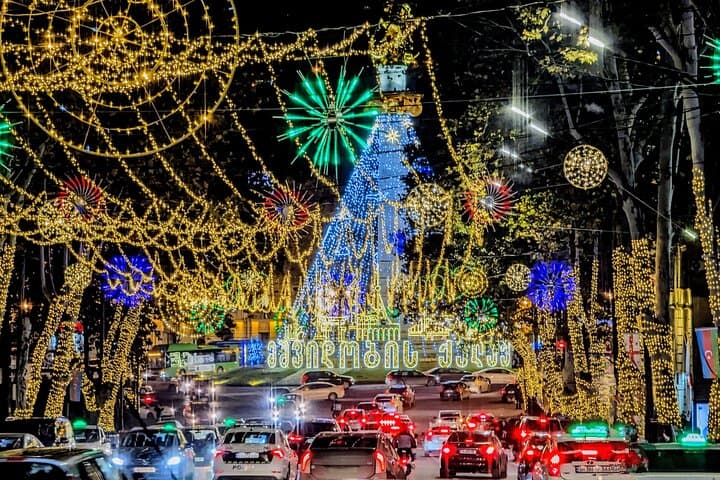
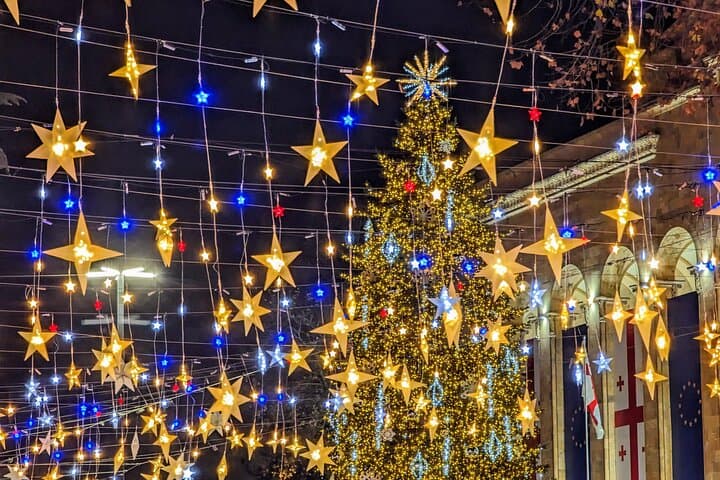
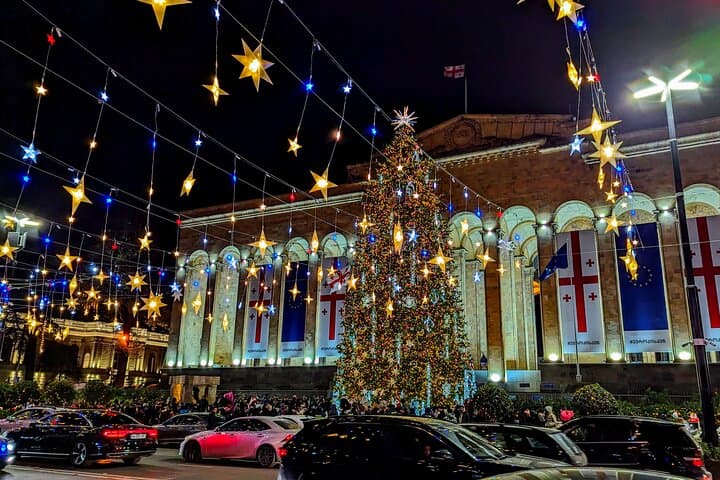
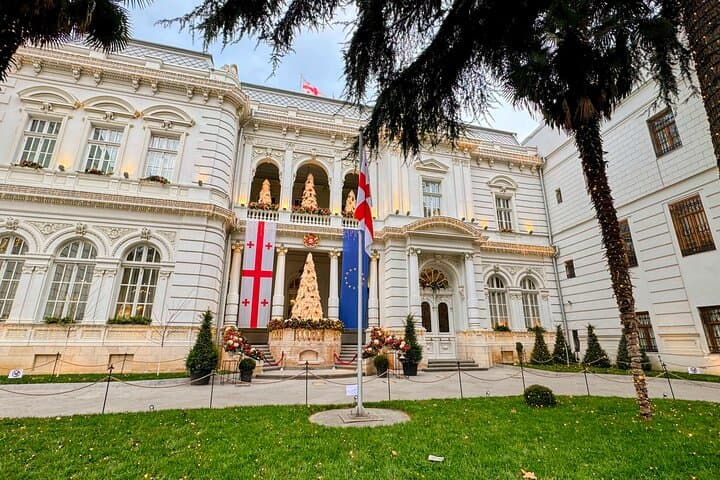
A cold evening light spills over Liberty Square, where the St. George column gleams amid strings of bulbs and the city hums like a pocket-sized festival. The walking tour moves deliberately through lit avenues and narrow alleyways, from Freedom Square into Orbeliani’s market stalls and the scent of roasting chestnuts, pausing where a violin threads through the air and the crowd leans in.
A cold evening light spills over Liberty Square, where the St. George column gleams amid strings of bulbs and the city hums like a pocket-sized festival. The walking tour moves deliberately through lit avenues and narrow alleyways, from Freedom Square into Orbeliani’s market stalls and the scent of roasting chestnuts, pausing where a violin threads through the air and the crowd leans in.
Tbilisi’s layout tells a layered story: founded in the 5th century at a crossroads between Europe and Asia, the city’s streets show Persian, Ottoman and Russian influences in their façades and civic spaces. Geologically, the neighborhood sits on the Kura (Mtkvari) River’s floodplain, with thermal springs that shaped Abanotubani’s bath quarter; the river below seems to tug the city toward the sea, daring you to follow.
Culturally, the holiday markets are modern interpretations of long-standing winter feasts—local vendors sell churchkhela, spiced pastries and handmade wool goods; live music resurfaces traditional songs beside contemporary pop. Guides point out details: 19th-century balconies, Soviet-era market transformations and the President’s palace dressed for the season.
Practical guidance: expect about 3.5 km of walking over 2–3 hours on mostly paved, sometimes cobbled streets with short hills—not wheelchair-friendly. Dress in warm, water-resistant layers, bring a small supply of cash for market stalls, and wear grippy shoes for slick pavements. Tours operate in English, start at Liberty Square, and move at an easy pace with frequent stops for photos and tastings. Arrive on time—the group waits a maximum of 10 minutes—or book a private tour for extra flexibility.