THE ADVENTURE COLLECTIVE® · Independent discovery and booking for outdoor travel

Explore Tbilisi’s hilltop viewpoints, Narikala Fortress and the ancient capital of Mtskheta on a private 5–7 hour day tour. Expect panoramic cable-car lifts, botanical terraces and centuries-old churches with a local driver-guide and homemade Georgian wine.
Explore Tbilisi’s hilltop viewpoints, Narikala Fortress and the ancient capital of Mtskheta on a private 5–7 hour day tour. Expect panoramic cable-car lifts, botanical terraces and centuries-old churches with a local driver-guide and homemade Georgian wine.
You step out of an air-conditioned van onto a terrace above Tbilisi and the city spreads below — a jumble of rust-red roofs, glass bridges and the slow bend of the Kura River daring you to cross. The cable car hisses and lifts you toward Mtatsminda Park; the wind pushes like an impatient local, urging you to look farther, to trace the ridgelines toward the Caucasus.
Verified experiences and guided adventures in the surrounding area.
Operated by Georgian Paradise · Tbilisi, Tbilisi
You step out of an air-conditioned van onto a terrace above Tbilisi and the city spreads below — a jumble of rust-red roofs, glass bridges and the slow bend of the Kura River daring you to cross. The cable car hisses and lifts you toward Mtatsminda Park; the wind pushes like an impatient local, urging you to look farther, to trace the ridgelines toward the Caucasus.
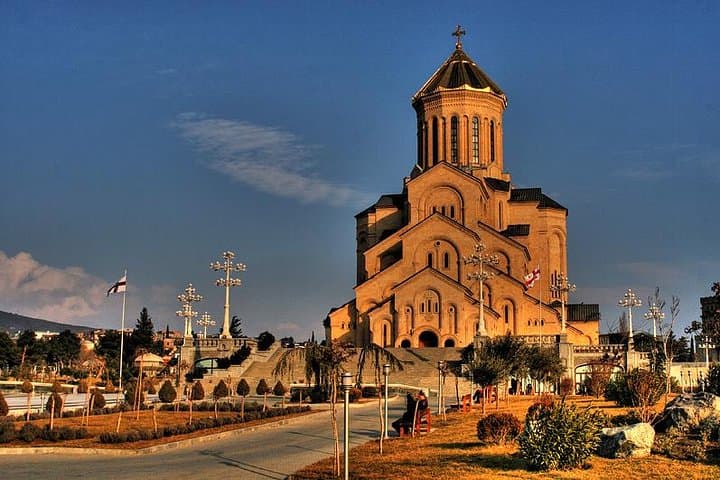
This full-day private tour stitches together two chapters of Georgian history. Tbilisi’s 4th-century origins surface in Abanot Ubani’s sulphur baths and the medieval ramparts of Narikala, while the Botanical Garden and Holy Trinity Cathedral show later layers of civic and spiritual life. A short drive west brings you to Mtskheta — once Georgia’s capital — where Jvari Monastery perches on a promontory watching the confluence of the Aragvi and Kura rivers.
Geology and culture meet at every stop: volcanic thermal springs fuel the baths, river valleys carve view corridors, and centuries of Orthodox architecture press their presence into narrow streets. Local touches — the driver-guide’s homemade wine, a walk through Fabrika’s converted Soviet courtyards — round the day.
Practical guide: the itinerary covers 5–7 hours with frequent short walks, some steep cobbles and viewpoints at 200–500 m elevation. Wear grippy shoes for stone streets and a light layer for breezy overlooks. Bring cash for small museum fees and tips; bottled water is provided but carry a refillable bottle to reduce plastic. Morning departures avoid afternoon heat and give clearer light for cathedral interiors. Expect a steady pace, accessible routes for most travelers, and plenty of photo stops.
easy.
5–7 hours.
Suitable for most fitness levels; involves repeated short walks, some uphill cobbled sections and standing during viewpoints.
The tour includes private transport, bottled water and pick-up; some historic sites and viewpoints may require separate admission or donations—confirm specifics with the operator before departure.
The vehicle and many viewpoints are accessible, but expect uneven cobbles and steps at Narikala, Jvari and some old-town streets that can limit full wheelchair access.
Mtskheta is about a 20–30 minute drive west of central Tbilisi, traffic dependent; the tour schedules stops to allow time for views and visits.
The tour provides bottled water and local refreshments like homemade wine; notify the operator in advance for any food restrictions or special requests.
Tbilisi dates to the 4th century and grew as a crossroads of empires; nearby Mtskheta served as Georgia’s early political and spiritual center, with monuments from the early medieval period.
Many sites are UNESCO-protected or locally managed — stick to marked paths, avoid touching ancient masonry and minimize single-use plastics to protect fragile historic and natural areas.
Georgian Paradise operates guided outdoor trips and adventures with an emphasis on safety, stewardship, and memorable experiences.
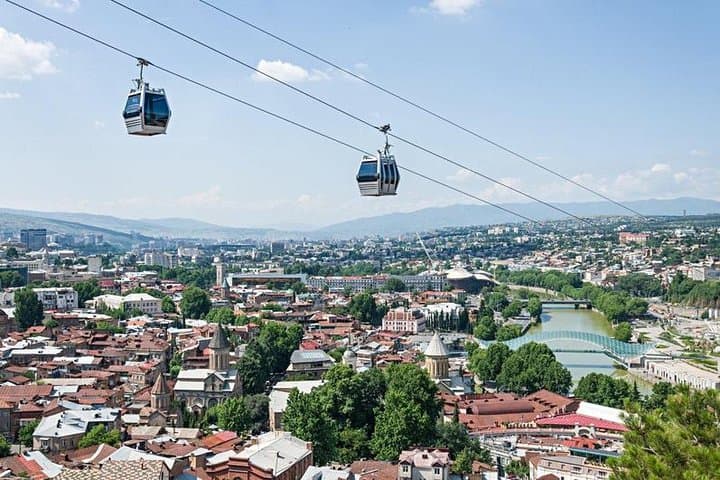
You step out of an air-conditioned van onto a terrace above Tbilisi and the city spreads below — a jumble of rust-red roofs, glass bridges and the slow bend of the Kura River daring you to cross. The cable car hisses and lifts you toward Mtatsminda Park; the wind pushes like an impatient local, urging you to look farther, to trace the ridgelines toward the Caucasus.
You step out of an air-conditioned van onto a terrace above Tbilisi and the city spreads below — a jumble of rust-red roofs, glass bridges and the slow bend of the Kura River daring you to cross. The cable car hisses and lifts you toward Mtatsminda Park; the wind pushes like an impatient local, urging you to look farther, to trace the ridgelines toward the Caucasus.
This full-day private tour stitches together two chapters of Georgian history. Tbilisi’s 4th-century origins surface in Abanot Ubani’s sulphur baths and the medieval ramparts of Narikala, while the Botanical Garden and Holy Trinity Cathedral show later layers of civic and spiritual life. A short drive west brings you to Mtskheta — once Georgia’s capital — where Jvari Monastery perches on a promontory watching the confluence of the Aragvi and Kura rivers.
Geology and culture meet at every stop: volcanic thermal springs fuel the baths, river valleys carve view corridors, and centuries of Orthodox architecture press their presence into narrow streets. Local touches — the driver-guide’s homemade wine, a walk through Fabrika’s converted Soviet courtyards — round the day.
Practical guide: the itinerary covers 5–7 hours with frequent short walks, some steep cobbles and viewpoints at 200–500 m elevation. Wear grippy shoes for stone streets and a light layer for breezy overlooks. Bring cash for small museum fees and tips; bottled water is provided but carry a refillable bottle to reduce plastic. Morning departures avoid afternoon heat and give clearer light for cathedral interiors. Expect a steady pace, accessible routes for most travelers, and plenty of photo stops.