THE ADVENTURE COLLECTIVE® · Independent discovery and booking for outdoor travel

See towering snow walls on a full-day coach tour from Nagoya to Murodo, the highest point on the Tateyama Kurobe Alpine Route. Expect dramatic alpine scenery, short town stops, and practical guidance for cold, changeable spring weather.
See towering snow walls on a full-day coach tour from Nagoya to Murodo, the highest point on the Tateyama Kurobe Alpine Route. Expect dramatic alpine scenery, short town stops, and practical guidance for cold, changeable spring weather.
A cold wind cuts across Murodo’s high plateau and the coach eases into a landscape still shaped by winter: towering white walls that frame a narrow corridor beneath a pale sky. Visitors step off the bus into an otherworldly alley of snow where plows have carved vertical faces—sometimes towering nearly 20 meters—so close the sun bounces off the walls and every breath steams.
Verified experiences and guided adventures in the surrounding area.
Operated by Club Tourism International Inc. · Tateyama, Toyama Prefecture
A cold wind cuts across Murodo’s high plateau and the coach eases into a landscape still shaped by winter: towering white walls that frame a narrow corridor beneath a pale sky. Visitors step off the bus into an otherworldly alley of snow where plows have carved vertical faces—sometimes towering nearly 20 meters—so close the sun bounces off the walls and every breath steams.
The Alpine Route traces a modern engineering story: early 20th-century mountain access expanded into a linked ropeway, trolley, and road system that made the high mountains accessible. Geologically, this is a young, uplifted range of granite and volcanic intrusions, scoured by heavy winter snows that compress into the massive drifts cleared each spring. Culturally, Tateyama is part pilgrimage route, part local retreat—shops in Tateyama town sell regional sweets and warm soba that travelers favor after crisp alpine air.
Practically, the trip is a long but manageable day: expect roughly 4–5 hours one-way coach time from Nagoya with short stops in Tateyama and a two-hour window at Murodo (2,450 m). Temperatures remain near or below 10°C in spring; snow boots or sturdy walking shoes with grip, insulated layers, and sunglasses are essential. Photography is rewarding but watch for glare and changing weather; the Snow Wall is best seen April–June and can be shortened or canceled in poor visibility. Bring a small backpack, water, and your boxed lunch will be provided on the tour. For travelers who want a concentrated taste of Japan’s high country, the route delivers dramatic alpine scenery with minimal hiking, making it a high-altitude, low-effort day venture.
easy.
15 hours (full-day).
Suitable for most fitness levels; involves short, easy walks at high altitude and several transfers.
The Snow Wall corridor is typically open from mid-April through late June, depending on winter snowfall and road clearance schedules.
The itinerary includes about two hours at Murodo—enough time to walk the Snow Wall, take photos, and eat the provided boxed lunch.
Infants and small children can ride in a pram for parts of the trip, but parents should be prepared to carry children during snowy sections; children aged 3+ are charged at adult rates per operator policy.
If heavy snow or poor visibility makes the Snow Wall unsafe, the operator may shorten or cancel that stop; cancellations due to route closures are decided by 3pm the day before departure when possible.
The Tateyama Kurobe Alpine Route was developed in the 20th century to connect isolated valleys; Kurobe Dam’s construction in the 1950s further opened the region to large-scale tourism.
Alpine plants and birdlife are fragile—stay on cleared paths, avoid trampling snowbeds, and follow local guidance to minimize impact.
Club Tourism International Inc. operates guided outdoor trips and adventures with an emphasis on safety, stewardship, and memorable experiences.
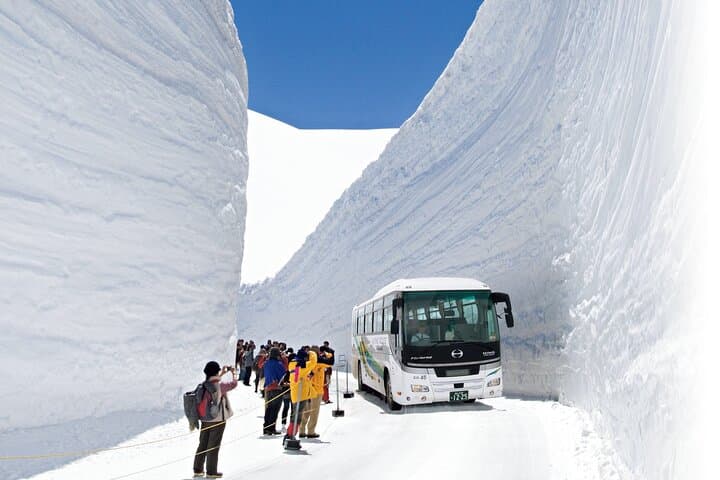
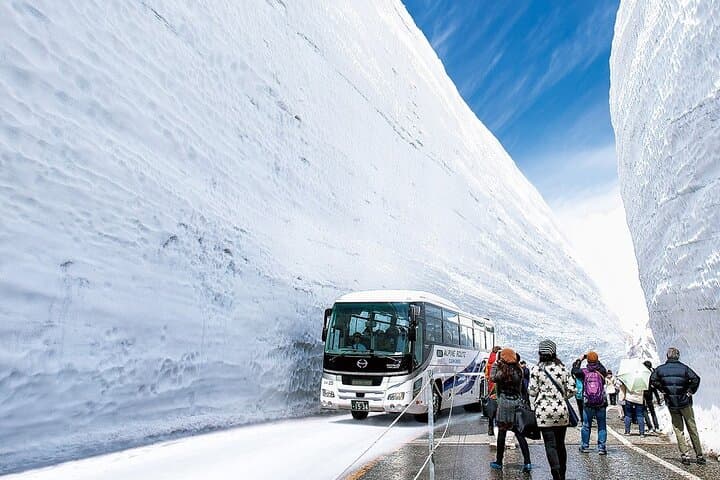
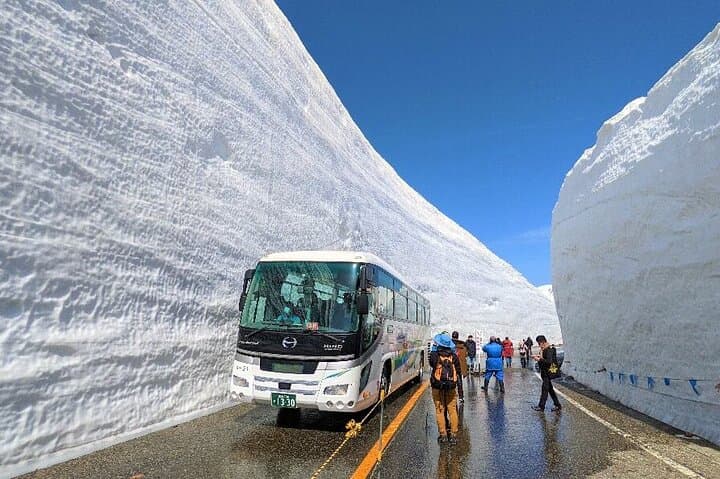
A cold wind cuts across Murodo’s high plateau and the coach eases into a landscape still shaped by winter: towering white walls that frame a narrow corridor beneath a pale sky. Visitors step off the bus into an otherworldly alley of snow where plows have carved vertical faces—sometimes towering nearly 20 meters—so close the sun bounces off the walls and every breath steams.
A cold wind cuts across Murodo’s high plateau and the coach eases into a landscape still shaped by winter: towering white walls that frame a narrow corridor beneath a pale sky. Visitors step off the bus into an otherworldly alley of snow where plows have carved vertical faces—sometimes towering nearly 20 meters—so close the sun bounces off the walls and every breath steams.
The Alpine Route traces a modern engineering story: early 20th-century mountain access expanded into a linked ropeway, trolley, and road system that made the high mountains accessible. Geologically, this is a young, uplifted range of granite and volcanic intrusions, scoured by heavy winter snows that compress into the massive drifts cleared each spring. Culturally, Tateyama is part pilgrimage route, part local retreat—shops in Tateyama town sell regional sweets and warm soba that travelers favor after crisp alpine air.
Practically, the trip is a long but manageable day: expect roughly 4–5 hours one-way coach time from Nagoya with short stops in Tateyama and a two-hour window at Murodo (2,450 m). Temperatures remain near or below 10°C in spring; snow boots or sturdy walking shoes with grip, insulated layers, and sunglasses are essential. Photography is rewarding but watch for glare and changing weather; the Snow Wall is best seen April–June and can be shortened or canceled in poor visibility. Bring a small backpack, water, and your boxed lunch will be provided on the tour. For travelers who want a concentrated taste of Japan’s high country, the route delivers dramatic alpine scenery with minimal hiking, making it a high-altitude, low-effort day venture.