THE ADVENTURE COLLECTIVE® · Independent discovery and booking for outdoor travel

Walk through Tel Aviv’s busiest market with a local guide, sampling spices, breads and street food while learning the neighborhood’s 20th-century roots. This 90-minute private tour pairs sensory discovery with practical tips for navigating the shuk.
Walk through Tel Aviv’s busiest market with a local guide, sampling spices, breads and street food while learning the neighborhood’s 20th-century roots. This 90-minute private tour pairs sensory discovery with practical tips for navigating the shuk.
You step off Dizengoff Street into a corridor of color and sound: baskets brush past, a vendor calls out a price, and the scent of cumin and baked bread threads through the air. Shuk HaCarmel moves like a city in miniature—urgent, curious, alive—inviting you to follow alleyways where fresh produce, spice stalls and small cafés crowd the pavement.
Verified experiences and guided adventures in the surrounding area.
Operated by GuidedLocal · Tel Aviv-Yafo, Tel Aviv District
You step off Dizengoff Street into a corridor of color and sound: baskets brush past, a vendor calls out a price, and the scent of cumin and baked bread threads through the air. Shuk HaCarmel moves like a city in miniature—urgent, curious, alive—inviting you to follow alleyways where fresh produce, spice stalls and small cafés crowd the pavement.
The market dates to the 1920s, born as Tel Aviv expanded on the coastal plain of the Mediterranean. The neighborhood’s sandy soils gave way to commerce; Ottoman and British Mandate-era influences still echo in stall layouts and recipes. Here, modern Israeli street food riffs on immigrant cuisines from Yemen, North Africa and Eastern Europe; olive oil and za’atar are as essential as the morning baker.
Expect tight aisles, stacked crates, and vendors who measure hospitality in tastes. The experience is sensory: citrus that snaps on the tongue, spices that dare you to mix them, and bakers pulling warm challah. The tour’s guided format adds cultural context—stories about migration, local foodways and the market’s weekly rhythms—so you see more than just products.
Practical side: the route is flat and compact, about 1–1.5 hours of walking at an easy pace. Bring small change, wear comfortable shoes, and time your visit for morning or late afternoon to avoid the hottest midday hours. If you have dietary restrictions, tell your guide in advance so vendors can tailor tastings. Leave room in your bag for purchases; this market rewards curiosity and careful pacing.
easy.
1–1.5 hours.
Suitable for most fitness levels; requires only light walking and standing
The market has some narrow and crowded aisles; while parts are flat, accessibility can be limited—contact the operator ahead to confirm suitable routes.
Yes—guided tastings are part of the experience, though exact items may change seasonally and vendors may offer additional purchases for a fee.
Language offerings vary by operator; check the booking page for available guide languages or request one when you book.
Meet directly in front of the 7-11 at the entrance to the market, as noted by the operator; arrive a few minutes early for a prompt departure.
Carmel Market grew in the 1920s as Tel Aviv expanded along the Mediterranean coastal plain, reflecting waves of immigrant culinary traditions.
Vendors and visitors are increasingly minimizing single-use plastics; bringing a reusable bag and bottle reduces waste and supports local sustainability efforts.
GuidedLocal operates guided outdoor trips and adventures with an emphasis on safety, stewardship, and memorable experiences.


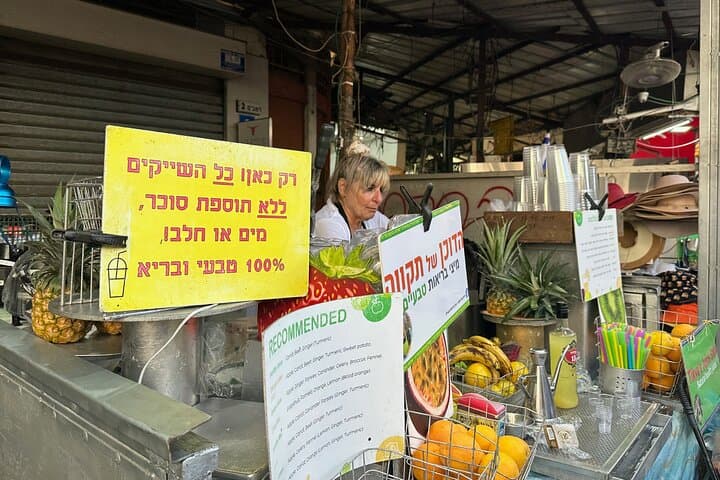
You step off Dizengoff Street into a corridor of color and sound: baskets brush past, a vendor calls out a price, and the scent of cumin and baked bread threads through the air. Shuk HaCarmel moves like a city in miniature—urgent, curious, alive—inviting you to follow alleyways where fresh produce, spice stalls and small cafés crowd the pavement.
You step off Dizengoff Street into a corridor of color and sound: baskets brush past, a vendor calls out a price, and the scent of cumin and baked bread threads through the air. Shuk HaCarmel moves like a city in miniature—urgent, curious, alive—inviting you to follow alleyways where fresh produce, spice stalls and small cafés crowd the pavement.
The market dates to the 1920s, born as Tel Aviv expanded on the coastal plain of the Mediterranean. The neighborhood’s sandy soils gave way to commerce; Ottoman and British Mandate-era influences still echo in stall layouts and recipes. Here, modern Israeli street food riffs on immigrant cuisines from Yemen, North Africa and Eastern Europe; olive oil and za’atar are as essential as the morning baker.
Expect tight aisles, stacked crates, and vendors who measure hospitality in tastes. The experience is sensory: citrus that snaps on the tongue, spices that dare you to mix them, and bakers pulling warm challah. The tour’s guided format adds cultural context—stories about migration, local foodways and the market’s weekly rhythms—so you see more than just products.
Practical side: the route is flat and compact, about 1–1.5 hours of walking at an easy pace. Bring small change, wear comfortable shoes, and time your visit for morning or late afternoon to avoid the hottest midday hours. If you have dietary restrictions, tell your guide in advance so vendors can tailor tastings. Leave room in your bag for purchases; this market rewards curiosity and careful pacing.