THE ADVENTURE COLLECTIVE® · Independent discovery and booking for outdoor travel

Explore Bucharest’s contrasts in a small-group, 4-hour circuit that pairs the Palace of Parliament and Revolution Square with the open-air National Village Museum. Move efficiently between monumental history and intimate cultural corners with a local guide.
Explore Bucharest’s contrasts in a small-group, 4-hour circuit that pairs the Palace of Parliament and Revolution Square with the open-air National Village Museum. Move efficiently between monumental history and intimate cultural corners with a local guide.
You step into an elegant minibus and the city opens like a page of history—the Dâmbovița cutting a silver line through blocks of neoclassical facades, communist-era behemoths and pocket parks. The tour moves at a human pace: quick stops, a guided walk through the Old Town, and a longer visit to the National Village Museum where wooden churches and windmills hold quiet centuries of rural life.
Verified experiences and guided adventures in the surrounding area.
Operated by Nicolas Experience Tours · Bucharest, Bucharest
You step into an elegant minibus and the city opens like a page of history—the Dâmbovița cutting a silver line through blocks of neoclassical facades, communist-era behemoths and pocket parks. The tour moves at a human pace: quick stops, a guided walk through the Old Town, and a longer visit to the National Village Museum where wooden churches and windmills hold quiet centuries of rural life.
Bucharest sits on the Wallachian Plain; its built fabric is a palimpsest of Ottoman trade routes, 19th-century modernization, interwar eclecticism and the stark imprint of Ceaușescu’s late-20th-century megaprojects. The Palace of Parliament — an exercise in scale and state power — contrasts sharply with the intimate courtyard of Hanul lui Manuc and the cobbled lanes of Lipscani where cafés and bookshops spill onto the street.
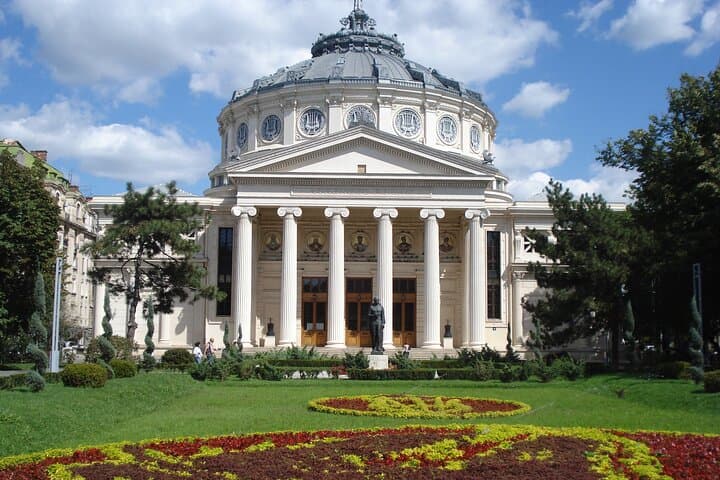
Expect history in concentrated doses: Revolution Square’s narrative of 1989, the National Village Museum’s architectural mosaics, and Calea Victoriei’s sequence of museums, theatres and the Romanian Athenaeum. Terrain is flat; walking is mostly on pavement with occasional gravel at the open-air museum. Distances between stops are short but you’ll be on your feet for brief guided walks.
Practical guidance: book morning slots to avoid late-afternoon traffic, bring a reusable water bottle and smaller bills for optional admissions or souvenirs, and wear comfortable shoes for 2–4 km of walking total. Check pickup details at booking and confirm any accessibility needs—this small-group format keeps the pace relaxed but timed. For mid-season showers a light rain shell will keep the experience uninterrupted.
easy.
3.8–4.5 hours.
Light urban fitness—able to walk 2–4 km with short periods standing for commentary
Admissions are generally not included; the itinerary notes which stops are longer visits versus pass-bys—confirm any specific entry fees at booking.
Pickup options are offered but vary; you’ll be asked to choose or confirm a pickup point during booking—check the operator’s instructions sent after reservation.
Yes—infant seats are available and the tour is rated physically easy, but consider noise and the length of time younger children will need to be on the move.
Guides typically speak English; confirm language needs at booking to ensure an appropriate guide or a private arrangement.
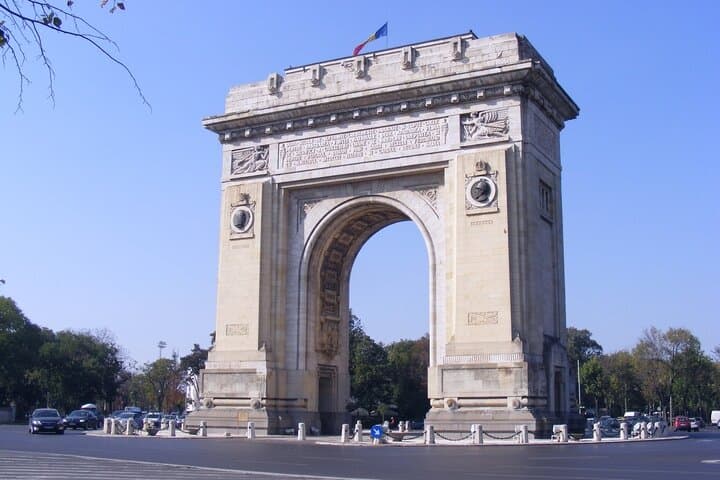
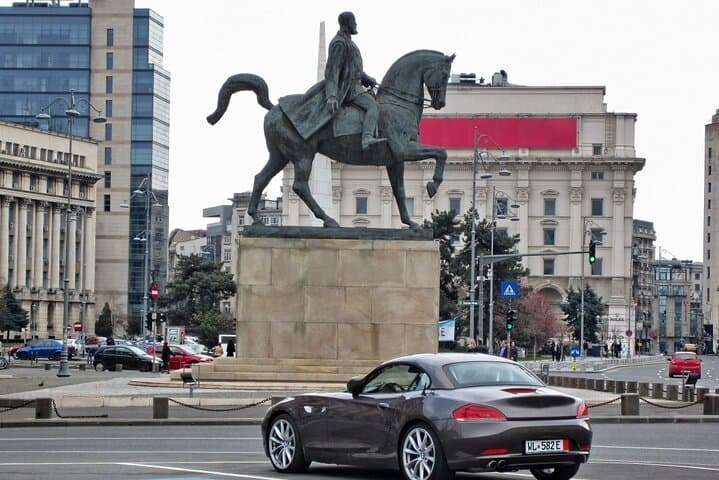
Bucharest’s modern form reflects rapid 19th-century growth and a radical reshaping under Ceaușescu; Revolution Square marks the flashpoint where 1989 ended the regime.
The National Village Museum preserves vernacular wooden architecture—visitors should stick to designated paths and avoid touching fragile structures to help long-term conservation.
Nicolas Experience Tours operates guided outdoor trips and adventures with an emphasis on safety, stewardship, and memorable experiences.
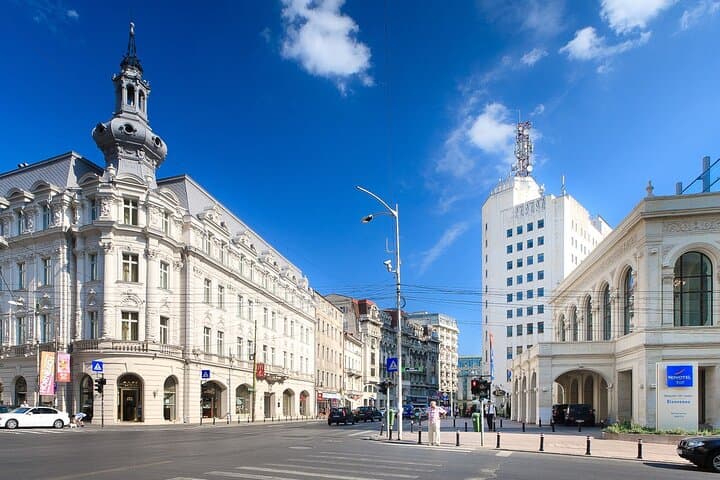
You step into an elegant minibus and the city opens like a page of history—the Dâmbovița cutting a silver line through blocks of neoclassical facades, communist-era behemoths and pocket parks. The tour moves at a human pace: quick stops, a guided walk through the Old Town, and a longer visit to the National Village Museum where wooden churches and windmills hold quiet centuries of rural life.
You step into an elegant minibus and the city opens like a page of history—the Dâmbovița cutting a silver line through blocks of neoclassical facades, communist-era behemoths and pocket parks. The tour moves at a human pace: quick stops, a guided walk through the Old Town, and a longer visit to the National Village Museum where wooden churches and windmills hold quiet centuries of rural life.
Bucharest sits on the Wallachian Plain; its built fabric is a palimpsest of Ottoman trade routes, 19th-century modernization, interwar eclecticism and the stark imprint of Ceaușescu’s late-20th-century megaprojects. The Palace of Parliament — an exercise in scale and state power — contrasts sharply with the intimate courtyard of Hanul lui Manuc and the cobbled lanes of Lipscani where cafés and bookshops spill onto the street.
Expect history in concentrated doses: Revolution Square’s narrative of 1989, the National Village Museum’s architectural mosaics, and Calea Victoriei’s sequence of museums, theatres and the Romanian Athenaeum. Terrain is flat; walking is mostly on pavement with occasional gravel at the open-air museum. Distances between stops are short but you’ll be on your feet for brief guided walks.
Practical guidance: book morning slots to avoid late-afternoon traffic, bring a reusable water bottle and smaller bills for optional admissions or souvenirs, and wear comfortable shoes for 2–4 km of walking total. Check pickup details at booking and confirm any accessibility needs—this small-group format keeps the pace relaxed but timed. For mid-season showers a light rain shell will keep the experience uninterrupted.