THE ADVENTURE COLLECTIVE® · Independent discovery and booking for outdoor travel

Explore Tashkent’s Soviet-era modernism on a focused walking tour of monumental public buildings and the city’s ornate subway stations. Learn how post‑1966 rebuilding shaped the urban fabric, with practical tips for navigating stations and plazas.
Explore Tashkent’s Soviet-era modernism on a focused walking tour of monumental public buildings and the city’s ornate subway stations. Learn how post‑1966 rebuilding shaped the urban fabric, with practical tips for navigating stations and plazas.
You step out from a wide Soviet-era boulevard and the city speaks in concrete and carved stone — flat planes meeting bold ornament, stations that hide chandeliers beneath a pragmatic ceiling. The morning light grazes the facades of post-1966 earthquake reconstruction: experimental blocks, civic palaces, and metro entrances that still insist on ceremony.
Verified experiences and guided adventures in the surrounding area.
Operated by Tashkent Free Walking Tour · Tashkent, Tashkent Region
You step out from a wide Soviet-era boulevard and the city speaks in concrete and carved stone — flat planes meeting bold ornament, stations that hide chandeliers beneath a pragmatic ceiling. The morning light grazes the facades of post-1966 earthquake reconstruction: experimental blocks, civic palaces, and metro entrances that still insist on ceremony.
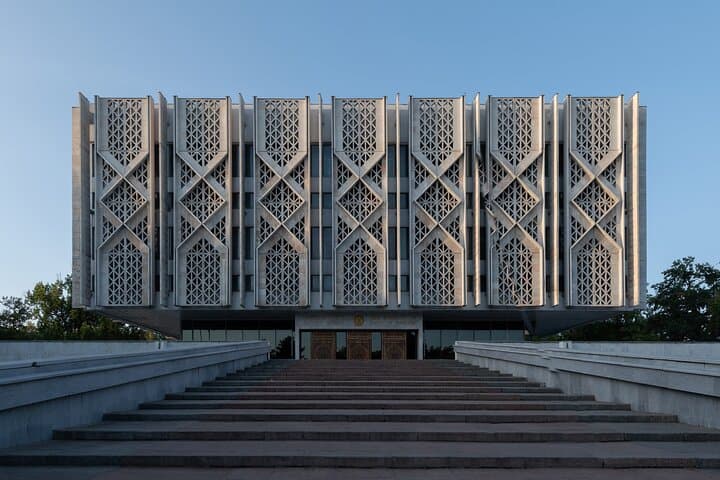
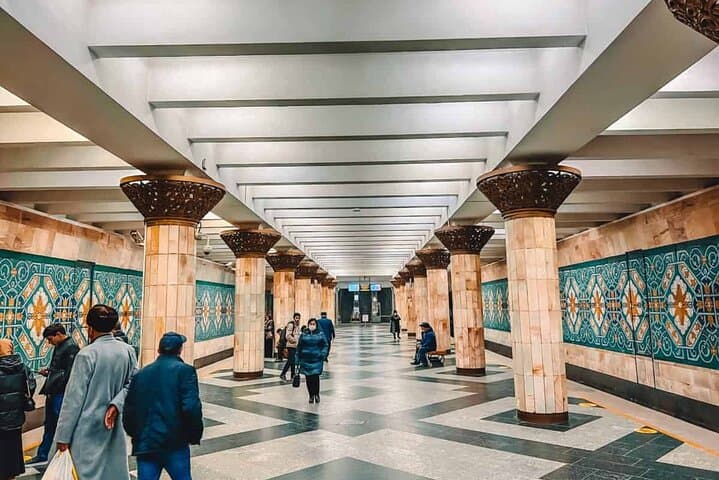
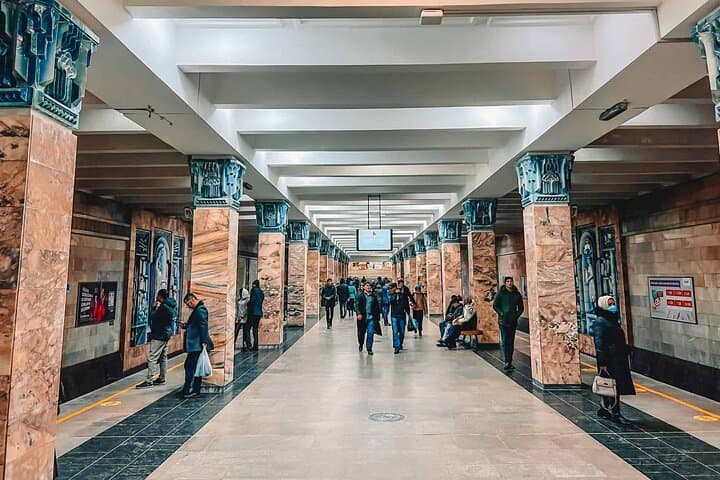
This walk traces Tashkent’s Soviet chapter: planners who rebuilt a damaged capital into a model of modernism, engineers who translated ideology into public space, and artisans who turned underground stations into civic galleries. Expect stops at Amir Temur Square and the Uzbekistan Hotel axis, the Museum of History, the Monument of Courage (a marker of the 1966 quake era), the Friendship of Nations Palace, and several of the metro’s most ornate stations where marble, bas-relief, mosaics and sculptural lighting recall mid‑20th‑century urban design.
The geology beneath the city — a flat, alluvial plain — made a deep, stable platform for a sprawling subway network; the 1970s stations doubled as cultural showcases. Along the way a guide will point out structural experiments, inscription styles, and how Soviet planning shaped Tashkent’s public life.
Practical side: the tour runs about 2–2.5 hours on mostly paved surfaces with short walks between sites; bring comfortable shoes and a light jacket for cooler underground air. Public transit connects easily to the meeting point; the tour is wheelchair accessible but check specifics with your operator. Carry water, a charged phone for photos, and a passport if you plan to use local metro cards — the stations are both history and working infrastructure.
easy.
2–2.5 hours.
Suitable for most fitness levels; requires standing and walking short distances and climbs of station stairs.
The tour lasts approximately 2 to 2.5 hours, covering several surface sites and multiple metro stations.
The itinerary includes visits to major stations; check your booking for whether metro rides are covered or if local fare is needed.
The tour listing notes wheelchair accessibility, but accessibility can vary by station—confirm specifics with the operator in advance.
Language options depend on the operator; check the booking page or request a specific language when you reserve.
Tashkent was extensively rebuilt after the 1966 earthquake; Soviet modernist planning and public art shaped much of the cityscape seen today.
Public infrastructure in Tashkent is actively maintained; visitors are encouraged to follow local rules, avoid graffiti, and use marked walkways to protect historic finishes.
Tashkent Free Walking Tour operates guided outdoor trips and adventures with an emphasis on safety, stewardship, and memorable experiences.
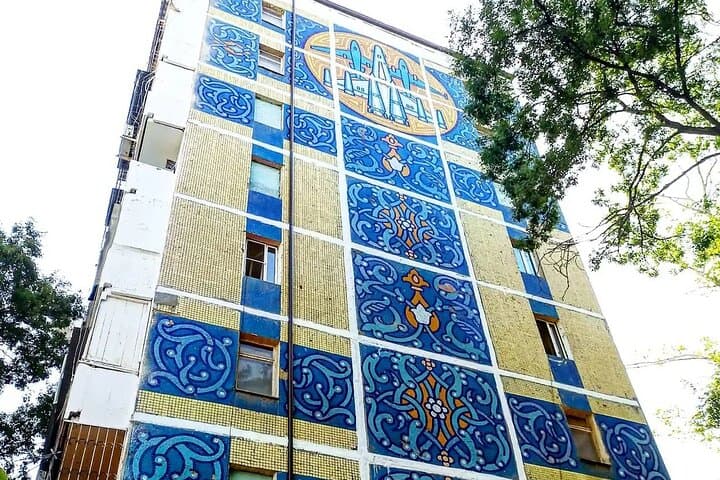
You step out from a wide Soviet-era boulevard and the city speaks in concrete and carved stone — flat planes meeting bold ornament, stations that hide chandeliers beneath a pragmatic ceiling. The morning light grazes the facades of post-1966 earthquake reconstruction: experimental blocks, civic palaces, and metro entrances that still insist on ceremony.
You step out from a wide Soviet-era boulevard and the city speaks in concrete and carved stone — flat planes meeting bold ornament, stations that hide chandeliers beneath a pragmatic ceiling. The morning light grazes the facades of post-1966 earthquake reconstruction: experimental blocks, civic palaces, and metro entrances that still insist on ceremony.
This walk traces Tashkent’s Soviet chapter: planners who rebuilt a damaged capital into a model of modernism, engineers who translated ideology into public space, and artisans who turned underground stations into civic galleries. Expect stops at Amir Temur Square and the Uzbekistan Hotel axis, the Museum of History, the Monument of Courage (a marker of the 1966 quake era), the Friendship of Nations Palace, and several of the metro’s most ornate stations where marble, bas-relief, mosaics and sculptural lighting recall mid‑20th‑century urban design.
The geology beneath the city — a flat, alluvial plain — made a deep, stable platform for a sprawling subway network; the 1970s stations doubled as cultural showcases. Along the way a guide will point out structural experiments, inscription styles, and how Soviet planning shaped Tashkent’s public life.
Practical side: the tour runs about 2–2.5 hours on mostly paved surfaces with short walks between sites; bring comfortable shoes and a light jacket for cooler underground air. Public transit connects easily to the meeting point; the tour is wheelchair accessible but check specifics with your operator. Carry water, a charged phone for photos, and a passport if you plan to use local metro cards — the stations are both history and working infrastructure.