THE ADVENTURE COLLECTIVE® · Independent discovery and booking for outdoor travel

Explore Tarragona’s layered past on a focused two-hour private walk that moves from Roman walls and underground vaults to the panoramic Mediterranean Balcony. Ideal for history-minded travelers who want archaeological context without a full-day commitment.
Explore Tarragona’s layered past on a focused two-hour private walk that moves from Roman walls and underground vaults to the panoramic Mediterranean Balcony. Ideal for history-minded travelers who want archaeological context without a full-day commitment.
A thin, salt-scented wind pushes visitors toward a stone arena where shadows still hold the outline of ancient crowds. The two-hour private walk moves from carved city walls into narrow streets, slipping beneath the city to vaults and corridors that reveal Tarragona’s Roman heart, and finishes on the sea-facing Mirador del Balcó del Mediterrani where the port and beach open outward like a page turned.
Verified experiences and guided adventures in the surrounding area.
Operated by Itinere - Day Tours · Tarragona, Catalonia
A thin, salt-scented wind pushes visitors toward a stone arena where shadows still hold the outline of ancient crowds. The two-hour private walk moves from carved city walls into narrow streets, slipping beneath the city to vaults and corridors that reveal Tarragona’s Roman heart, and finishes on the sea-facing Mirador del Balcó del Mediterrani where the port and beach open outward like a page turned.
Tarragona was one of Hispania’s principal Roman centers; its amphitheater, circus and city walls date to the first centuries BCE–CE and sit directly under the medieval Old Town. Geologically the coastline here is low limestone and Miocene sediment that has kept the ruins remarkably intact; the city’s layout still follows Roman orthogonal patterns interrupted by later medieval layers. Locals keep alive traditions such as castells (human towers), a living cultural performance visible in town squares during festival season.
Practical guidance: the tour includes entrance to the Roman Circus and visits vaults under the stands, so bring comfortable, grippy shoes for uneven stone and short staircases. The route is compact but involves walking on cobbles and steps; a moderate level of fitness helps. Mornings and late afternoons are best to avoid Mediterranean heat and busy cruise-ship windows. The meeting point is in the Old Town near Baixada del Roser; tour operators commonly offer short-term parking and are wheelchair-friendly on parts of the route, but vault access requires mobility. Carry water, sun protection, and a light layer—the sea breeze can change quickly. For history-minded travelers, the guide’s archaeological context makes the tour especially rewarding.
moderate.
2 hours.
Light to moderate fitness—able to walk on cobbles and climb short flights of stairs.
The private tour runs about two hours and includes guided access to key sites such as the Roman Circus, underground vaults under the stands, city walls, cathedral area, and the Mediterranean Balcony viewpoint.
Children can join, but the route has cobbles and stairs; parts of the tour are wheelchair accessible but the underground vaults and arena steps may not be—check with the operator before booking.
The price includes entrance to the Roman Circus as stated; confirm any additional site fees with the operator when booking.
Morning or late afternoon avoids midday heat and busy cruise-ship periods, and provides better light on the Mediterranean Balcony for photos.
Tarragona was the capital of the Roman province of Hispania Citerior Tarraconensis; major monuments like the amphitheater and circus reflect its importance in the first centuries BCE–CE.
Ongoing archaeological conservation balances visitor access with preservation—stick to marked paths and follow guide instructions to protect fragile structures.
Itinere - Day Tours operates guided outdoor trips and adventures with an emphasis on safety, stewardship, and memorable experiences.
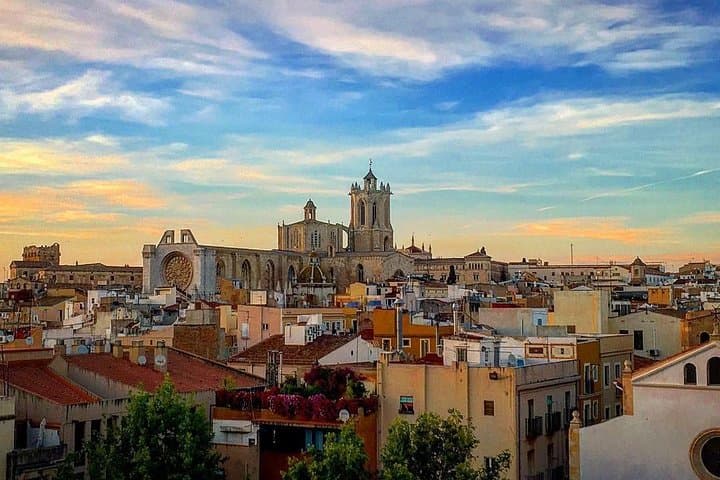


A thin, salt-scented wind pushes visitors toward a stone arena where shadows still hold the outline of ancient crowds. The two-hour private walk moves from carved city walls into narrow streets, slipping beneath the city to vaults and corridors that reveal Tarragona’s Roman heart, and finishes on the sea-facing Mirador del Balcó del Mediterrani where the port and beach open outward like a page turned.
A thin, salt-scented wind pushes visitors toward a stone arena where shadows still hold the outline of ancient crowds. The two-hour private walk moves from carved city walls into narrow streets, slipping beneath the city to vaults and corridors that reveal Tarragona’s Roman heart, and finishes on the sea-facing Mirador del Balcó del Mediterrani where the port and beach open outward like a page turned.
Tarragona was one of Hispania’s principal Roman centers; its amphitheater, circus and city walls date to the first centuries BCE–CE and sit directly under the medieval Old Town. Geologically the coastline here is low limestone and Miocene sediment that has kept the ruins remarkably intact; the city’s layout still follows Roman orthogonal patterns interrupted by later medieval layers. Locals keep alive traditions such as castells (human towers), a living cultural performance visible in town squares during festival season.
Practical guidance: the tour includes entrance to the Roman Circus and visits vaults under the stands, so bring comfortable, grippy shoes for uneven stone and short staircases. The route is compact but involves walking on cobbles and steps; a moderate level of fitness helps. Mornings and late afternoons are best to avoid Mediterranean heat and busy cruise-ship windows. The meeting point is in the Old Town near Baixada del Roser; tour operators commonly offer short-term parking and are wheelchair-friendly on parts of the route, but vault access requires mobility. Carry water, sun protection, and a light layer—the sea breeze can change quickly. For history-minded travelers, the guide’s archaeological context makes the tour especially rewarding.