THE ADVENTURE COLLECTIVE® · Independent discovery and booking for outdoor travel

Step into Monterozzi’s painted tombs on a focused 90-minute guided tour of Tarquinia’s Etruscan necropolis. Learn how frescoes of banquets, hunts and rites reveal pre-Roman life while following conservation-minded access and practical tips for a better visit.
Step into Monterozzi’s painted tombs on a focused 90-minute guided tour of Tarquinia’s Etruscan necropolis. Learn how frescoes of banquets, hunts and rites reveal pre-Roman life while following conservation-minded access and practical tips for a better visit.
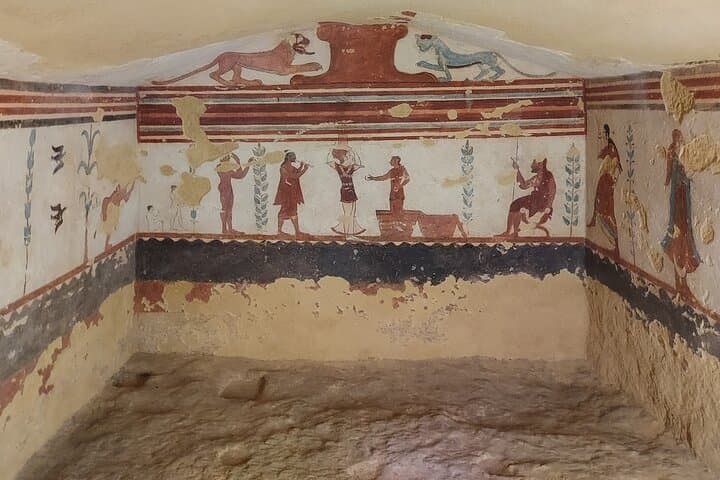
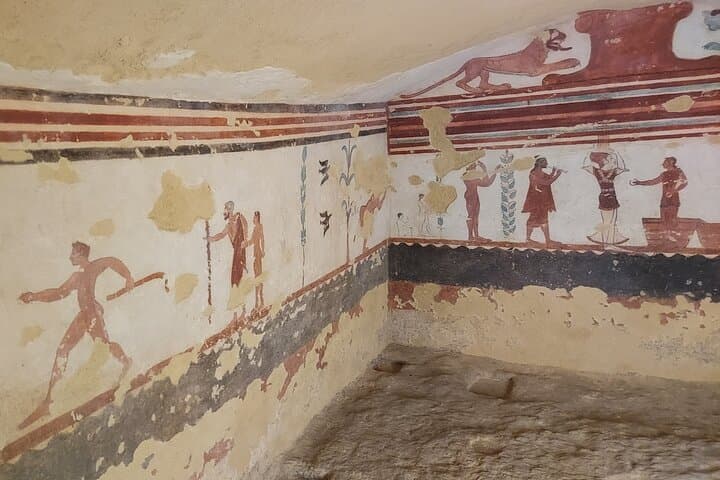
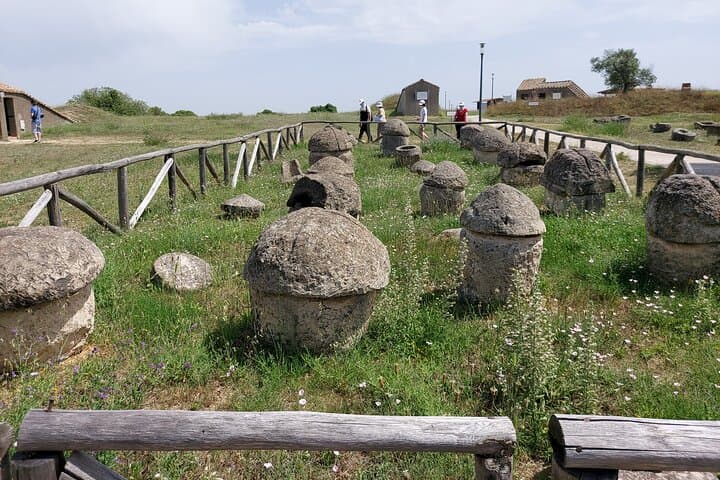
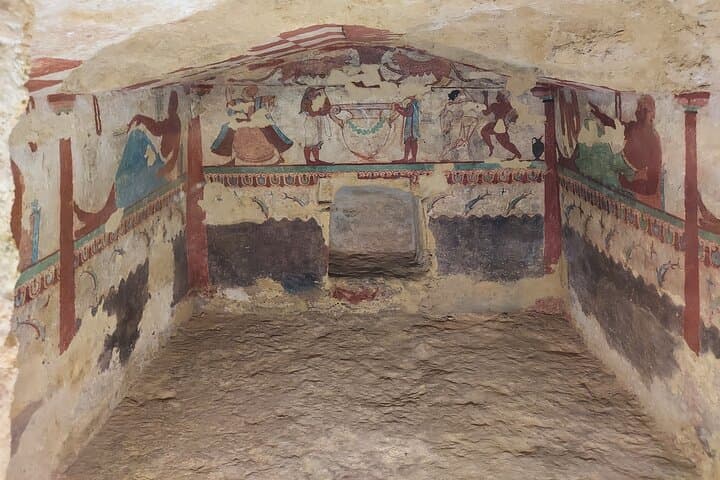
A low sun slices across the grass-topped mounds of Monterozzi, and the guide’s voice threads between olive trees as visitors step from the town road into a landscape that has been watching people for three millennia. The burial mounds here are not silent hills but pages of a lost city: frescoed chambers hold scenes of banquets, hunts and ritual contests that give shape to Etruscan life.
Verified experiences and guided adventures in the surrounding area.
Operated by Blue Cat Tours · Tarquinia, Lazio
A low sun slices across the grass-topped mounds of Monterozzi, and the guide’s voice threads between olive trees as visitors step from the town road into a landscape that has been watching people for three millennia. The burial mounds here are not silent hills but pages of a lost city: frescoed chambers hold scenes of banquets, hunts and ritual contests that give shape to Etruscan life.
Tarquinia rose to prominence in the 7th century BCE as one of Italy’s principal Etruscan cities. The Monterozzi Necropolis preserves more than two hundred painted tombs—art that records costume, status and social roles before Rome absorbed the region. Geologically, the soft tuff of the coastal Lazio plain made rock-cut tombs practical; the same stone helps preserve pigment in sheltered chambers, while open air and humidity remain long-term threats to the paintings.
Culturally, the tomb scenes reveal a society where elite leisure and funerary ritual were public, visual statements. A short guided walkthrough focuses on key tombs—the Leopards, Hunting and Fishing, and the Warrior—while a knowledgeable guide explains iconography and funerary customs.
Practicalities are straightforward: this is a 90-minute, mostly flat tour with steps down into tombs and low ceilings in places. Entrance is included and the tour usually skips the line, but groups are small to protect frescoes. Wear stable shoes, bring water, and avoid flash photography; the guide will note conservation rules. Morning visits offer cooler temperatures and softer light for exterior views. The tour suits travelers interested in archaeology, history and compact, high-value cultural experiences.
easy.
1–1.5 hours.
Suitable for average fitness; able to manage short stairs and low clearances
Yes—entrance to the Monterozzi Necropolis is included in the tour price; the guide will handle admissions so you skip standard lines.
The guided visit runs about 90 minutes with mostly short, easy walks between burial mounds and some steps down into the tomb chambers.
Photography is usually allowed without flash; conservation rules vary so follow your guide’s instructions and avoid flash or close lighting on pigments.
There are stairs and low passages into many tombs, so full access is limited; contact the operator ahead of time to discuss accommodation options.
Tarquinia was a major Etruscan center in the 7th–4th centuries BCE; its painted tombs provide rare visual records of pre-Roman social life and ritual.
Frescoes are sensitive to light and humidity; visits are managed with group limits, no-flash rules and conservation-focused guidance to reduce wear.
Blue Cat Tours operates guided outdoor trips and adventures with an emphasis on safety, stewardship, and memorable experiences.
A low sun slices across the grass-topped mounds of Monterozzi, and the guide’s voice threads between olive trees as visitors step from the town road into a landscape that has been watching people for three millennia. The burial mounds here are not silent hills but pages of a lost city: frescoed chambers hold scenes of banquets, hunts and ritual contests that give shape to Etruscan life.
A low sun slices across the grass-topped mounds of Monterozzi, and the guide’s voice threads between olive trees as visitors step from the town road into a landscape that has been watching people for three millennia. The burial mounds here are not silent hills but pages of a lost city: frescoed chambers hold scenes of banquets, hunts and ritual contests that give shape to Etruscan life.
Tarquinia rose to prominence in the 7th century BCE as one of Italy’s principal Etruscan cities. The Monterozzi Necropolis preserves more than two hundred painted tombs—art that records costume, status and social roles before Rome absorbed the region. Geologically, the soft tuff of the coastal Lazio plain made rock-cut tombs practical; the same stone helps preserve pigment in sheltered chambers, while open air and humidity remain long-term threats to the paintings.
Culturally, the tomb scenes reveal a society where elite leisure and funerary ritual were public, visual statements. A short guided walkthrough focuses on key tombs—the Leopards, Hunting and Fishing, and the Warrior—while a knowledgeable guide explains iconography and funerary customs.
Practicalities are straightforward: this is a 90-minute, mostly flat tour with steps down into tombs and low ceilings in places. Entrance is included and the tour usually skips the line, but groups are small to protect frescoes. Wear stable shoes, bring water, and avoid flash photography; the guide will note conservation rules. Morning visits offer cooler temperatures and softer light for exterior views. The tour suits travelers interested in archaeology, history and compact, high-value cultural experiences.