THE ADVENTURE COLLECTIVE® · Independent discovery and booking for outdoor travel

Spend a full day roaming Taroudant’s red-walled medina and a palm-fringed kasbah in Tiout. This guided trip blends market walks, local tea, and panoramic views from an oasis fortress—ideal for travelers who want culture and landscape in one day.
Spend a full day roaming Taroudant’s red-walled medina and a palm-fringed kasbah in Tiout. This guided trip blends market walks, local tea, and panoramic views from an oasis fortress—ideal for travelers who want culture and landscape in one day.
You step off the air-conditioned minivan and the town breathes a different tempo: a ring of ochre ramparts cutting a crisp silhouette against an open sky, orange trees scenting the lane, and the low murmur of market bargaining. Taroudant’s horseshoe of walls—roughly 7.5 km and pierced by five gates—frames narrow streets where copper lamps and woven mats crowd storefronts.
Verified experiences and guided adventures in the surrounding area.
Operated by Imohatours · Taroudant, Souss-Massa
You step off the air-conditioned minivan and the town breathes a different tempo: a ring of ochre ramparts cutting a crisp silhouette against an open sky, orange trees scenting the lane, and the low murmur of market bargaining. Taroudant’s horseshoe of walls—roughly 7.5 km and pierced by five gates—frames narrow streets where copper lamps and woven mats crowd storefronts.
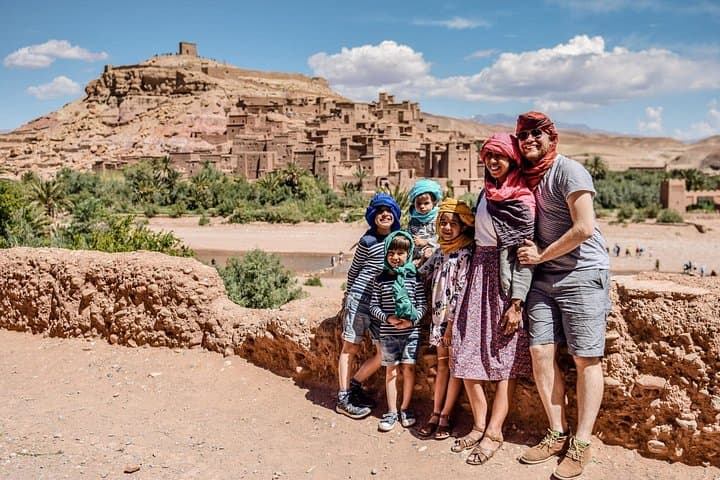
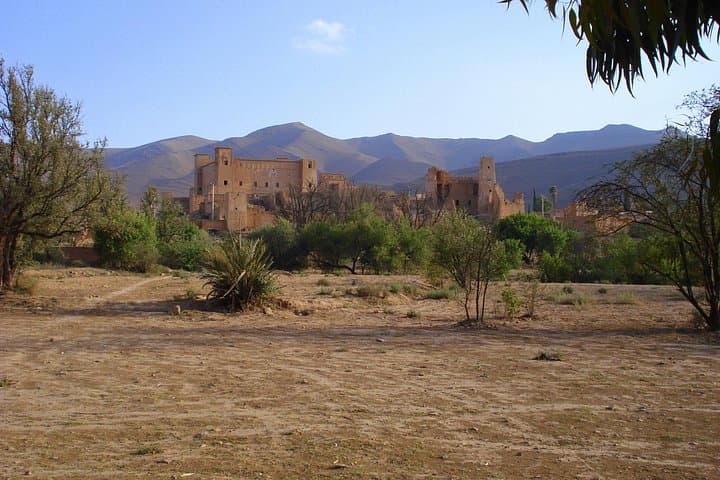
The region sits on the northern edge of the Anti-Atlas foothills; its red walls are sun-baked sandstone and mud-brick, built and rebuilt across centuries of Saadian and Alaouite rule. Tiout, a small Berber village tucked beneath rocky ridges, preserves a traditional irrigation system—terre pluviale channels that feed a compact palm oasis and the Kasbah terrace where a 1950s film once staged Ali Baba and the Forty Thieves.
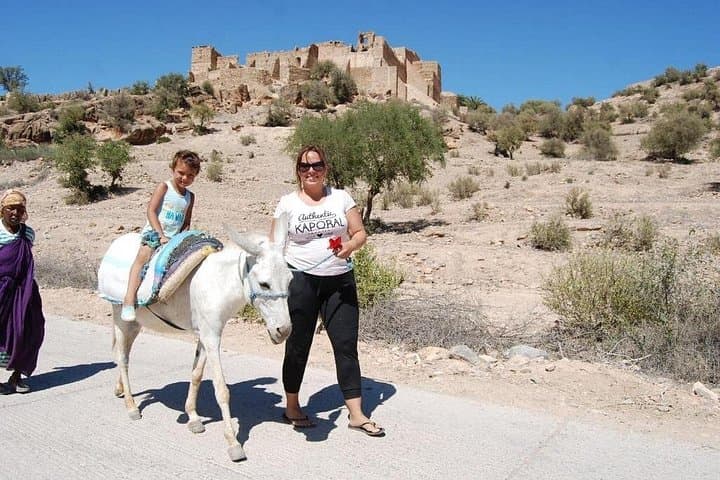
Expect a mix of guided walking through Taroudant’s medina (about 2–3 hours), a market tour, a visit to a Jewish quarter and riad facades, plus a panoramic lunch at Tiout’s kasbah overlooking the oasis. Along the route you’ll stop for argan tree stands where goats climb the branches and to visit an orange grove.
Practical notes: wear closed-toe walking shoes for cobbles, sun protection for exposed stretches, and carry cash for small purchases. The day is long (roughly 8–9 hours) but paced—short walks and vehicle transfers—making it accessible to most travelers. Take water, a light layer for coastal mornings, and a sense of patience; bargaining and narrow alleys reward curiosity.
moderate.
8–9 hours.
Suitable for travelers with average fitness; involves up to a few hours of walking on uneven surfaces and short climbs in Tiout.
The trip is about 8–9 hours, including two roadside stops (argan goats and an orange farm), a guided 2–3 hour visit to Taroudant’s medina, and a 2–3 hour stop in Tiout for lunch and a kasbah walk.
Most walking is moderate on uneven streets and short uphill sections; the tour is described as suitable for all fitness levels, but bring supportive shoes and take breaks as needed.
Yes—lunch (couscous or tagine) and Moroccan tea with dessert are included in the tour price.
Children are welcome; infant seats are available on request—check with the operator when booking for accessibility or seat needs.
Taroudant grew as a regional trading hub with fortified walls expanded during the 16th–18th centuries; Tiout retains Berber agricultural practices tied to ancient irrigation methods.
Argan woodlands are protected and local cooperatives use sustainable harvesting; visitors should avoid disturbing livestock and stick to marked paths to protect the oasis ecology.
Imohatours operates guided outdoor trips and adventures with an emphasis on safety, stewardship, and memorable experiences.
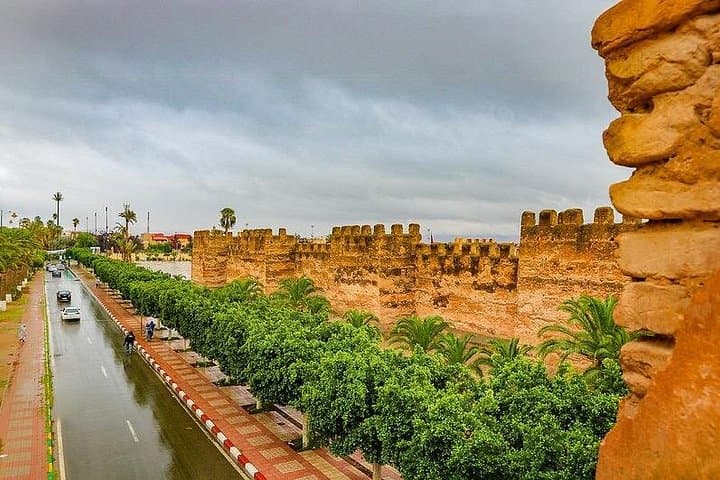
You step off the air-conditioned minivan and the town breathes a different tempo: a ring of ochre ramparts cutting a crisp silhouette against an open sky, orange trees scenting the lane, and the low murmur of market bargaining. Taroudant’s horseshoe of walls—roughly 7.5 km and pierced by five gates—frames narrow streets where copper lamps and woven mats crowd storefronts.
You step off the air-conditioned minivan and the town breathes a different tempo: a ring of ochre ramparts cutting a crisp silhouette against an open sky, orange trees scenting the lane, and the low murmur of market bargaining. Taroudant’s horseshoe of walls—roughly 7.5 km and pierced by five gates—frames narrow streets where copper lamps and woven mats crowd storefronts.
The region sits on the northern edge of the Anti-Atlas foothills; its red walls are sun-baked sandstone and mud-brick, built and rebuilt across centuries of Saadian and Alaouite rule. Tiout, a small Berber village tucked beneath rocky ridges, preserves a traditional irrigation system—terre pluviale channels that feed a compact palm oasis and the Kasbah terrace where a 1950s film once staged Ali Baba and the Forty Thieves.
Expect a mix of guided walking through Taroudant’s medina (about 2–3 hours), a market tour, a visit to a Jewish quarter and riad facades, plus a panoramic lunch at Tiout’s kasbah overlooking the oasis. Along the route you’ll stop for argan tree stands where goats climb the branches and to visit an orange grove.
Practical notes: wear closed-toe walking shoes for cobbles, sun protection for exposed stretches, and carry cash for small purchases. The day is long (roughly 8–9 hours) but paced—short walks and vehicle transfers—making it accessible to most travelers. Take water, a light layer for coastal mornings, and a sense of patience; bargaining and narrow alleys reward curiosity.