THE ADVENTURE COLLECTIVE® · Independent discovery and booking for outdoor travel

Drive through the Souss plain to Taroudant, an ancient walled market town, with a detour to Tiout’s palm grove and argan-tree goats. This full-day outing pairs easy walking, markets, and a traditional lunch.
Drive through the Souss plain to Taroudant, an ancient walled market town, with a detour to Tiout’s palm grove and argan-tree goats. This full-day outing pairs easy walking, markets, and a traditional lunch.
A morning drive out of Agadir pushes across the flat, sun-baked Souss plain; olive groves and low scrub give way to the squat silhouettes of argan trees where goats pick their way among branches as if the trees themselves dared visitors to look closer.
Verified experiences and guided adventures in the surrounding area.
Operated by Marvels Tours · Taroudant, Souss-Massa
A morning drive out of Agadir pushes across the flat, sun-baked Souss plain; olive groves and low scrub give way to the squat silhouettes of argan trees where goats pick their way among branches as if the trees themselves dared visitors to look closer.
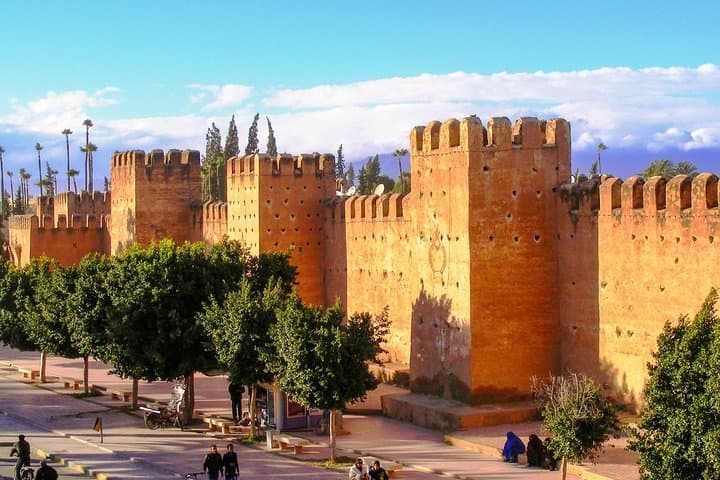
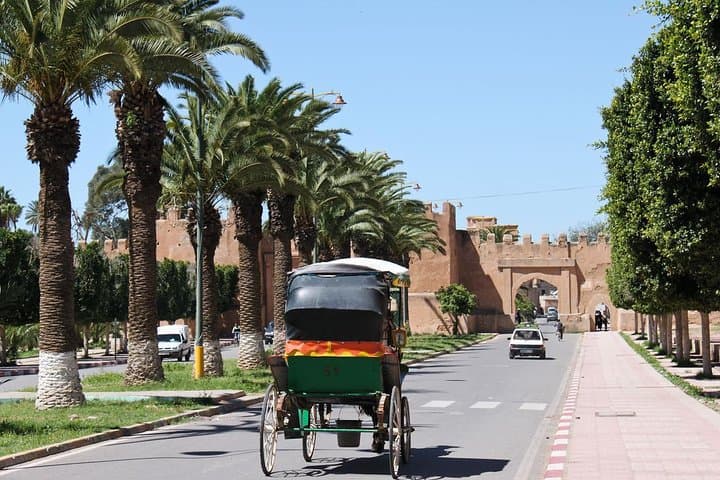
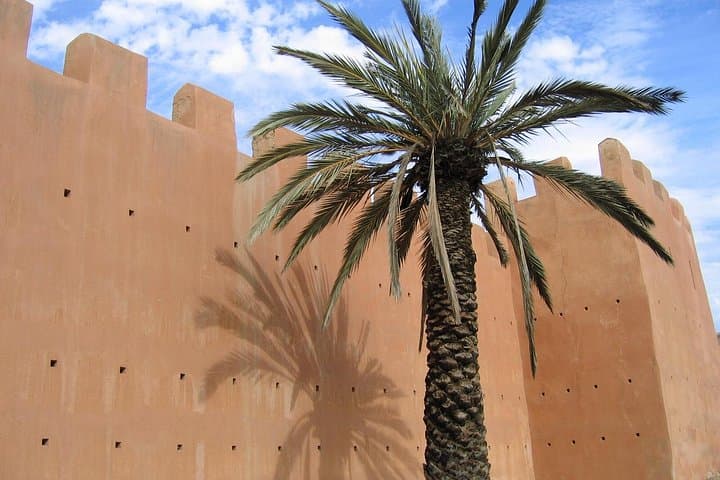
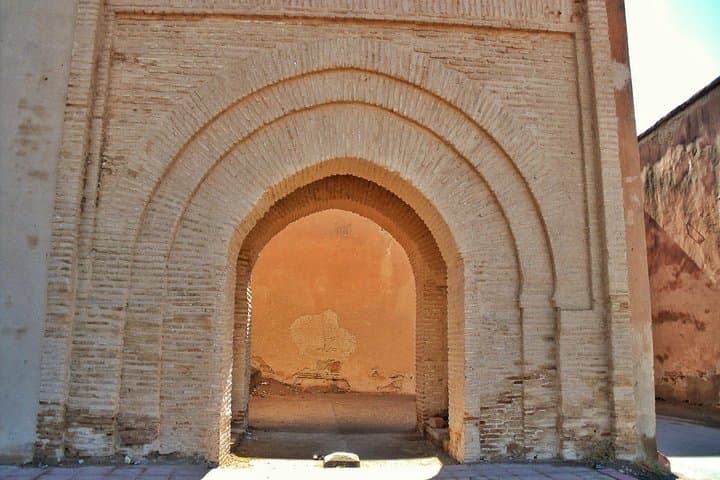
Arriving in Taroudant, the city’s ochre ramparts rise like an old map’s border — broad, walkable walls that frame a working market town rather than a tourist stage set. Nearby Tiout offers a contrasting pocket of green: a small palm grove and irrigation channels that trace older agricultural patterns in this arid corner of Morocco. The region sits at the northern edge of the Anti-Atlas foothills; soils and seasonal rivers shaped the trade routes that made Taroudant an important commercial hub for the Souss valley from medieval times through the Saadian and Alaouite periods.
Culturally, visitors should expect lively souks, leather and metalwork stalls, and the chance to meet women’s cooperatives selling argan oil — a local economy born from the endemic argan tree. The day includes a sit-down lunch featuring tagine and couscous in a local restaurant, and gentle walking on mainly paved streets with occasional dust tracks around Tiout.
Practical guidance: plan for sun and dust, carry cash for markets, and allow 1–1.5 hours each way by car from Agadir. Comfortable walking shoes and layered clothing work best for shifting shade and heat. Respect local custom by dressing modestly and avoid feeding the goats; support cooperatives if you want authentic souvenirs. This is an easy, culturally rich day for travelers who want nature close to cultivated life.
easy.
8–10 hours.
Suitable for most fitness levels; involves several hours of casual walking and standing in markets
The drive typically takes about 1–1.5 hours each way, depending on traffic and exact pickup location in Agadir.
The tour lists wheelchair and stroller accessibility for transportation and many surfaces, though some market alleys can be narrow and uneven.
Lunch is usually a Moroccan set meal such as tagine or couscous with salads and mint tea; vegetarian options are commonly available if requested in advance.
Yes — many itineraries include stops at local cooperatives where visitors can learn about argan production and purchase oils, often sold by women’s groups.
Taroudant grew as a commercial center for the Souss valley and is known for its broad defensive walls and market tradition dating back to the medieval and Saadian eras.
Argan woodlands are ecologically unique and under pressure; supporting certified cooperatives and avoiding activities that damage trees helps local conservation and livelihoods.
Marvels Tours operates guided outdoor trips and adventures with an emphasis on safety, stewardship, and memorable experiences.
A morning drive out of Agadir pushes across the flat, sun-baked Souss plain; olive groves and low scrub give way to the squat silhouettes of argan trees where goats pick their way among branches as if the trees themselves dared visitors to look closer.
A morning drive out of Agadir pushes across the flat, sun-baked Souss plain; olive groves and low scrub give way to the squat silhouettes of argan trees where goats pick their way among branches as if the trees themselves dared visitors to look closer.
Arriving in Taroudant, the city’s ochre ramparts rise like an old map’s border — broad, walkable walls that frame a working market town rather than a tourist stage set. Nearby Tiout offers a contrasting pocket of green: a small palm grove and irrigation channels that trace older agricultural patterns in this arid corner of Morocco. The region sits at the northern edge of the Anti-Atlas foothills; soils and seasonal rivers shaped the trade routes that made Taroudant an important commercial hub for the Souss valley from medieval times through the Saadian and Alaouite periods.
Culturally, visitors should expect lively souks, leather and metalwork stalls, and the chance to meet women’s cooperatives selling argan oil — a local economy born from the endemic argan tree. The day includes a sit-down lunch featuring tagine and couscous in a local restaurant, and gentle walking on mainly paved streets with occasional dust tracks around Tiout.
Practical guidance: plan for sun and dust, carry cash for markets, and allow 1–1.5 hours each way by car from Agadir. Comfortable walking shoes and layered clothing work best for shifting shade and heat. Respect local custom by dressing modestly and avoid feeding the goats; support cooperatives if you want authentic souvenirs. This is an easy, culturally rich day for travelers who want nature close to cultivated life.