THE ADVENTURE COLLECTIVE® · Independent discovery and booking for outdoor travel

Share a coach, half the intensity, twice the learning: a semiprivate kitesurf lesson in Tarifa pairs one instructor with two students to accelerate progress on the Levante and Poniente winds. Expect focused radio coaching, rescue-boat support, and certification-ready training.
Share a coach, half the intensity, twice the learning: a semiprivate kitesurf lesson in Tarifa pairs one instructor with two students to accelerate progress on the Levante and Poniente winds. Expect focused radio coaching, rescue-boat support, and certification-ready training.
A salty wind cuts across Playa de Los Lances as you clip into a harness and listen to your coach through a Bluetooth headset — the sea ahead pushing and testing you. In Tarifa, where the Atlantic meets the Mediterranean, kitesurfing lessons start with the wind: the Levante can gust hard and steady, the Poniente brings softer, cleaner sailing. A semiprivate lesson places one instructor with two students, so you alternate time on the kite while getting uninterrupted coaching and real-time radio feedback.
Verified experiences and guided adventures in the surrounding area.
A salty wind cuts across Playa de Los Lances as you clip into a harness and listen to your coach through a Bluetooth headset — the sea ahead pushing and testing you. In Tarifa, where the Atlantic meets the Mediterranean, kitesurfing lessons start with the wind: the Levante can gust hard and steady, the Poniente brings softer, cleaner sailing. A semiprivate lesson places one instructor with two students, so you alternate time on the kite while getting uninterrupted coaching and real-time radio feedback.
Tarifa’s coastline is geologically young coastal plain and wind-sculpted dunes framing views of the Strait of Gibraltar; its ports and fortifications recall centuries of Phoenician, Roman and Moorish maritime trade. Today the town’s culture centers on wind sports — local shacks, surf shops and repair yards line the beach. Schools here follow IKO standards and often include rescue-boat coverage for safety.
Practically, expect 3 hours of structured instruction: safety briefing, kite handling on land, water starts, short runs with coach support and certification paperwork. Equipment is usually provided — lines, board, kite, harness and helmet — but bring swimwear, a wetsuit in cooler months, SPF, and a willingness to swim moderate distances if necessary.
Timing matters: mornings often offer cleaner wind; afternoons can strengthen. Bring snacks and hydrate; instructors will plan rescues if needed. For newcomers this semiprivate format balances attention with a social pace: more coaching than a group lesson, less intensity than a private clinic. It’s a focused, efficient way to progress in one of Europe’s premier kite spots.
moderate.
3 hours.
Moderate — able to swim and handle short bursts of exertion; reasonable core and balance help.
No — semiprivate lessons accommodate beginners; instructors teach fundamentals from kite control to assisted water starts.
Two students share a single coach, allowing more personalized instruction than larger groups while rotating on the equipment.
Schools monitor conditions and may reschedule or adjust the lesson; rescue boats and experienced coaches manage safety in variable winds.
Yes — reputable schools supply kite, control bar, board, harness, helmet and often impact vests; bring your own wetsuit if you prefer a personal fit.
Tarifa’s position at the Strait of Gibraltar made it a strategic crossing for Phoenician, Roman and Moorish mariners; modern life still orbits the sea and winds.
Kite schools work with local authorities to minimize beach erosion and disturbance; avoid nesting zones and follow designated access paths.
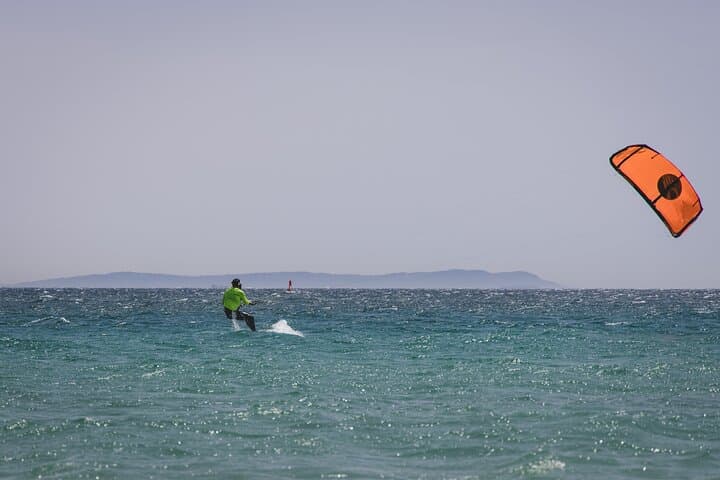
A salty wind cuts across Playa de Los Lances as you clip into a harness and listen to your coach through a Bluetooth headset — the sea ahead pushing and testing you. In Tarifa, where the Atlantic meets the Mediterranean, kitesurfing lessons start with the wind: the Levante can gust hard and steady, the Poniente brings softer, cleaner sailing. A semiprivate lesson places one instructor with two students, so you alternate time on the kite while getting uninterrupted coaching and real-time radio feedback.
A salty wind cuts across Playa de Los Lances as you clip into a harness and listen to your coach through a Bluetooth headset — the sea ahead pushing and testing you. In Tarifa, where the Atlantic meets the Mediterranean, kitesurfing lessons start with the wind: the Levante can gust hard and steady, the Poniente brings softer, cleaner sailing. A semiprivate lesson places one instructor with two students, so you alternate time on the kite while getting uninterrupted coaching and real-time radio feedback.
Tarifa’s coastline is geologically young coastal plain and wind-sculpted dunes framing views of the Strait of Gibraltar; its ports and fortifications recall centuries of Phoenician, Roman and Moorish maritime trade. Today the town’s culture centers on wind sports — local shacks, surf shops and repair yards line the beach. Schools here follow IKO standards and often include rescue-boat coverage for safety.
Practically, expect 3 hours of structured instruction: safety briefing, kite handling on land, water starts, short runs with coach support and certification paperwork. Equipment is usually provided — lines, board, kite, harness and helmet — but bring swimwear, a wetsuit in cooler months, SPF, and a willingness to swim moderate distances if necessary.
Timing matters: mornings often offer cleaner wind; afternoons can strengthen. Bring snacks and hydrate; instructors will plan rescues if needed. For newcomers this semiprivate format balances attention with a social pace: more coaching than a group lesson, less intensity than a private clinic. It’s a focused, efficient way to progress in one of Europe’s premier kite spots.