THE ADVENTURE COLLECTIVE® · Independent discovery and booking for outdoor travel

A compact private safari that pairs Tarangire’s elephant-rich plains with the dramatic bowl of Ngorongoro Crater. Expect early starts, long game drives, ancient baobabs and concentrated wildlife viewing across two days.
A compact private safari that pairs Tarangire’s elephant-rich plains with the dramatic bowl of Ngorongoro Crater. Expect early starts, long game drives, ancient baobabs and concentrated wildlife viewing across two days.
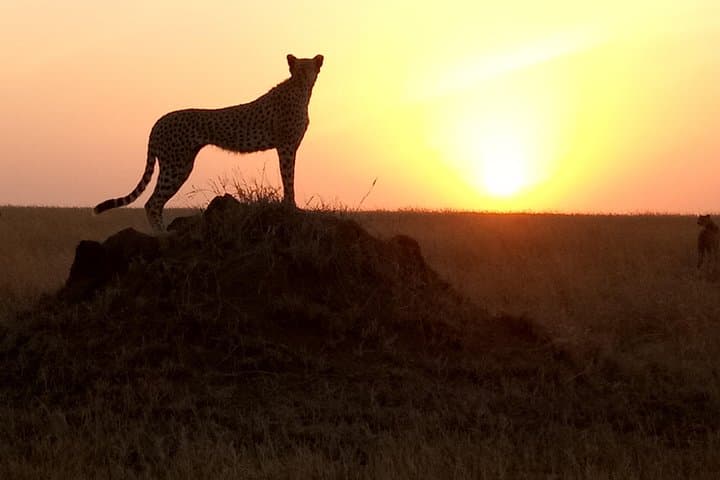
Dawn breaks over a plain where baobab trunks silhouette the sky and elephant herds move like slow weather. On this two-day private safari you follow rutted tracks into Tarangire National Park—home to some of Tanzania’s largest elephant aggregations—then cross the Ngorongoro Conservation Area to peer down into the crater’s bowl where wildlife congregates around seasonal water. The landscape alternates between open savanna, swampy river corridors and the dramatic rim of a collapsed volcano.
Verified experiences and guided adventures in the surrounding area.
Operated by Godson Adventures Plains2Peaks ltd. · Karatu, Arusha Region
Dawn breaks over a plain where baobab trunks silhouette the sky and elephant herds move like slow weather. On this two-day private safari you follow rutted tracks into Tarangire National Park—home to some of Tanzania’s largest elephant aggregations—then cross the Ngorongoro Conservation Area to peer down into the crater’s bowl where wildlife congregates around seasonal water. The landscape alternates between open savanna, swampy river corridors and the dramatic rim of a collapsed volcano.
Geology on display: Ngorongoro is a volcanic caldera formed when a mountain exploded and collapsed roughly 2.5 million years ago; its floor sits about 610 meters below the rim and covers roughly 260 km². Culture is present at every turn—Maasai herders still graze livestock on the crater rim and their villages around Karatu offer glimpses of local life. Tarangire’s ancient baobabs (Adansonia digitata) stand like natural monuments, and the park’s seasonal Silale Swamp draws prolific birdlife.
Practical guidance: expect long game drives across unpaved roads—comfortable, dust-resistant clothing and a sturdy camera are essential. Early starts (before 7:00) improve wildlife sightings and light for photography. Park fees and crater entry are part of the logistics; your private tour operator typically handles permits and accommodation (lodge nights are standard). Hydrate, carry binoculars, and respect wildlife distances—cars are your platform, not a moat. If you want rhino sightings, Ngorongoro offers the best chance, but sightings aren’t guaranteed. Timing your visit to the dry season (June–September) increases visibility and road reliability.
easy.
2 days (approx. 8–10 hours driving/activity per day).
Light fitness required—able to sit for long drives with occasional short walks; suitable for most travelers.
Private tour operators typically include park entry and Ngorongoro crater fees in the quote—confirm at booking to avoid surprises.
Ngorongoro offers strong chances for lions, elephants, buffalo and rhino; spotting all five (including leopard) is possible but not guaranteed.
The itinerary is family-friendly with lodge accommodation, but long vehicle rides and uneven ground can be challenging—consult the operator about specific needs.
The dry season (June–September) concentrates animals around water sources and generally means better road access and clearer sightings.
Ngorongoro formed when a stratovolcano collapsed about 2.5 million years ago; the conservation area is also a long-inhabited landscape for Maasai pastoralists.
Ngorongoro is a UNESCO World Heritage site—visitors should follow park rules, limit disturbance to wildlife and support local community-run enterprises to help conservation.
Godson Adventures Plains2Peaks ltd. operates guided outdoor trips and adventures with an emphasis on safety, stewardship, and memorable experiences.
Dawn breaks over a plain where baobab trunks silhouette the sky and elephant herds move like slow weather. On this two-day private safari you follow rutted tracks into Tarangire National Park—home to some of Tanzania’s largest elephant aggregations—then cross the Ngorongoro Conservation Area to peer down into the crater’s bowl where wildlife congregates around seasonal water. The landscape alternates between open savanna, swampy river corridors and the dramatic rim of a collapsed volcano.
Dawn breaks over a plain where baobab trunks silhouette the sky and elephant herds move like slow weather. On this two-day private safari you follow rutted tracks into Tarangire National Park—home to some of Tanzania’s largest elephant aggregations—then cross the Ngorongoro Conservation Area to peer down into the crater’s bowl where wildlife congregates around seasonal water. The landscape alternates between open savanna, swampy river corridors and the dramatic rim of a collapsed volcano.
Geology on display: Ngorongoro is a volcanic caldera formed when a mountain exploded and collapsed roughly 2.5 million years ago; its floor sits about 610 meters below the rim and covers roughly 260 km². Culture is present at every turn—Maasai herders still graze livestock on the crater rim and their villages around Karatu offer glimpses of local life. Tarangire’s ancient baobabs (Adansonia digitata) stand like natural monuments, and the park’s seasonal Silale Swamp draws prolific birdlife.
Practical guidance: expect long game drives across unpaved roads—comfortable, dust-resistant clothing and a sturdy camera are essential. Early starts (before 7:00) improve wildlife sightings and light for photography. Park fees and crater entry are part of the logistics; your private tour operator typically handles permits and accommodation (lodge nights are standard). Hydrate, carry binoculars, and respect wildlife distances—cars are your platform, not a moat. If you want rhino sightings, Ngorongoro offers the best chance, but sightings aren’t guaranteed. Timing your visit to the dry season (June–September) increases visibility and road reliability.