THE ADVENTURE COLLECTIVE® · Independent discovery and booking for outdoor travel

Spend three quiet hours tracking endemic highland birds through Tapantí’s rain-to-cloud forest transition. Small groups, local guides, and supplied optics make this a focused, beginner-friendly birdwatching outing from Orosi.
Spend three quiet hours tracking endemic highland birds through Tapantí’s rain-to-cloud forest transition. Small groups, local guides, and supplied optics make this a focused, beginner-friendly birdwatching outing from Orosi.
Dawn filters through a layered canopy where mist still clings to moss and the first calls of the day cut the silence. On this three-hour walk through Tapantí National Park you move slowly—eyes up, ears tuned—along trails that pass from lowland rainforest into cooler cloud-forest pockets. The forest seems to rearrange itself with every step: thick bole trunks, dripping epiphytes, and sunlit clearings where tanagers flash like signal flags.
Verified experiences and guided adventures in the surrounding area.
Operated by Aventuras Neotropicales · Orosi, Cartago
Dawn filters through a layered canopy where mist still clings to moss and the first calls of the day cut the silence. On this three-hour walk through Tapantí National Park you move slowly—eyes up, ears tuned—along trails that pass from lowland rainforest into cooler cloud-forest pockets. The forest seems to rearrange itself with every step: thick bole trunks, dripping epiphytes, and sunlit clearings where tanagers flash like signal flags.
Tapantí sits on the eastern slopes of Costa Rica’s central mountain range and is part of a larger biological corridor that feeds rivers down into the Orosi Valley. Geologically the park is marked by volcanic soils and steep ridgelines that create the moisture gradient supporting both rainforest and cloud forest. The area has long been important to local communities for water and traditional agroforestry; today it’s protected for biodiversity, including more than 400 bird species.
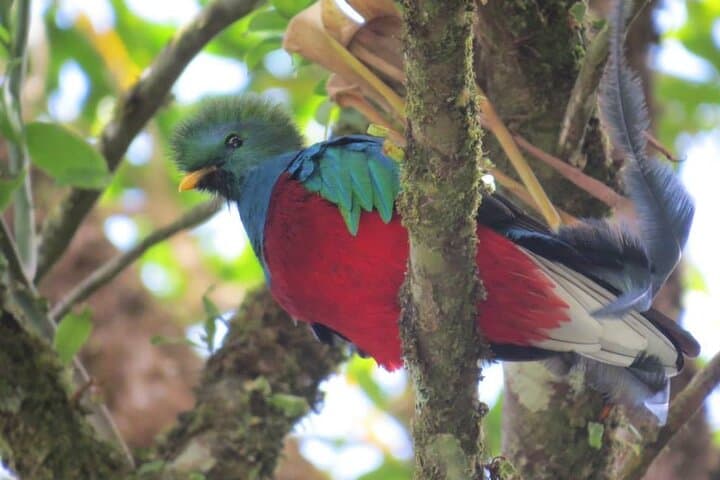
Expect to encounter toucanets, barbets, wrens, euphonias, warblers and a variety of flycatchers; local guides know where understory specialties and canopy rarities commonly appear. The operator supplies optics and keeps groups to five for quiet, focused searching.
Practical notes: the route is easy walking on damp, sometimes muddy trails—good treaded shoes recommended. Mornings are best for active birds and clearer views; bring a rain layer and binoculars if you prefer your own. The tour is accessible for most fitness levels, family-friendly, and runs about three hours from meeting points near Orosi. Move deliberately, blend into the quiet, and let the forest reveal its list.
easy.
3 hours.
Low-to-moderate fitness sufficient; tour involves steady walking on uneven, sometimes muddy trails.
The tour lasts about three hours and follows easy-to-moderate trails; most participants with basic mobility can complete it.
Yes—optics and a local birding guide are included so both beginners and experienced birders can join.
Expect toucanets, barbets, various tanagers, wrens, euphonias, warblers and multiple flycatchers; Tapantí hosts over 400 recorded species overall.
The operator indicates accessibility options, but some forest paths can be uneven—confirm specific access needs when booking.
The park protects watersheds essential to the Orosi Valley and forms part of conservation efforts dating back to mid-20th century land-protection initiatives.
Stick to trails and follow guide instructions to minimize disturbance; visitor limits and small group sizes help reduce impact on sensitive habitats.
Aventuras Neotropicales operates guided outdoor trips and adventures with an emphasis on safety, stewardship, and memorable experiences.

Dawn filters through a layered canopy where mist still clings to moss and the first calls of the day cut the silence. On this three-hour walk through Tapantí National Park you move slowly—eyes up, ears tuned—along trails that pass from lowland rainforest into cooler cloud-forest pockets. The forest seems to rearrange itself with every step: thick bole trunks, dripping epiphytes, and sunlit clearings where tanagers flash like signal flags.
Dawn filters through a layered canopy where mist still clings to moss and the first calls of the day cut the silence. On this three-hour walk through Tapantí National Park you move slowly—eyes up, ears tuned—along trails that pass from lowland rainforest into cooler cloud-forest pockets. The forest seems to rearrange itself with every step: thick bole trunks, dripping epiphytes, and sunlit clearings where tanagers flash like signal flags.
Tapantí sits on the eastern slopes of Costa Rica’s central mountain range and is part of a larger biological corridor that feeds rivers down into the Orosi Valley. Geologically the park is marked by volcanic soils and steep ridgelines that create the moisture gradient supporting both rainforest and cloud forest. The area has long been important to local communities for water and traditional agroforestry; today it’s protected for biodiversity, including more than 400 bird species.
Expect to encounter toucanets, barbets, wrens, euphonias, warblers and a variety of flycatchers; local guides know where understory specialties and canopy rarities commonly appear. The operator supplies optics and keeps groups to five for quiet, focused searching.
Practical notes: the route is easy walking on damp, sometimes muddy trails—good treaded shoes recommended. Mornings are best for active birds and clearer views; bring a rain layer and binoculars if you prefer your own. The tour is accessible for most fitness levels, family-friendly, and runs about three hours from meeting points near Orosi. Move deliberately, blend into the quiet, and let the forest reveal its list.