THE ADVENTURE COLLECTIVE® · Independent discovery and booking for outdoor travel

Combine cliffside Taormina and the rugged slopes of Mount Etna in a single full-day outing from Giardini Naxos. Expect seaside panoramas, ancient ruins, and an easy walk across recent lava fields that show Etna’s ongoing power.
Combine cliffside Taormina and the rugged slopes of Mount Etna in a single full-day outing from Giardini Naxos. Expect seaside panoramas, ancient ruins, and an easy walk across recent lava fields that show Etna’s ongoing power.
The day opens with the Ionian light striking whitewashed facades as the ferry disgorges at Giardini Naxos and a driver steers you up the coastal road toward Taormina. Walks along Corso Umberto thread through history — an 1808 arched gateway, cobbled alleys and a Roman-Greek theater perched to watch both an active volcano and the sea.
Verified experiences and guided adventures in the surrounding area.
Operated by Top Private Tours Malta · Taormina, Sicily
The day opens with the Ionian light striking whitewashed facades as the ferry disgorges at Giardini Naxos and a driver steers you up the coastal road toward Taormina. Walks along Corso Umberto thread through history — an 1808 arched gateway, cobbled alleys and a Roman-Greek theater perched to watch both an active volcano and the sea.
From Taormina the tour shifts inland, rising through pine forests that thin into black lava fields. Mount Etna’s slopes are a study in geological motion: layered flows, pumice ridges and recent scars from eruptions that still steam on cool mornings. Piano Provenzana, at roughly 1,900 m, offers a short, easy walk past skeletal hotel ruins left from the 2002 eruption — a clear lesson in the volcano’s appetite for change.
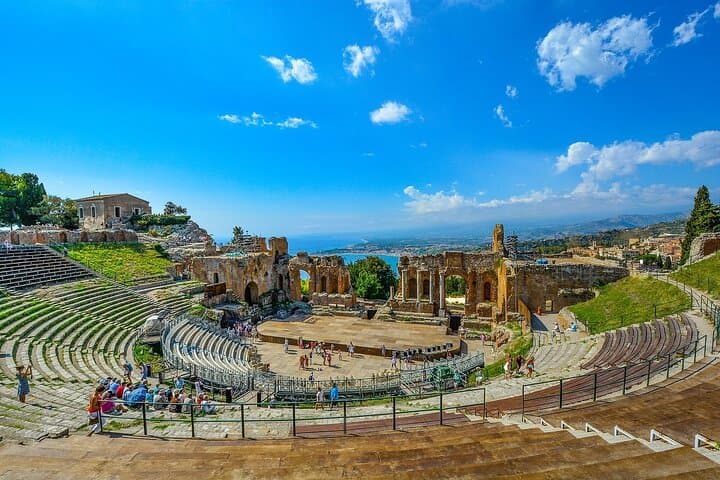
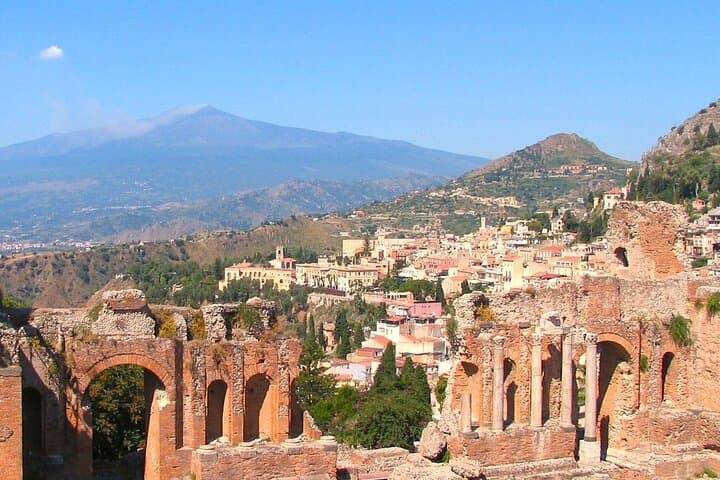
Culturally, Taormina has long been a crossroads for Greek, Roman, Arab and Norman influences; the theater’s stone seats have framed emperors and modern opera alike. The coast below — including the tide-cut pebble spit that links Isola Bella — shows a different tempo, where currents and tides decide the shoreline’s shape.
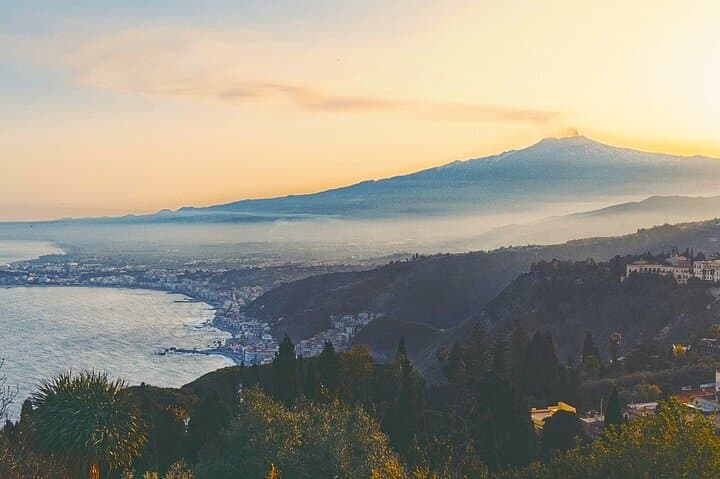
Practical notes: expect 7–8 hours of touring with vehicle transfers, a mix of short urban walking and an easy volcano-side stroll. Altitude at Etna’s base can make mornings chillier; pack layers, sturdy shoes, sun protection and at least 1–1.5 liters of water. If you plan photography, time windows around golden hour offer dramatic light on Etna and the Ionian Sea. The itinerary is customizable, but respect closed zones on Etna and follow guides’ safety directions — the mountain is beautiful, deliberate, and always in motion.
moderate.
7–8 hours.
Comfortable walking ability; able to handle short uphill sections and steps in town and on volcanic trails
The tour runs about 7–8 hours and typically includes port pickup/drop‑off, a local guide, transportation in an air‑conditioned vehicle and admission to the Greek Theater in Taormina.
The included Etna visit is to the base areas (around 1,900 m) with easy walks; it is not high‑altitude hiking but can feel cooler and breezier than the coast.
Yes — this is a private tour and guides often tailor stops and time in Taormina or Etna to guest interests within the allocated day.
Yes — the operator notes it’s suitable for all fitness levels and offers infant seats, but bring warm clothing for children at higher elevations.
Taormina’s Greek Theatre dates to the 3rd century BCE and later Roman modification; Etna’s eruptions have shaped local settlements for millennia.
Etna’s fragile volcanic soils and coastal marine habitats are sensitive—stay on marked paths, avoid collecting lava or shells, and support local guide‑led stewardship efforts.
Top Private Tours Malta operates guided outdoor trips and adventures with an emphasis on safety, stewardship, and memorable experiences.
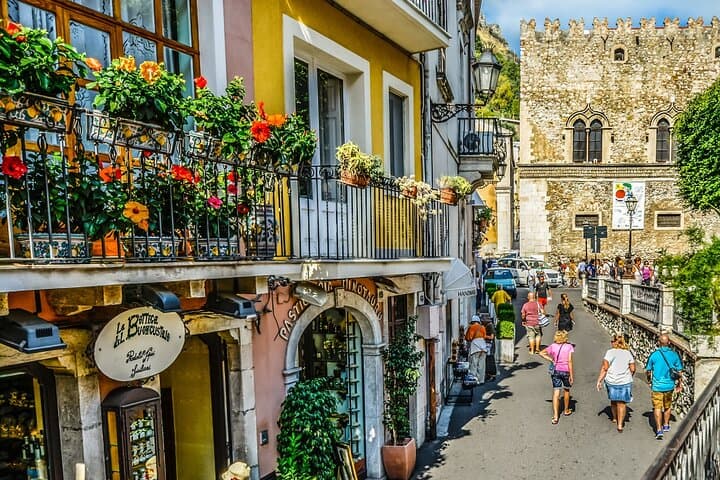
The day opens with the Ionian light striking whitewashed facades as the ferry disgorges at Giardini Naxos and a driver steers you up the coastal road toward Taormina. Walks along Corso Umberto thread through history — an 1808 arched gateway, cobbled alleys and a Roman-Greek theater perched to watch both an active volcano and the sea.
The day opens with the Ionian light striking whitewashed facades as the ferry disgorges at Giardini Naxos and a driver steers you up the coastal road toward Taormina. Walks along Corso Umberto thread through history — an 1808 arched gateway, cobbled alleys and a Roman-Greek theater perched to watch both an active volcano and the sea.
From Taormina the tour shifts inland, rising through pine forests that thin into black lava fields. Mount Etna’s slopes are a study in geological motion: layered flows, pumice ridges and recent scars from eruptions that still steam on cool mornings. Piano Provenzana, at roughly 1,900 m, offers a short, easy walk past skeletal hotel ruins left from the 2002 eruption — a clear lesson in the volcano’s appetite for change.
Culturally, Taormina has long been a crossroads for Greek, Roman, Arab and Norman influences; the theater’s stone seats have framed emperors and modern opera alike. The coast below — including the tide-cut pebble spit that links Isola Bella — shows a different tempo, where currents and tides decide the shoreline’s shape.
Practical notes: expect 7–8 hours of touring with vehicle transfers, a mix of short urban walking and an easy volcano-side stroll. Altitude at Etna’s base can make mornings chillier; pack layers, sturdy shoes, sun protection and at least 1–1.5 liters of water. If you plan photography, time windows around golden hour offer dramatic light on Etna and the Ionian Sea. The itinerary is customizable, but respect closed zones on Etna and follow guides’ safety directions — the mountain is beautiful, deliberate, and always in motion.