THE ADVENTURE COLLECTIVE® · Independent discovery and booking for outdoor travel

Spend a concentrated day in Tangkoko’s coastal rainforest watching endemic macaques, hornbills and tarsiers. Early starts, experienced guides and short, uneven trails make this an accessible wildlife-focused outing from Manado.
Spend a concentrated day in Tangkoko’s coastal rainforest watching endemic macaques, hornbills and tarsiers. Early starts, experienced guides and short, uneven trails make this an accessible wildlife-focused outing from Manado.
Dawn breaks over a narrow strip of coastal rainforest and the trail exhales mist as you step out of an air-conditioned van in Batuputih. The trees here lean toward the sea and the undergrowth seems to watch; every rustle can be a masked civet, a hornbill wingbeat, or the sudden, arresting stare of a Celebes crested macaque. This is Tangkoko — compact, loud and biologically intense.
Verified experiences and guided adventures in the surrounding area.
Operated by Birdphoto Indo Ecotour · Batuputih, North Sulawesi
Dawn breaks over a narrow strip of coastal rainforest and the trail exhales mist as you step out of an air-conditioned van in Batuputih. The trees here lean toward the sea and the undergrowth seems to watch; every rustle can be a masked civet, a hornbill wingbeat, or the sudden, arresting stare of a Celebes crested macaque. This is Tangkoko — compact, loud and biologically intense.
The reserve sits on volcanic soils of northern Sulawesi and protects one of Indonesia’s richest endemic assemblages. Local fishing and farming communities long shared the land with these forests; today small-scale ecotourism and park rangers help sustain protection efforts. Geologically, the park’s ridges and lowland slopes formed from uplifted volcanic islands, creating steep drainage lines and pockets of mossy forest where specialty birds and mammals concentrate.
On a guided day trip visitors typically hike 1–3 kilometers on uneven, often muddy trails, with sections of low scrambling and boardwalks near primate hotspots. Wildlife sightings are most reliable in the early morning when macaques, hornbills and tarsiers are active; guides read the forest like a map, pointing out calls and fresh trails.
Practical notes: start before sunrise, wear grippy shoes, carry rain protection and water, and bring small bills for park fees or tips. Keep distance from wildlife, avoid flash photography of tarsiers, and follow your guide’s instructions to minimize disturbance. In roughly 6–7 hours you’ll move from coastal scrub to taller forest and back, with concentrated opportunities to see truly endemic Sulawesi species in a single, well-managed outing.
easy.
6–7 hours.
Suitable for general fitness; expect short climbs and uneven footing requiring steady balance.
Expect about 6–7 hours including round-trip transport from Manado, park entrance, guide, bottled water and lunch as listed in the tour inclusions.
Macaques and many birds are commonly seen, but wildlife is never guaranteed; guides maximize chances by choosing active forest areas at dawn.
Yes—trail distances are short and the tour is marketed as suitable for all fitness levels, though uneven terrain may challenge strollers or limited mobility.
Bring ID and any required travel documents; the booking may request passport details for record-keeping and pickup coordination.
Tangkoko protects forest that local communities have used for generations; recent conservation efforts and regulated tourism aim to balance livelihoods and species protection.
Visitors reduce impact by staying on trails, not feeding wildlife and using local guides whose fees support park management and community incomes.
Birdphoto Indo Ecotour operates guided outdoor trips and adventures with an emphasis on safety, stewardship, and memorable experiences.
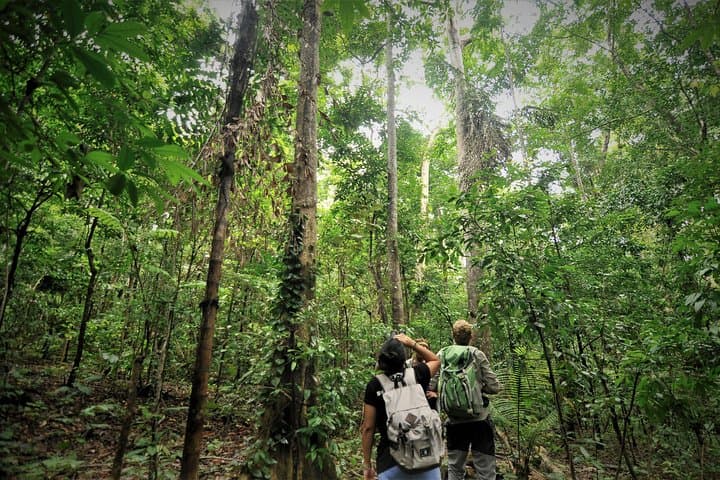


Dawn breaks over a narrow strip of coastal rainforest and the trail exhales mist as you step out of an air-conditioned van in Batuputih. The trees here lean toward the sea and the undergrowth seems to watch; every rustle can be a masked civet, a hornbill wingbeat, or the sudden, arresting stare of a Celebes crested macaque. This is Tangkoko — compact, loud and biologically intense.
Dawn breaks over a narrow strip of coastal rainforest and the trail exhales mist as you step out of an air-conditioned van in Batuputih. The trees here lean toward the sea and the undergrowth seems to watch; every rustle can be a masked civet, a hornbill wingbeat, or the sudden, arresting stare of a Celebes crested macaque. This is Tangkoko — compact, loud and biologically intense.
The reserve sits on volcanic soils of northern Sulawesi and protects one of Indonesia’s richest endemic assemblages. Local fishing and farming communities long shared the land with these forests; today small-scale ecotourism and park rangers help sustain protection efforts. Geologically, the park’s ridges and lowland slopes formed from uplifted volcanic islands, creating steep drainage lines and pockets of mossy forest where specialty birds and mammals concentrate.
On a guided day trip visitors typically hike 1–3 kilometers on uneven, often muddy trails, with sections of low scrambling and boardwalks near primate hotspots. Wildlife sightings are most reliable in the early morning when macaques, hornbills and tarsiers are active; guides read the forest like a map, pointing out calls and fresh trails.
Practical notes: start before sunrise, wear grippy shoes, carry rain protection and water, and bring small bills for park fees or tips. Keep distance from wildlife, avoid flash photography of tarsiers, and follow your guide’s instructions to minimize disturbance. In roughly 6–7 hours you’ll move from coastal scrub to taller forest and back, with concentrated opportunities to see truly endemic Sulawesi species in a single, well-managed outing.