THE ADVENTURE COLLECTIVE® · Independent discovery and booking for outdoor travel

A full-day guided loop from Tangier through the Rif to Tetouan that combines coastal panoramas at Cap Spartel, the mythic Hercules Caves, and Tetouan’s UNESCO-listed medina. Expect 6–8 hours of guided sightseeing, short walks on uneven surfaces, and rich cultural context.
A full-day guided loop from Tangier through the Rif to Tetouan that combines coastal panoramas at Cap Spartel, the mythic Hercules Caves, and Tetouan’s UNESCO-listed medina. Expect 6–8 hours of guided sightseeing, short walks on uneven surfaces, and rich cultural context.
Morning light hits the Strait as the minivan eases out of Tangier, the city’s layered past rolling past the window — colonial facades, the American Legation, and the low roar of the Atlantic.
Verified experiences and guided adventures in the surrounding area.
Operated by JTT Morocco · Tangier, Tangier-Tetouan-Al Hoceima
Morning light hits the Strait as the minivan eases out of Tangier, the city’s layered past rolling past the window — colonial facades, the American Legation, and the low roar of the Atlantic.
The route climbs toward the Rif, a green spine of cork oak and pine that frames dramatic viewpoints. At Cap Spartel the sea stretches in two directions; cliffs and lighthouse anchor a place where currents and cultures converge. Later, the Hercules Caves open like a weathered doorway to the Atlantic, its sea-cut aperture framing the ocean like a natural map.
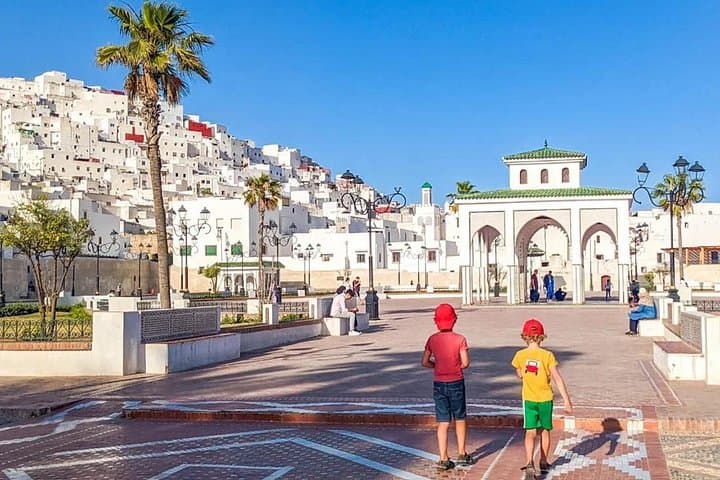
Tetouan arrives as a slower rhythm: whitewashed walls, tight medina alleys, and clear Andalusian lines left by refugees of the Reconquista who reshaped the city in the 15th century. The UNESCO medina feels lived-in — artisan stalls, rooftop tea rooms, and quiet squares where history sits close to everyday life. Optional stops such as the Ethnographic Museum add context to the city’s Spanish-Moorish architecture and crafts.
Practicalities are straightforward: this is a full 6–8 hour day with round-trip transport from Tangier, guided commentary, short walks on uneven streets, and several photo stops. Wear sturdy walking shoes for cobbled alleys and coastal rock, bring sunscreen and a refillable bottle, and plan for spring or fall breezes by layering.
For travelers seeking cultural depth with accessible outdoor moments, this day trip balances landscape and city, giving a compact but textured view of northern Morocco’s geography and heritage.
easy.
6–8 hours.
Suitable for most fitness levels; ability to walk short distances on uneven ground and climb stairs is helpful
The tour runs about 6–8 hours depending on traffic and group size; typical return to Tangier is late afternoon or early evening.
The standard tour includes transport and guiding; specific museum entrances may be optional and paid on site — check with your operator beforehand.
Yes; the itinerary involves short walks and easy access points. Infants and small children can use strollers in some areas, and pickup options are available from hotels and the port.
Guides usually speak English and Spanish; confirm language availability when booking as multilingual options vary.
Tetouan’s medina reflects strong Andalusian influence after 15th-century migrations from Iberia; Tangier’s strategic location shaped centuries of international presence at the Strait of Gibraltar.
Respect medina neighborhoods by minimizing waste, supporting local artisans, and following guide instructions to reduce wear on fragile historic areas.
JTT Morocco operates guided outdoor trips and adventures with an emphasis on safety, stewardship, and memorable experiences.
Morning light hits the Strait as the minivan eases out of Tangier, the city’s layered past rolling past the window — colonial facades, the American Legation, and the low roar of the Atlantic.
Morning light hits the Strait as the minivan eases out of Tangier, the city’s layered past rolling past the window — colonial facades, the American Legation, and the low roar of the Atlantic.
The route climbs toward the Rif, a green spine of cork oak and pine that frames dramatic viewpoints. At Cap Spartel the sea stretches in two directions; cliffs and lighthouse anchor a place where currents and cultures converge. Later, the Hercules Caves open like a weathered doorway to the Atlantic, its sea-cut aperture framing the ocean like a natural map.
Tetouan arrives as a slower rhythm: whitewashed walls, tight medina alleys, and clear Andalusian lines left by refugees of the Reconquista who reshaped the city in the 15th century. The UNESCO medina feels lived-in — artisan stalls, rooftop tea rooms, and quiet squares where history sits close to everyday life. Optional stops such as the Ethnographic Museum add context to the city’s Spanish-Moorish architecture and crafts.
Practicalities are straightforward: this is a full 6–8 hour day with round-trip transport from Tangier, guided commentary, short walks on uneven streets, and several photo stops. Wear sturdy walking shoes for cobbled alleys and coastal rock, bring sunscreen and a refillable bottle, and plan for spring or fall breezes by layering.
For travelers seeking cultural depth with accessible outdoor moments, this day trip balances landscape and city, giving a compact but textured view of northern Morocco’s geography and heritage.