THE ADVENTURE COLLECTIVE® · Independent discovery and booking for outdoor travel

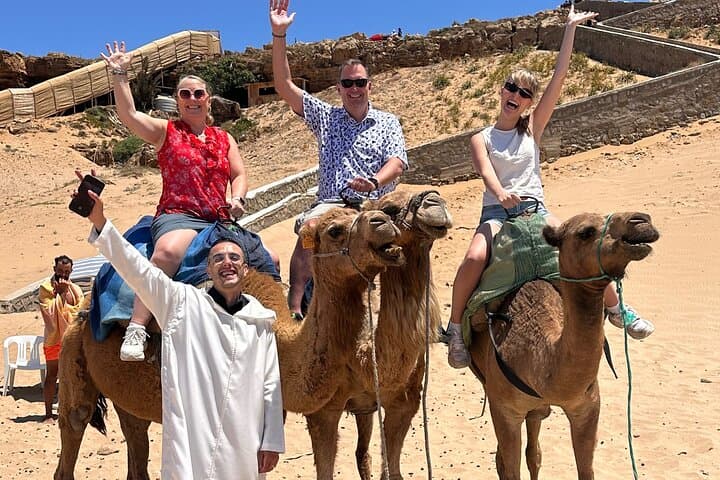
Cross the Strait of Gibraltar in under an hour for a private day in Tangier: Cap Spartel viewpoints, a guided medina tour, the American Legation, and a short camel ride on Achakkar beach. Ideal for a day of concentrated culture and coastal scenery.
Cross the Strait of Gibraltar in under an hour for a private day in Tangier: Cap Spartel viewpoints, a guided medina tour, the American Legation, and a short camel ride on Achakkar beach. Ideal for a day of concentrated culture and coastal scenery.
A brisk Atlantic wind hits the ferry as Tarifa slides behind you; by the time Tangier’s whitewashed walls come into view an hour later, the city’s patchwork roofscape and the call to prayer are already reshaping the day. You step ashore into a place that has long sat where continents meet — textured alleys, a compact kasbah perched above the harbor, and the relentless pulse of trade that feeds the medina.
Verified experiences and guided adventures in the surrounding area.
Operated by Radi Lemtiri · Tangier, Tangier-Tetouan-Al Hoceima
A brisk Atlantic wind hits the ferry as Tarifa slides behind you; by the time Tangier’s whitewashed walls come into view an hour later, the city’s patchwork roofscape and the call to prayer are already reshaping the day. You step ashore into a place that has long sat where continents meet — textured alleys, a compact kasbah perched above the harbor, and the relentless pulse of trade that feeds the medina.
Tangier’s history reads like a travelogue: Phoenician and Roman touches, centuries as a trade gateway between Europe and Africa, and an international zone that attracted writers and diplomats in the 20th century. Geologically the Strait of Gibraltar is a narrow, energetic channel where Atlantic swells meet the Mediterranean; Cap Spartel marks the rocky point where currents split and light changes quickly at dusk.
The itinerary moves from saltair viewpoints at Cap Spartel and the Parc Perdicaris cliffs to the tactile intimacy of the medina, with stops at the Kasbah, the American Legation, a small synagogue, and the sandy sweep of Achakkar beach for a short camel ride. Expect cobbled alleys, short climbs to lookout points, and busy market lanes where bargaining is practiced.
Practical edge: bring your passport and small-denomination dirhams, wear sturdy walking shoes for uneven surfaces, and plan for six to seven hours including ferry time and customs. Start early to avoid midday crowds, carry water and sun protection, and confirm ferry schedules both ways. This is a full day that mixes coastal scenery, urban exploration, and compact cultural stops—an efficient way to press two continents into one memorable outing.
easy.
6–7 hours.
Suitable for most fitness levels; involves several short walks and stairs in the medina and viewpoints.
EU and many nationalities can enter Morocco visa-free for short stays, but passport requirements vary—check current Moroccan entry rules for your nationality before travel.
The ferry crossing typically takes about 50–60 minutes, but factor in boarding, disembarkation, and customs which extend total transit time.
Yes—operators often allow strollers and provide infant seats, but expect walking through narrow medina lanes and short walks to viewpoints.
ATMs and currency exchange services are available in Tangier, but small shops and market vendors commonly prefer cash (Moroccan dirham). Carry small bills for purchases and tips.
Tangier has served as a strategic gateway between Africa and Europe for millennia and hosted the American Legation, the U.S. government’s first diplomatic building abroad.
Tourism pressure on narrow medina streets and coastal sites means visitors should avoid single-use plastics, stick to marked paths at viewpoints, and hire local guides or services that follow responsible-tourism practices.
Radi Lemtiri operates guided outdoor trips and adventures with an emphasis on safety, stewardship, and memorable experiences.
A brisk Atlantic wind hits the ferry as Tarifa slides behind you; by the time Tangier’s whitewashed walls come into view an hour later, the city’s patchwork roofscape and the call to prayer are already reshaping the day. You step ashore into a place that has long sat where continents meet — textured alleys, a compact kasbah perched above the harbor, and the relentless pulse of trade that feeds the medina.
A brisk Atlantic wind hits the ferry as Tarifa slides behind you; by the time Tangier’s whitewashed walls come into view an hour later, the city’s patchwork roofscape and the call to prayer are already reshaping the day. You step ashore into a place that has long sat where continents meet — textured alleys, a compact kasbah perched above the harbor, and the relentless pulse of trade that feeds the medina.
Tangier’s history reads like a travelogue: Phoenician and Roman touches, centuries as a trade gateway between Europe and Africa, and an international zone that attracted writers and diplomats in the 20th century. Geologically the Strait of Gibraltar is a narrow, energetic channel where Atlantic swells meet the Mediterranean; Cap Spartel marks the rocky point where currents split and light changes quickly at dusk.
The itinerary moves from saltair viewpoints at Cap Spartel and the Parc Perdicaris cliffs to the tactile intimacy of the medina, with stops at the Kasbah, the American Legation, a small synagogue, and the sandy sweep of Achakkar beach for a short camel ride. Expect cobbled alleys, short climbs to lookout points, and busy market lanes where bargaining is practiced.
Practical edge: bring your passport and small-denomination dirhams, wear sturdy walking shoes for uneven surfaces, and plan for six to seven hours including ferry time and customs. Start early to avoid midday crowds, carry water and sun protection, and confirm ferry schedules both ways. This is a full day that mixes coastal scenery, urban exploration, and compact cultural stops—an efficient way to press two continents into one memorable outing.