THE ADVENTURE COLLECTIVE® · Independent discovery and booking for outdoor travel

Leap from 13,000 feet and watch Palm Jumeirah shrink into a perfect motif below. This tandem skydive pairs a short, intense freefall with calm canopy time for panoramic views of Dubai’s coast and skyline.
Leap from 13,000 feet and watch Palm Jumeirah shrink into a perfect motif below. This tandem skydive pairs a short, intense freefall with calm canopy time for panoramic views of Dubai’s coast and skyline.
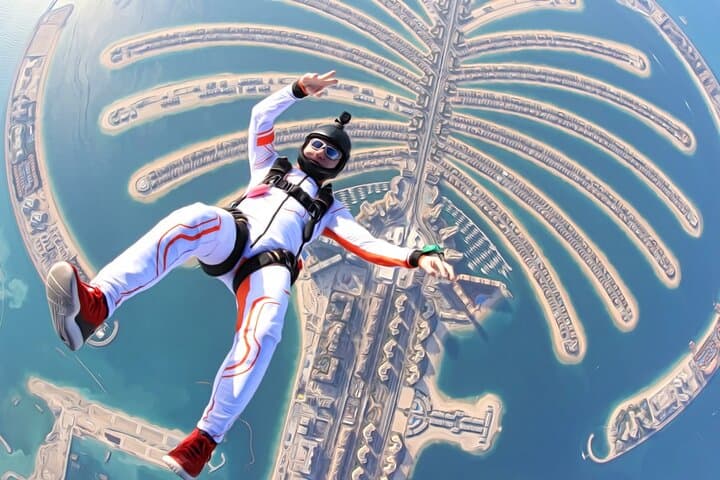
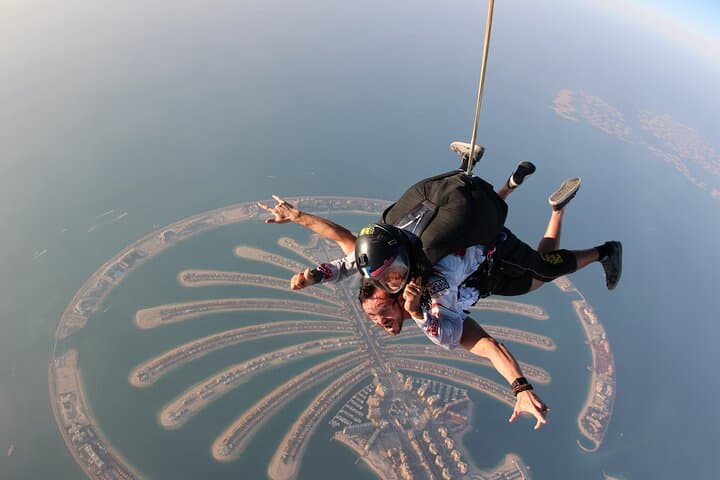
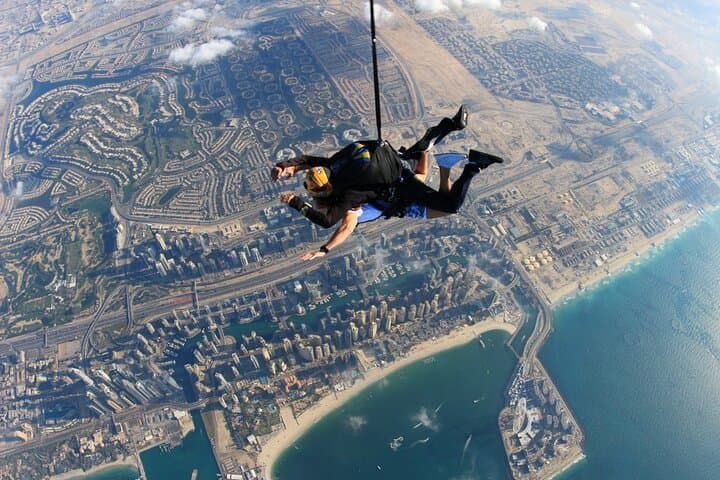
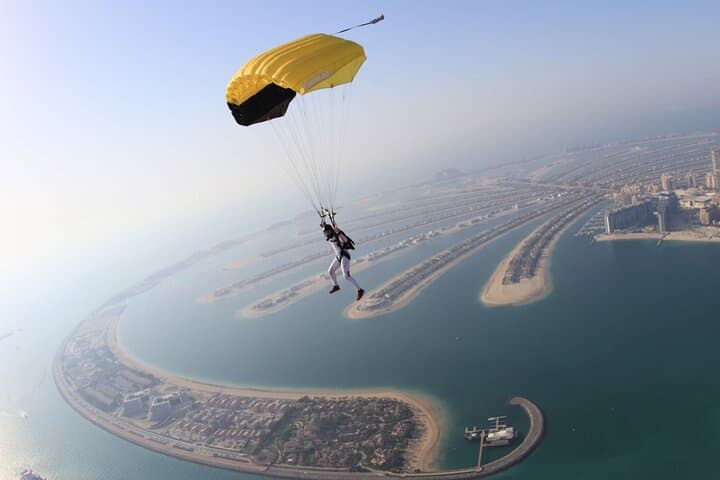
The aircraft climbs and the city shrinks: beneath you the crescent of the Palm Jumeirah fans out into the Persian Gulf while Dubai’s high-rises puncture the horizon. In a tandem jump over the Palm, the first heartbeat is thunderous and the second is stunned silence — not because the city is quiet, but because freefall reduces everything to speed, wind, and an impossible vantage.
Verified experiences and guided adventures in the surrounding area.
Operated by Tripline Tourism · Dubai, Dubai
The aircraft climbs and the city shrinks: beneath you the crescent of the Palm Jumeirah fans out into the Persian Gulf while Dubai’s high-rises puncture the horizon. In a tandem jump over the Palm, the first heartbeat is thunderous and the second is stunned silence — not because the city is quiet, but because freefall reduces everything to speed, wind, and an impossible vantage.
Palm Jumeirah is a recent human landscape: a large, engineered island finished in the early 2000s on reclaimed coastal shelf. The view from altitude turns its geometry into a graphic — fronds, trunk, and ring — while the mainland reveals the rapid growth of Dubai’s skyline, an urban story of trade, oil wealth and leisure investment. Geologically it’s built on dredged sand and rock, which is why much of Dubai’s coastline feels engineered rather than natural; culturally, the jump is as much a spectacle as a sport, part of the emirate’s push for audacious experiences.
Practically, expect a two-hour window for briefing, transport and the jump itself. Typical Palm tandem jumps lift to roughly 13,000 feet with about 45–60 seconds of freefall before canopy time to soak the coastline and cityscape. Operators supply harnesses, goggles, training and professional photo/video. Medical and weight limits apply; arrivals use private transfer to the drop zone and land on a designated field near the shore.
Plan lightweight layers, secure footwear, valid ID/passport, and an afternoon buffer for transfer and processing. Hydrate in Dubai’s dry heat and follow instructor guidance exactly — the sport is tightly procedural. For thrill-seekers the tandem over The Palm is short on time and huge on perspective: the city dares you to see it differently.
moderate.
2 hours.
Moderate fitness: you should be able to climb a few flights of stairs and follow physical instructions; no specialized training required.
Tandem jumps over the Palm typically ascend to around 13,000 feet, giving roughly 45–60 seconds of freefall before the instructor deploys the parachute for a scenic descent.
Yes—operators require a minimum age (often 16–18 with guardian consent), specific weight/BMI caps, and advise against jumping if pregnant or with certain spinal or heart conditions; check provider policies before booking.
No advanced training is required for tandem jumps; instructors provide a briefing, harness fitting and basic body-position training prior to the flight.
Most packages include professional footage and photos recorded from the instructor and ground crew; confirm inclusion when you book.
Palm Jumeirah is a large, man-made island completed in the 2000s by reclamation projects that reshaped Dubai’s coastline and tourism profile.
Coastal reclamation has impacted marine habitats; responsible operators minimize boat traffic near sensitive areas and encourage guests to respect local wildlife and litter rules.
Tripline Tourism operates guided outdoor trips and adventures with an emphasis on safety, stewardship, and memorable experiences.
The aircraft climbs and the city shrinks: beneath you the crescent of the Palm Jumeirah fans out into the Persian Gulf while Dubai’s high-rises puncture the horizon. In a tandem jump over the Palm, the first heartbeat is thunderous and the second is stunned silence — not because the city is quiet, but because freefall reduces everything to speed, wind, and an impossible vantage.
The aircraft climbs and the city shrinks: beneath you the crescent of the Palm Jumeirah fans out into the Persian Gulf while Dubai’s high-rises puncture the horizon. In a tandem jump over the Palm, the first heartbeat is thunderous and the second is stunned silence — not because the city is quiet, but because freefall reduces everything to speed, wind, and an impossible vantage.
Palm Jumeirah is a recent human landscape: a large, engineered island finished in the early 2000s on reclaimed coastal shelf. The view from altitude turns its geometry into a graphic — fronds, trunk, and ring — while the mainland reveals the rapid growth of Dubai’s skyline, an urban story of trade, oil wealth and leisure investment. Geologically it’s built on dredged sand and rock, which is why much of Dubai’s coastline feels engineered rather than natural; culturally, the jump is as much a spectacle as a sport, part of the emirate’s push for audacious experiences.
Practically, expect a two-hour window for briefing, transport and the jump itself. Typical Palm tandem jumps lift to roughly 13,000 feet with about 45–60 seconds of freefall before canopy time to soak the coastline and cityscape. Operators supply harnesses, goggles, training and professional photo/video. Medical and weight limits apply; arrivals use private transfer to the drop zone and land on a designated field near the shore.
Plan lightweight layers, secure footwear, valid ID/passport, and an afternoon buffer for transfer and processing. Hydrate in Dubai’s dry heat and follow instructor guidance exactly — the sport is tightly procedural. For thrill-seekers the tandem over The Palm is short on time and huge on perspective: the city dares you to see it differently.