THE ADVENTURE COLLECTIVE® · Independent discovery and booking for outdoor travel

Launch from 12,000 feet above São Paulo and experience nearly 50 seconds of freefall before a canopy-guided descent. This tandem skydive pairs certified instructors with scenic climbs and a smooth landing close to the school.
Launch from 12,000 feet above São Paulo and experience nearly 50 seconds of freefall before a canopy-guided descent. This tandem skydive pairs certified instructors with scenic climbs and a smooth landing close to the school.
You step onto the tarmac as the twin-prop hums and the wind runs a last check through your jacket. The aircraft climbs, the city shrinks, and São Paulo’s patchwork of parks, highways and river valleys unspools beneath you. At 12,000 feet the world seems to hold its breath—then gravity takes over and you’re falling, weightless and focused, carving a line through the sky for nearly 50 seconds before the canopy blooms and the ground rises up with calm resolve.
Verified experiences and guided adventures in the surrounding area.
Operated by São Paulo Paraquedismo · São Paulo, São Paulo
You step onto the tarmac as the twin-prop hums and the wind runs a last check through your jacket. The aircraft climbs, the city shrinks, and São Paulo’s patchwork of parks, highways and river valleys unspools beneath you. At 12,000 feet the world seems to hold its breath—then gravity takes over and you’re falling, weightless and focused, carving a line through the sky for nearly 50 seconds before the canopy blooms and the ground rises up with calm resolve.
Skydiving around São Paulo traces back decades as Brazil’s sport aviation community grew; many operators run from airfields east of the city where flatter terrain and consistent thermals make stable landing areas. Geologically the region is low-lying plateau and river valley, so views favor urban edges and agricultural mosaics rather than alpine peaks. Culturally, jumps often finish with quick debriefs and local snacks—São Paulo’s hospitality meets high-adrenaline sport.
Practical guidance: expect a 2–3 hour visit that includes equipment fitting, a 10-minute safety briefing, a 15-minute scenic climb and the jump itself. Weight limits apply (max 114 kg; contact operator if 98–114 kg). Bring ID, wear easily removable layers and closed-toe shoes; sunglasses and sunscreen are smart. Medical restrictions include pregnancy, serious heart or spinal conditions. Weather governs operations—winds or low clouds will postpone your jump. If you want photos or video, reserve a camera upgrade in advance. Arrive rested, hydrated and ready to follow your instructor’s commands—the safest way to enjoy one of Brazil’s most immediate ways to see the world.
moderate.
2–3 hours.
Minimal fitness required: you should be able to climb aircraft stairs, bend at the knees for landing and follow instructor commands.
Maximum permitted weight is 114 kg; participants between 98–114 kg must contact the operator in advance and may incur extra fees.
The full visit is typically about 2–3 hours including briefing, gear-up, a 15-minute climb and the jump sequence.
Minors over 14 can often jump with parental consent—participants under 18 or over 65 should check specific operator conditions before booking.
Flights are weather-dependent; operators will postpone or refund if conditions (wind, low clouds, storms) make jumping unsafe.
Skydiving in the São Paulo region grew as a sport in the late 20th century, with inland airfields becoming hubs for training and national competitions.
Operators emphasize leaving no trace on landing fields, limiting drone use and packing out all gear and trash to protect agricultural land and bird habitats.
São Paulo Paraquedismo operates guided outdoor trips and adventures with an emphasis on safety, stewardship, and memorable experiences.
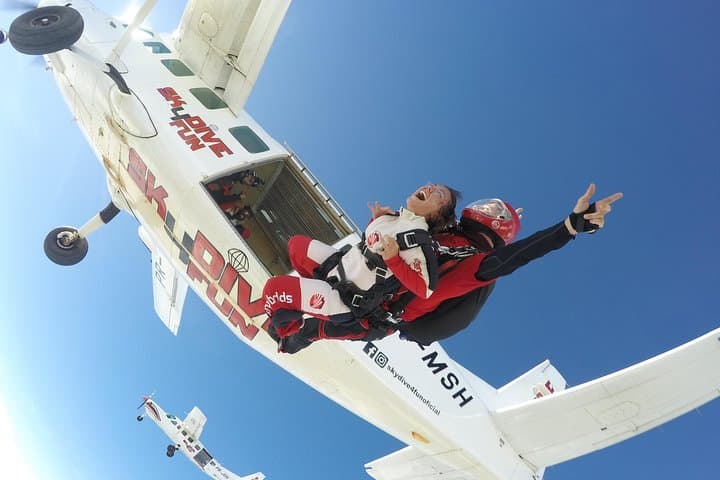


You step onto the tarmac as the twin-prop hums and the wind runs a last check through your jacket. The aircraft climbs, the city shrinks, and São Paulo’s patchwork of parks, highways and river valleys unspools beneath you. At 12,000 feet the world seems to hold its breath—then gravity takes over and you’re falling, weightless and focused, carving a line through the sky for nearly 50 seconds before the canopy blooms and the ground rises up with calm resolve.
You step onto the tarmac as the twin-prop hums and the wind runs a last check through your jacket. The aircraft climbs, the city shrinks, and São Paulo’s patchwork of parks, highways and river valleys unspools beneath you. At 12,000 feet the world seems to hold its breath—then gravity takes over and you’re falling, weightless and focused, carving a line through the sky for nearly 50 seconds before the canopy blooms and the ground rises up with calm resolve.
Skydiving around São Paulo traces back decades as Brazil’s sport aviation community grew; many operators run from airfields east of the city where flatter terrain and consistent thermals make stable landing areas. Geologically the region is low-lying plateau and river valley, so views favor urban edges and agricultural mosaics rather than alpine peaks. Culturally, jumps often finish with quick debriefs and local snacks—São Paulo’s hospitality meets high-adrenaline sport.
Practical guidance: expect a 2–3 hour visit that includes equipment fitting, a 10-minute safety briefing, a 15-minute scenic climb and the jump itself. Weight limits apply (max 114 kg; contact operator if 98–114 kg). Bring ID, wear easily removable layers and closed-toe shoes; sunglasses and sunscreen are smart. Medical restrictions include pregnancy, serious heart or spinal conditions. Weather governs operations—winds or low clouds will postpone your jump. If you want photos or video, reserve a camera upgrade in advance. Arrive rested, hydrated and ready to follow your instructor’s commands—the safest way to enjoy one of Brazil’s most immediate ways to see the world.