THE ADVENTURE COLLECTIVE® · Independent discovery and booking for outdoor travel

Leap from 10,000 feet above Franz Josef and freefall past glaciers, mountains and the Tasman Sea. This tandem skydive pairs technical safety with unbeatable West Coast scenery — ideal for thrill-seekers who want a concise but unforgettable aerial perspective.
Leap from 10,000 feet above Franz Josef and freefall past glaciers, mountains and the Tasman Sea. This tandem skydive pairs technical safety with unbeatable West Coast scenery — ideal for thrill-seekers who want a concise but unforgettable aerial perspective.
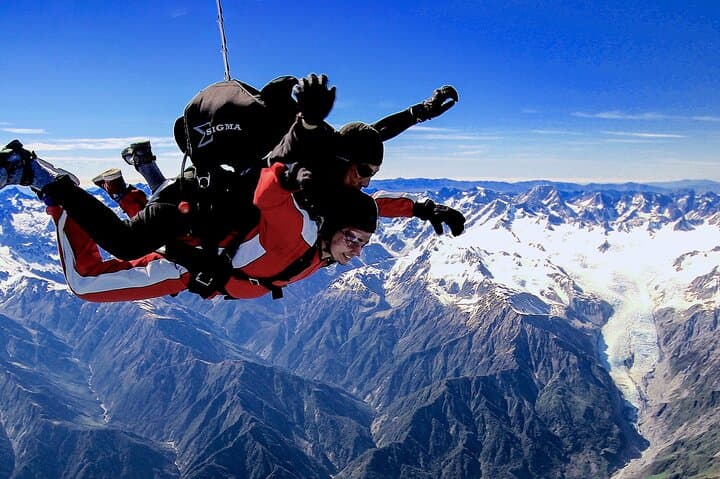
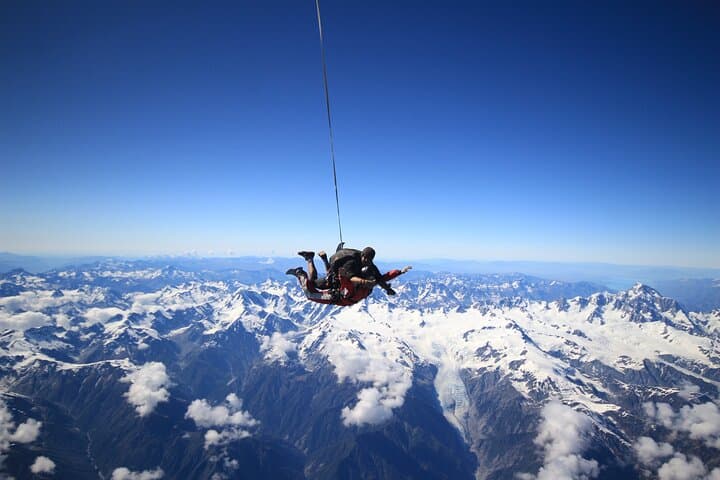
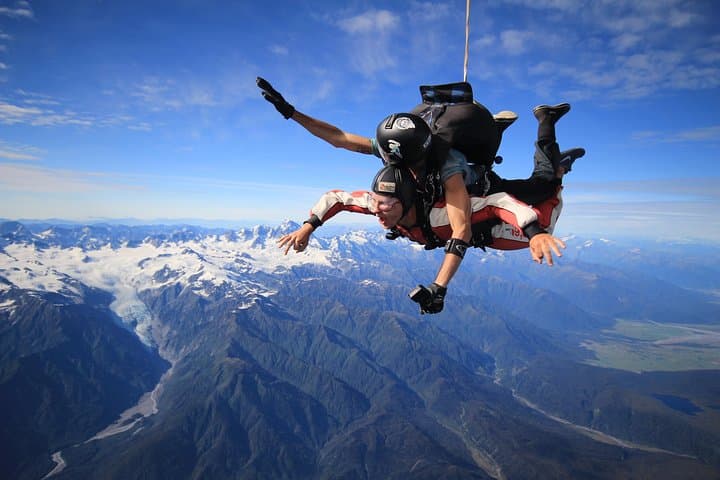
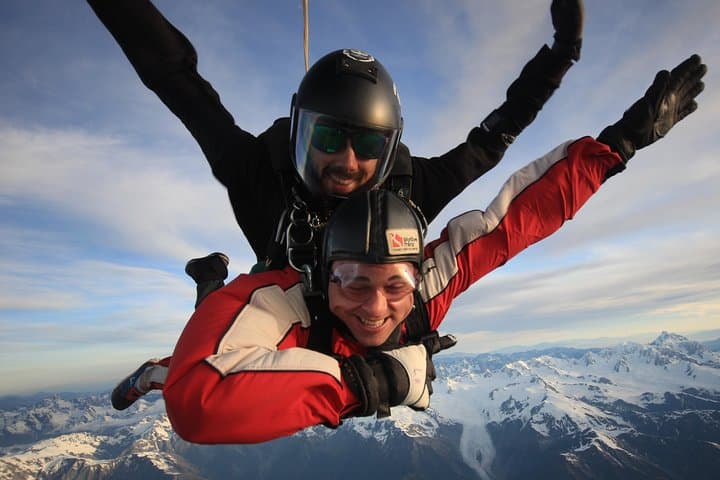
You step out of a small, low-wing aircraft with the Southern Alps on one shoulder and the Tasman Sea on the other — ice, rock and water streaming below like chapters of the same story. The plane’s roar fades and the wind takes over as you accelerate into freefall, the world compressing into a sweep of blue glaciers, braided rivers and rainforest.
Verified experiences and guided adventures in the surrounding area.
Operated by Skydive Franz Josef Limited · Franz Josef, West Coast
You step out of a small, low-wing aircraft with the Southern Alps on one shoulder and the Tasman Sea on the other — ice, rock and water streaming below like chapters of the same story. The plane’s roar fades and the wind takes over as you accelerate into freefall, the world compressing into a sweep of blue glaciers, braided rivers and rainforest.
The West Coast around Franz Josef is ground-sculpted: glaciers carved deep valleys through uplifted greywacke and schist, while Māori and later European names—Franz Josef after the Austrian emperor—record successive encounters with this dramatic landscape. Geology is visible at eye level from the jump; you’ll see the toe of Franz Josef Glacier, the ribboned Tasman Sea and the dark forest that pins the coast to the mountains.
Locally, Franz Josef township is a compact service hub with guiding history stretching back to early glacier tourism; operators emphasize safety and environmental care. Expect a practical, well-briefed experience: check-in, harness fitting, a short flight to altitude, a 30–60 second freefall at roughly 200 kph (120 mph), then a calm parachute descent and guided landing. Weather drives the schedule — cloud, wind or low visibility can postpone jumps, and operators offer rebook or refund options.
Pack warm layers, wear secure lace-up shoes and bring a small sense of patience; the best light is often early or late in the day. Follow instructor guidance, disclose health concerns, and leave drones to the pros — this jump is about the visceral, human-facing view of one of New Zealand’s most raw places.
moderate.
3 hours (total experience).
Moderate fitness: able to climb into a small aircraft and follow instructor directions; not suitable for people with serious spinal or cardiovascular issues.
The operator schedules around three hours total: check-in, briefing, a short flight to altitude, the tandem jump and return; actual freefall is about 30–60 seconds before canopy time.
This tandem jump is conducted from about 10,000 ft; freefall speeds are typically near 200 kph (120 mph) before parachute deployment for a controlled descent.
Standard inclusions are use of helmet, gloves, goggles and a jumpsuit, plus skydive equipment and typically a shared transfer from the booking office to the airstrip—confirm video/photo options with the operator.
Flights are weather-dependent; if your jump is canceled due to poor conditions you’ll be offered an alternative date or a full refund per the operator’s policy.
The Franz Josef area has long significance to Ngāi Tahu and was later named by European explorers; tourism to the glaciers began in the late 19th and early 20th centuries.
Glaciers in the region are retreating due to climate change; operators and visitors are encouraged to minimize disturbance and follow established landing and access rules.
Skydive Franz Josef Limited operates guided outdoor trips and adventures with an emphasis on safety, stewardship, and memorable experiences.
You step out of a small, low-wing aircraft with the Southern Alps on one shoulder and the Tasman Sea on the other — ice, rock and water streaming below like chapters of the same story. The plane’s roar fades and the wind takes over as you accelerate into freefall, the world compressing into a sweep of blue glaciers, braided rivers and rainforest.
You step out of a small, low-wing aircraft with the Southern Alps on one shoulder and the Tasman Sea on the other — ice, rock and water streaming below like chapters of the same story. The plane’s roar fades and the wind takes over as you accelerate into freefall, the world compressing into a sweep of blue glaciers, braided rivers and rainforest.
The West Coast around Franz Josef is ground-sculpted: glaciers carved deep valleys through uplifted greywacke and schist, while Māori and later European names—Franz Josef after the Austrian emperor—record successive encounters with this dramatic landscape. Geology is visible at eye level from the jump; you’ll see the toe of Franz Josef Glacier, the ribboned Tasman Sea and the dark forest that pins the coast to the mountains.
Locally, Franz Josef township is a compact service hub with guiding history stretching back to early glacier tourism; operators emphasize safety and environmental care. Expect a practical, well-briefed experience: check-in, harness fitting, a short flight to altitude, a 30–60 second freefall at roughly 200 kph (120 mph), then a calm parachute descent and guided landing. Weather drives the schedule — cloud, wind or low visibility can postpone jumps, and operators offer rebook or refund options.
Pack warm layers, wear secure lace-up shoes and bring a small sense of patience; the best light is often early or late in the day. Follow instructor guidance, disclose health concerns, and leave drones to the pros — this jump is about the visceral, human-facing view of one of New Zealand’s most raw places.