THE ADVENTURE COLLECTIVE® · Independent discovery and booking for outdoor travel

Launch from alpine meadows above Lake Lucerne and ride thermals over glacier-sculpted ridges. This tandem paragliding experience from Zurich–Lucerne offers accessible airtime, sweeping valley views and local takeoffs at Pilatus, Niederbauen and Engelberg.
Launch from alpine meadows above Lake Lucerne and ride thermals over glacier-sculpted ridges. This tandem paragliding experience from Zurich–Lucerne offers accessible airtime, sweeping valley views and local takeoffs at Pilatus, Niederbauen and Engelberg.
You stand at a grassy lip above the lake, harness snug, helmet cool against the wind. Below, Lake Lucerne flattens the light; the Alps around Engelberg, Pilatus and Niederbauen fold and rise like a living map. When the wing fills, the world eases into silence and the valley pushes you forward—glacier-carved ridges, pasture mosaics and woodland that leans into the air.
Verified experiences and guided adventures in the surrounding area.
Operated by CAP Paragliding · Emmetten, Nidwalden
You stand at a grassy lip above the lake, harness snug, helmet cool against the wind. Below, Lake Lucerne flattens the light; the Alps around Engelberg, Pilatus and Niederbauen fold and rise like a living map. When the wing fills, the world eases into silence and the valley pushes you forward—glacier-carved ridges, pasture mosaics and woodland that leans into the air.
This is flying where alpine geology and human history meet. The Lucerne basin was carved by repeated glaciations, leaving steep faces and deep fjord-like arms of water; nearby Pilatus carries centuries of local lore and a 19th-century tourist history. Villages like Emmetten grew around seasonal grazing and mountain transport; today the takeoff fields still smell of hay and diesel from the cable cars that bring riders up for winter and summer sports.
Expect 20–30 minutes of airtime during a 2-hour window operation that includes briefing, setup and transfer. Flights launch from established sites such as Niederbauen, Brunni and Pilatus; professional tandem pilots handle the wing, radio and landing. Views are the main feature—snow-capped summits in colder months, sharp green slopes and wildflower patches in summer—and the ride is accessible for most people who can walk a few steps.
Practicalities: dress in layers, wear sturdy shoes, and bring a small camera with a secure strap. Weather dictates go/no-go; operators cancel for unsafe winds or low clouds. Communicate weight and mobility needs when booking (220 lb/110 kg noted limit). Aim for morning thermals for smoother air and softer light for photos.
easy.
2 hours.
Suitable for most fitness levels; able to walk a short, sometimes steep, few steps to the launch area
Yes—operators generally request notification for passengers over 110 kg (220 lbs); specific aircraft and pilot rules may vary.
Flights are canceled for unsafe winds, low clouds or storms; most operators refund or reschedule if cancelled for weather.
No—tandem flights are suited to first-timers; the pilot manages all flying tasks while you enjoy the ride.
Common launch sites include Niederbauen (Emmetten), Brunni and Pilatus; access usually requires cable car or short transfers—check the meeting point and transit options when booking.
The Lucerne basin and surrounding peaks were shaped by Pleistocene glaciers; local mountain inns and cable cars date from the 19th and early 20th centuries when alpine tourism began to grow.
Operators follow strict landing-site rules to avoid trampling sensitive alpine vegetation; visitors are asked to pack out waste and avoid disturbing wildlife and nesting birds.
CAP Paragliding operates guided outdoor trips and adventures with an emphasis on safety, stewardship, and memorable experiences.
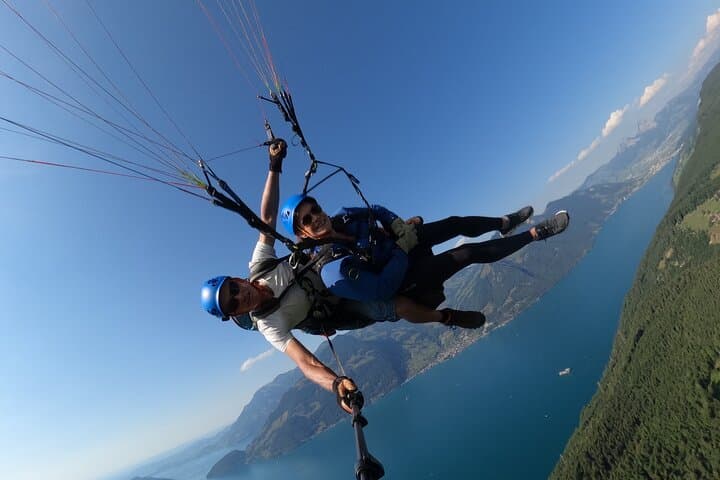
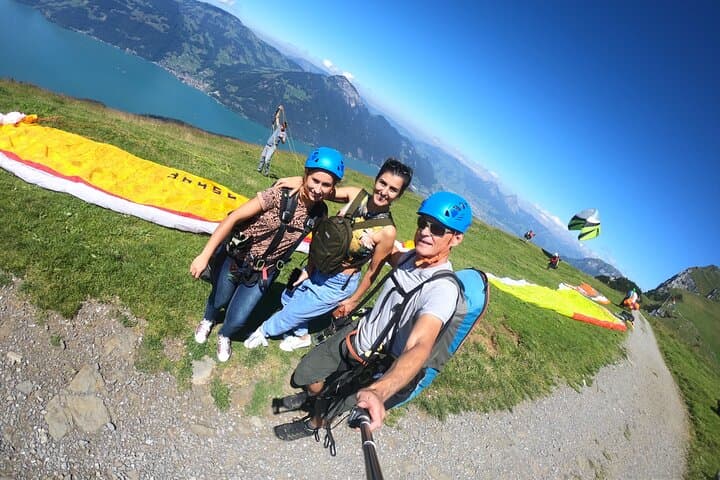
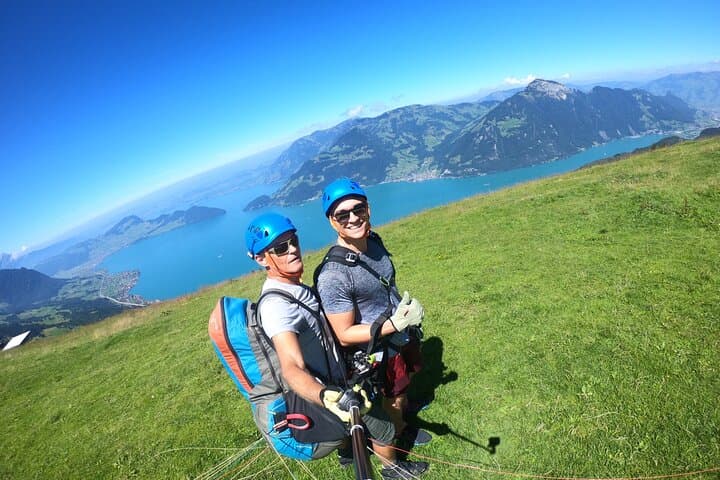
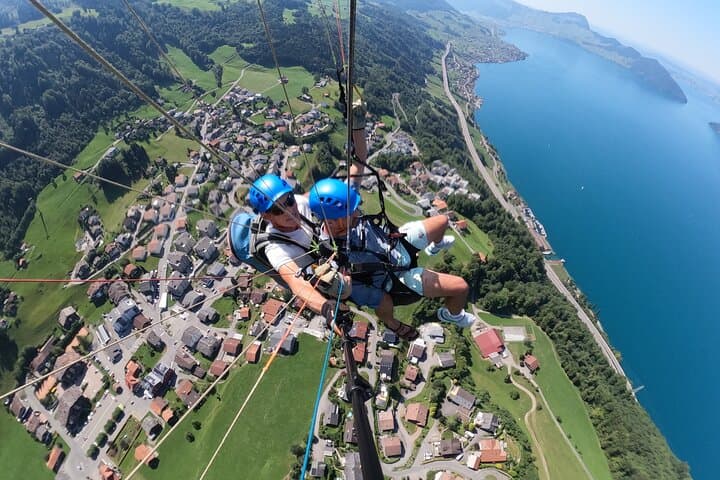
You stand at a grassy lip above the lake, harness snug, helmet cool against the wind. Below, Lake Lucerne flattens the light; the Alps around Engelberg, Pilatus and Niederbauen fold and rise like a living map. When the wing fills, the world eases into silence and the valley pushes you forward—glacier-carved ridges, pasture mosaics and woodland that leans into the air.
You stand at a grassy lip above the lake, harness snug, helmet cool against the wind. Below, Lake Lucerne flattens the light; the Alps around Engelberg, Pilatus and Niederbauen fold and rise like a living map. When the wing fills, the world eases into silence and the valley pushes you forward—glacier-carved ridges, pasture mosaics and woodland that leans into the air.
This is flying where alpine geology and human history meet. The Lucerne basin was carved by repeated glaciations, leaving steep faces and deep fjord-like arms of water; nearby Pilatus carries centuries of local lore and a 19th-century tourist history. Villages like Emmetten grew around seasonal grazing and mountain transport; today the takeoff fields still smell of hay and diesel from the cable cars that bring riders up for winter and summer sports.
Expect 20–30 minutes of airtime during a 2-hour window operation that includes briefing, setup and transfer. Flights launch from established sites such as Niederbauen, Brunni and Pilatus; professional tandem pilots handle the wing, radio and landing. Views are the main feature—snow-capped summits in colder months, sharp green slopes and wildflower patches in summer—and the ride is accessible for most people who can walk a few steps.
Practicalities: dress in layers, wear sturdy shoes, and bring a small camera with a secure strap. Weather dictates go/no-go; operators cancel for unsafe winds or low clouds. Communicate weight and mobility needs when booking (220 lb/110 kg noted limit). Aim for morning thermals for smoother air and softer light for photos.