THE ADVENTURE COLLECTIVE® · Independent discovery and booking for outdoor travel

Launch from a Blue Mountains ridge and glide 500–900m above moss-covered lava fields with a tandem pilot. This short, weather-dependent flight offers sweeping views of the Atlantic, glaciers, and Reykjavik with minimal physical demands.
Launch from a Blue Mountains ridge and glide 500–900m above moss-covered lava fields with a tandem pilot. This short, weather-dependent flight offers sweeping views of the Atlantic, glaciers, and Reykjavik with minimal physical demands.
A cool wind lifts and the world drops away: moss-dark lava fields give way to a broad, wind-sculpted sky as a tandem pilot straps in and steps off the ridge. From 500–900 meters above ground the paraglider floats over jagged basalt flows that still carry the memory of fire, with a 360° sweep that can include the Atlantic’s gray edge, distant glaciers, Reykjavik’s low skyline, and the long ribbon of the South Coast.
Verified experiences and guided adventures in the surrounding area.
Operated by Happyworld Iceland · Reykjavik, Capital Region
A cool wind lifts and the world drops away: moss-dark lava fields give way to a broad, wind-sculpted sky as a tandem pilot straps in and steps off the ridge. From 500–900 meters above ground the paraglider floats over jagged basalt flows that still carry the memory of fire, with a 360° sweep that can include the Atlantic’s gray edge, distant glaciers, Reykjavik’s low skyline, and the long ribbon of the South Coast.
The site sits on volcanic ground shaped by repeated eruptions over the last 10,000 years; the resulting lava plains and rhyolite ridges define why paragliders look for these slopes — thermals rise predictably over uneven surfaces. Iceland’s flying culture blends practical aerology with a deep respect for quickly changing weather; pilots here watch clouds like instruments.
Travelers should expect a short briefing and safety checks with an experienced tandem instructor, a few minutes of prep on the slope, then 10–15 minutes of in-air flight within a 45–60 minute booking window. The pilot controls the glider, but guests often get a chance to try supervised steering.
Practical notes: layers and windproof outerwear matter — air is usually colder aloft. Shoes with grip help on rocky takeoff zones. Weather dictates the schedule; operators will rebook or refund if conditions are unsafe. Bring a securely mounted camera or use the operator’s action cam option to capture the run and landings.
This is an accessible, high-adrenaline way to read Icelandic weather and see volcanic terrain from the bird’s perspective — thrilling, brief, and unforgettable when conditions line up.
moderate.
45–60 minutes.
Suitable for most people in reasonable health; must be able to walk on uneven ground and run a few steps at takeoff if required.
No—this is a tandem flight with a licensed pilot; guests do not need previous experience.
Policies vary by operator; children must be accompanied by an adult and typical weight limits are commonly around 100–120 kg—confirm with the provider when booking.
In-air time is usually 10–15 minutes, with the full experience including briefing and gear fitting lasting about 45–60 minutes.
Flights are weather-dependent; operators will rebook or provide a full refund if conditions are unsafe.
The lava fields are part of recent Holocene volcanism; many flows around Reykjavik are less than 10,000 years old and shaped local routes and settlement patterns.
Stick to marked access points and avoid trampling moss—Icelandic moss recovers extremely slowly; small impacts can last decades.
Happyworld Iceland operates guided outdoor trips and adventures with an emphasis on safety, stewardship, and memorable experiences.
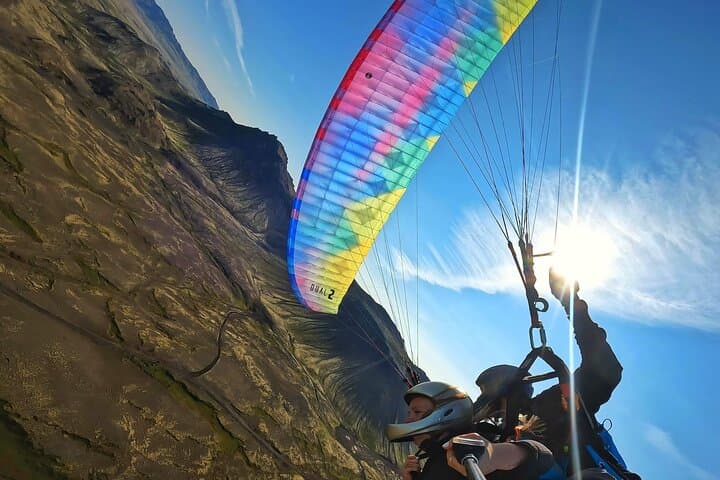
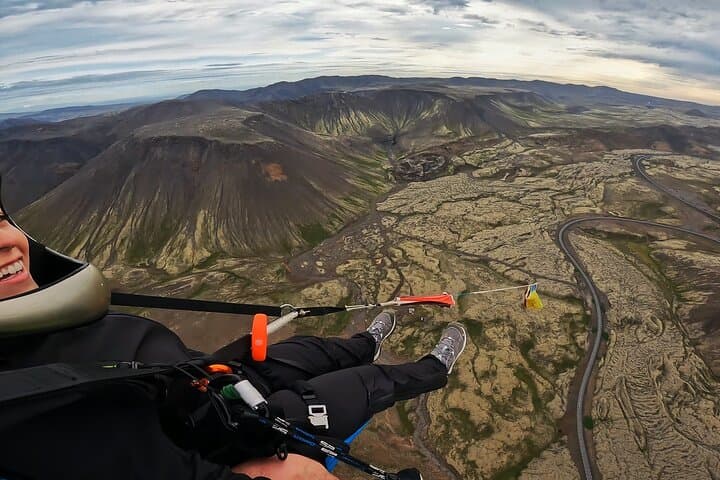
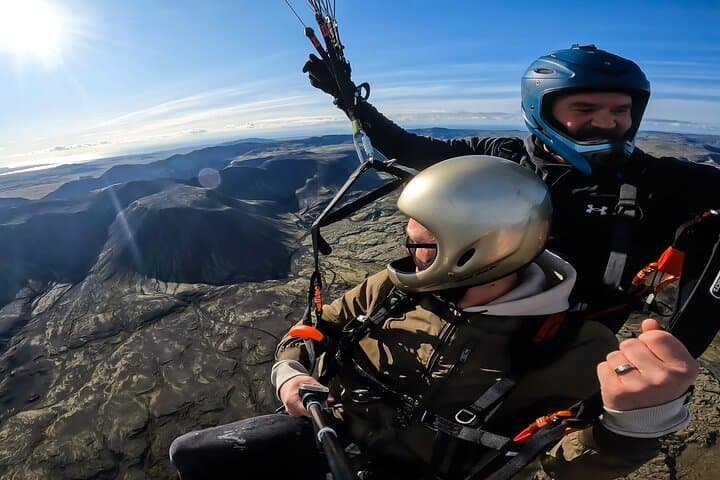
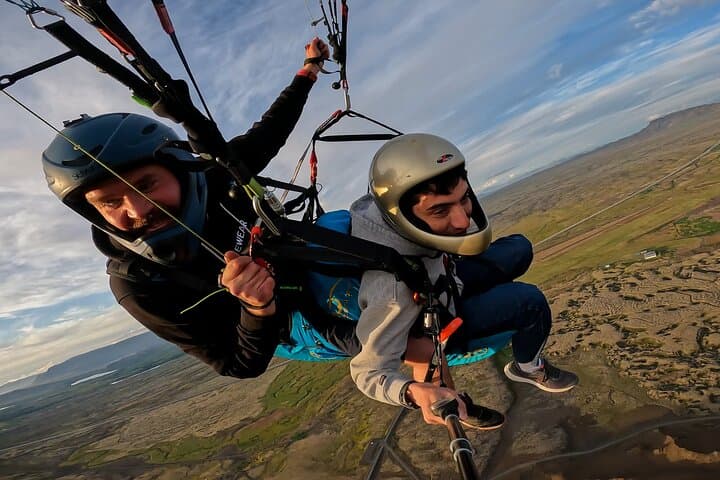
A cool wind lifts and the world drops away: moss-dark lava fields give way to a broad, wind-sculpted sky as a tandem pilot straps in and steps off the ridge. From 500–900 meters above ground the paraglider floats over jagged basalt flows that still carry the memory of fire, with a 360° sweep that can include the Atlantic’s gray edge, distant glaciers, Reykjavik’s low skyline, and the long ribbon of the South Coast.
A cool wind lifts and the world drops away: moss-dark lava fields give way to a broad, wind-sculpted sky as a tandem pilot straps in and steps off the ridge. From 500–900 meters above ground the paraglider floats over jagged basalt flows that still carry the memory of fire, with a 360° sweep that can include the Atlantic’s gray edge, distant glaciers, Reykjavik’s low skyline, and the long ribbon of the South Coast.
The site sits on volcanic ground shaped by repeated eruptions over the last 10,000 years; the resulting lava plains and rhyolite ridges define why paragliders look for these slopes — thermals rise predictably over uneven surfaces. Iceland’s flying culture blends practical aerology with a deep respect for quickly changing weather; pilots here watch clouds like instruments.
Travelers should expect a short briefing and safety checks with an experienced tandem instructor, a few minutes of prep on the slope, then 10–15 minutes of in-air flight within a 45–60 minute booking window. The pilot controls the glider, but guests often get a chance to try supervised steering.
Practical notes: layers and windproof outerwear matter — air is usually colder aloft. Shoes with grip help on rocky takeoff zones. Weather dictates the schedule; operators will rebook or refund if conditions are unsafe. Bring a securely mounted camera or use the operator’s action cam option to capture the run and landings.
This is an accessible, high-adrenaline way to read Icelandic weather and see volcanic terrain from the bird’s perspective — thrilling, brief, and unforgettable when conditions line up.