THE ADVENTURE COLLECTIVE® · Independent discovery and booking for outdoor travel

Launch from coastal heights and glide for at least 30 minutes over Madeira’s volcanic ridges before landing on the beach. Learn what to expect, practical prep, and where pilots typically operate.
Launch from coastal heights and glide for at least 30 minutes over Madeira’s volcanic ridges before landing on the beach. Learn what to expect, practical prep, and where pilots typically operate.
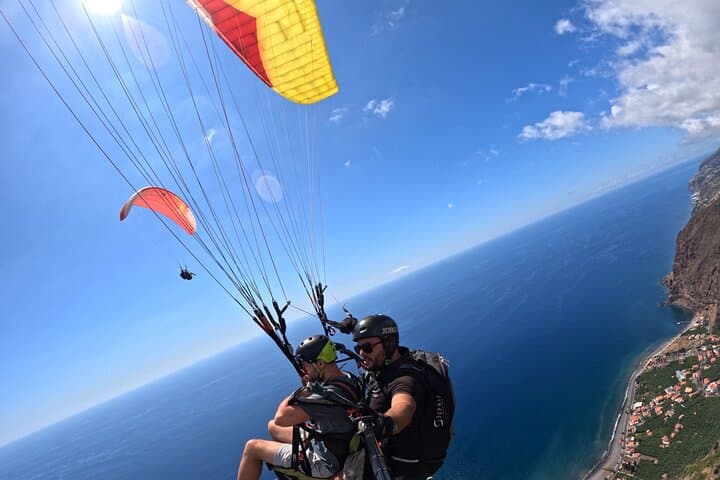
You run to the cliff edge, the Atlantic breathing up from below; the pilot checks straps and the wing catches an invisible current. In a single gentle surge you rise above terraced farmland and basalt cliffs, the island’s ridgelines folding away while the ocean pulls the horizon toward you.
Verified experiences and guided adventures in the surrounding area.
Operated by FlyMadeira Paragliding Madeira · Funchal, Madeira
You run to the cliff edge, the Atlantic breathing up from below; the pilot checks straps and the wing catches an invisible current. In a single gentle surge you rise above terraced farmland and basalt cliffs, the island’s ridgelines folding away while the ocean pulls the horizon toward you.
Madeira’s mountains are volcanic ribs shaped by lava and erosion, a compact landscape that sends predictable thermals out to sea. The island’s history — 15th-century Portuguese settlement, sugar cane wealth, and the stone channels called levadas — shows in its stitched fields and narrow roads. Paragliding here is part adrenaline, part geography: a chance to read the air currents carved by volcanic peaks and Atlantic swells.
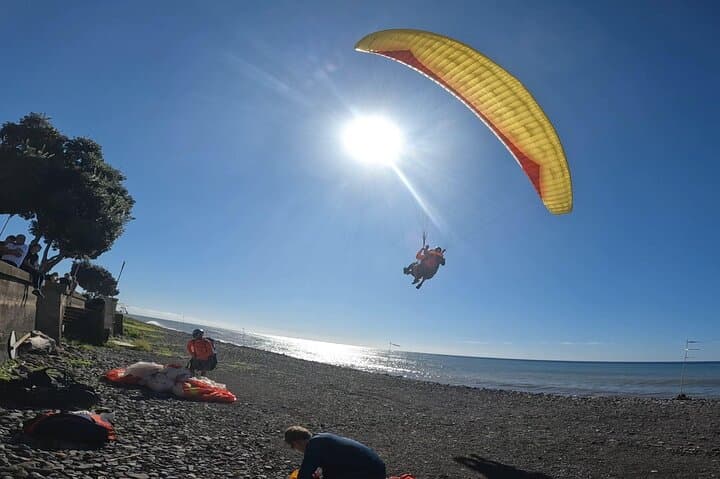
Culturally, flights commonly launch from high coastal slopes above Funchal and often end on one of the island’s pebble beaches, connecting mountain and sea in a single run. Pilots are locally trained and usually include photo or video capture so you can keep the view long after you’re on firm ground.
Practical guidance: expect a total experience of 1–2 hours including transfer and briefing; the flight itself is marketed at a minimum of 30 minutes. Operators set weight and health limits and will cancel in strong winds or rain — safety comes first. Wear sturdy shoes and layered clothing; sun and wind are stronger in the air. Arrive with ID and your booking confirmation, and ask about optional media packages if you want high-quality footage. With a bit of planning, this tandem flight is a direct and exhilarating way to see Madeira from an angle few visitors get to know intimately.
moderate.
1–2 hours (30-minute flight).
Comfortable walking ability and the ability to run short distances for takeoff; moderate cardiovascular fitness recommended
Most operators set upper and lower weight limits (commonly around 45–100 kg/100–220 lb); check with the provider at booking as limits vary.
Children may fly with parental consent and within weight limits; pregnant travelers and people with serious heart conditions are not recommended to participate.
Flights are typically canceled or rescheduled if winds are too strong, rain is present, or visibility is poor — operators often offer full refunds if canceled 24+ hours before departure.
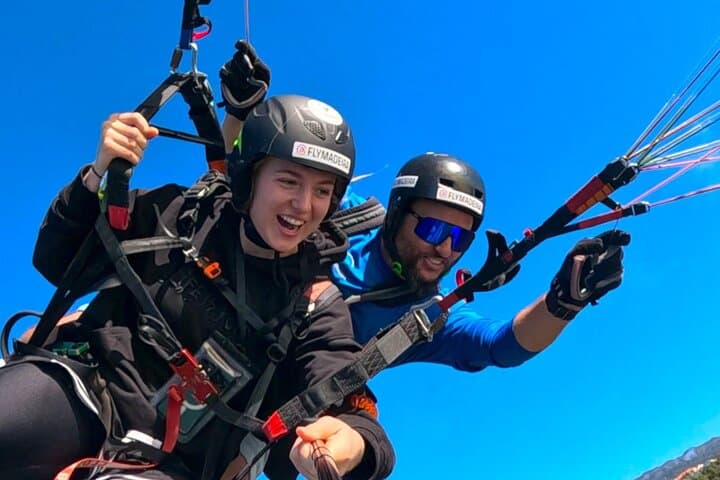
Many tandems offer on-flight photo/video packages for an extra fee; confirm availability and format when booking.
Madeira formed from volcanic activity millions of years ago and was settled by the Portuguese in the 15th century; its levadas and terraced farmland reflect centuries of island agriculture.
Operators emphasize low-impact practices like staying on established launch areas and avoiding litter; respect pilot guidance to protect nesting seabirds and fragile cliff vegetation.
FlyMadeira Paragliding Madeira operates guided outdoor trips and adventures with an emphasis on safety, stewardship, and memorable experiences.

You run to the cliff edge, the Atlantic breathing up from below; the pilot checks straps and the wing catches an invisible current. In a single gentle surge you rise above terraced farmland and basalt cliffs, the island’s ridgelines folding away while the ocean pulls the horizon toward you.
You run to the cliff edge, the Atlantic breathing up from below; the pilot checks straps and the wing catches an invisible current. In a single gentle surge you rise above terraced farmland and basalt cliffs, the island’s ridgelines folding away while the ocean pulls the horizon toward you.
Madeira’s mountains are volcanic ribs shaped by lava and erosion, a compact landscape that sends predictable thermals out to sea. The island’s history — 15th-century Portuguese settlement, sugar cane wealth, and the stone channels called levadas — shows in its stitched fields and narrow roads. Paragliding here is part adrenaline, part geography: a chance to read the air currents carved by volcanic peaks and Atlantic swells.
Culturally, flights commonly launch from high coastal slopes above Funchal and often end on one of the island’s pebble beaches, connecting mountain and sea in a single run. Pilots are locally trained and usually include photo or video capture so you can keep the view long after you’re on firm ground.
Practical guidance: expect a total experience of 1–2 hours including transfer and briefing; the flight itself is marketed at a minimum of 30 minutes. Operators set weight and health limits and will cancel in strong winds or rain — safety comes first. Wear sturdy shoes and layered clothing; sun and wind are stronger in the air. Arrive with ID and your booking confirmation, and ask about optional media packages if you want high-quality footage. With a bit of planning, this tandem flight is a direct and exhilarating way to see Madeira from an angle few visitors get to know intimately.