THE ADVENTURE COLLECTIVE® · Independent discovery and booking for outdoor travel

Launch from a ridge, feel the wind lift you and glide alongside red kites over the Brecon Beacons. This tandem paragliding experience pairs safety-focused instruction with ridge- and thermal-soaring for scenic flights up to 40 minutes.
Launch from a ridge, feel the wind lift you and glide alongside red kites over the Brecon Beacons. This tandem paragliding experience pairs safety-focused instruction with ridge- and thermal-soaring for scenic flights up to 40 minutes.
You stand at the ridge’s lip while the wind tugs at your jacket, the valley unrolling beneath—green fields, dry-stone walls and the chalk-white ribbon of a distant road. A brief walk to the launch; a few checks; then the wing catches air and the ground slips away. The quiet of a tandem paraglider turns the landscape into a moving map, with thermals that tease and then lift you toward cloudbase.
Verified experiences and guided adventures in the surrounding area.
Operated by Crickhowell Paragliding · Abergavenny, Wales
You stand at the ridge’s lip while the wind tugs at your jacket, the valley unrolling beneath—green fields, dry-stone walls and the chalk-white ribbon of a distant road. A brief walk to the launch; a few checks; then the wing catches air and the ground slips away. The quiet of a tandem paraglider turns the landscape into a moving map, with thermals that tease and then lift you toward cloudbase.
The Brecon Beacons (Bannau Brycheiniog) are an upland spine of Old Red Sandstone and gritstone—ridges like Hay Bluff and the Blorenge were shaped by ice and millennia of upland erosion. The area has long been a working landscape of sheep farms and drovers’ tracks; in wartime the open ranges saw military training that still shapes access today. Paragliders commonly share airspace with red kites and peregrines, part of a recovering raptor population that reads the same ridge winds you do.
Practical guidance: sessions last up to four hours on-site with flights typically up to 40 minutes; operators provide all technical kit and briefings. Check weight and health restrictions before booking, arrive in sturdy boots and layered, windproof clothing, and allow extra time for variable upland weather. If thermals are active (late spring–early autumn), expect higher and longer flights; on calm days you’ll enjoy smooth ridge-soaring. After landing, take a moment—watch the wing fold like a sleeping gull and scan for birds that followed you. Respect no-fly zones, stick to agreed takeoff and landing points, and follow the instructor’s safety brief to get the most from a low-impact, airborne perspective on one of Wales’s most dramatic landscapes.
moderate.
3–4 hours.
Minimal aerobic fitness required for a short uphill walk to launch and safe landing positions; ability to follow safety instructions and bend knees on landing.
Flights typically last up to 40 minutes; the whole session on-site is usually around three to four hours to allow for briefing, transfers to launch, and ground handling.
Operators require accurate weight at booking and set limits for safety—commonly around 95–110 kg (210–243 lb) depending on conditions and harnesses; confirm with the provider before booking.
Yes—strong winds, heavy rain or low cloud can lead to cancellations; providers usually offer refunds or rebooking and recommend flexible scheduling.
No prior paragliding experience is needed for tandem flights; instructors provide a safety briefing and handle launch, flight and landing while you enjoy the ride.
Designated as a national park in 1957, the Brecon Beacons have long been shaped by upland farming and military training ranges that influence access and land use today.
Paragliding is relatively low-impact when operators use established launch and landing sites; visitors should follow Leave No Trace, avoid disturbing ground-nesting birds, and pack out waste.
Crickhowell Paragliding operates guided outdoor trips and adventures with an emphasis on safety, stewardship, and memorable experiences.
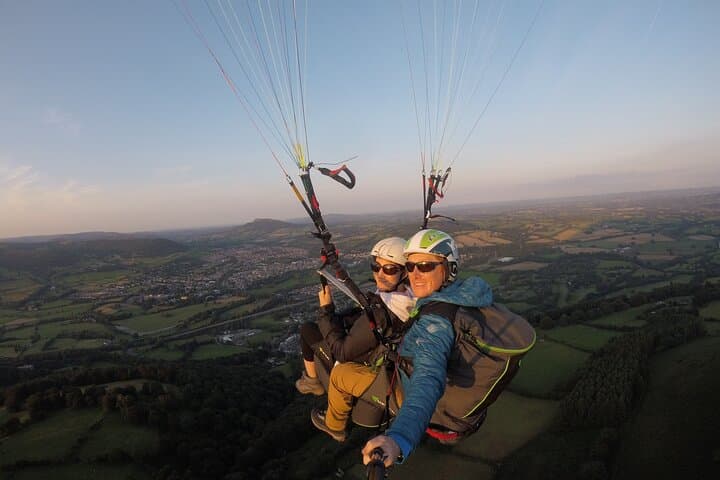
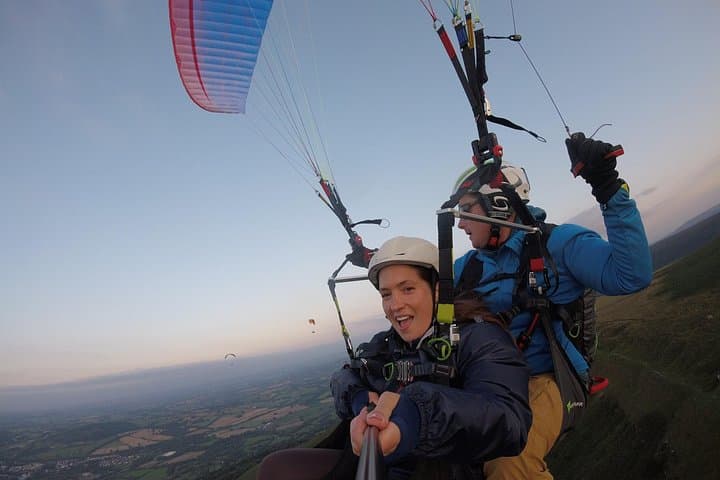
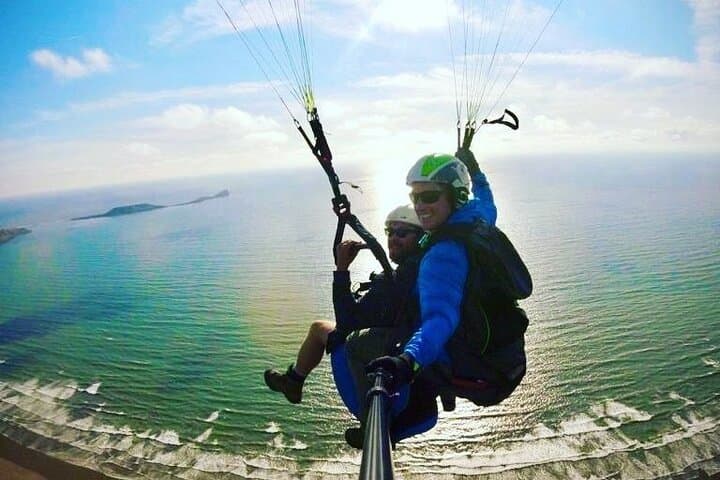
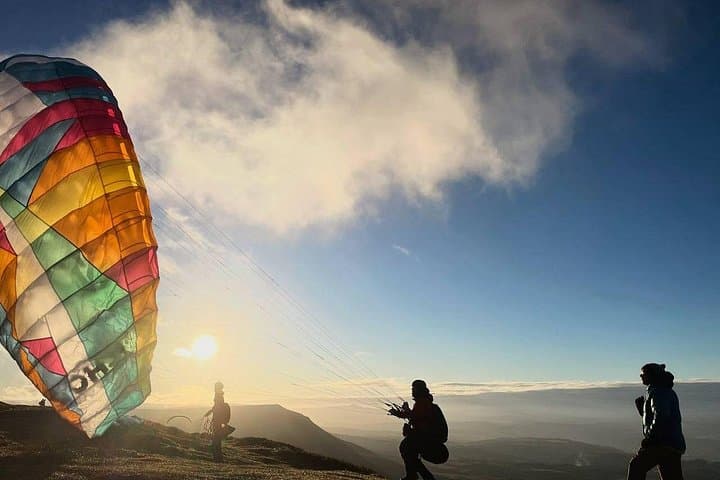
You stand at the ridge’s lip while the wind tugs at your jacket, the valley unrolling beneath—green fields, dry-stone walls and the chalk-white ribbon of a distant road. A brief walk to the launch; a few checks; then the wing catches air and the ground slips away. The quiet of a tandem paraglider turns the landscape into a moving map, with thermals that tease and then lift you toward cloudbase.
You stand at the ridge’s lip while the wind tugs at your jacket, the valley unrolling beneath—green fields, dry-stone walls and the chalk-white ribbon of a distant road. A brief walk to the launch; a few checks; then the wing catches air and the ground slips away. The quiet of a tandem paraglider turns the landscape into a moving map, with thermals that tease and then lift you toward cloudbase.
The Brecon Beacons (Bannau Brycheiniog) are an upland spine of Old Red Sandstone and gritstone—ridges like Hay Bluff and the Blorenge were shaped by ice and millennia of upland erosion. The area has long been a working landscape of sheep farms and drovers’ tracks; in wartime the open ranges saw military training that still shapes access today. Paragliders commonly share airspace with red kites and peregrines, part of a recovering raptor population that reads the same ridge winds you do.
Practical guidance: sessions last up to four hours on-site with flights typically up to 40 minutes; operators provide all technical kit and briefings. Check weight and health restrictions before booking, arrive in sturdy boots and layered, windproof clothing, and allow extra time for variable upland weather. If thermals are active (late spring–early autumn), expect higher and longer flights; on calm days you’ll enjoy smooth ridge-soaring. After landing, take a moment—watch the wing fold like a sleeping gull and scan for birds that followed you. Respect no-fly zones, stick to agreed takeoff and landing points, and follow the instructor’s safety brief to get the most from a low-impact, airborne perspective on one of Wales’s most dramatic landscapes.